Listen to this article
Take the story with you. Choose a voice and a pace that suits you.
Or listen in another language / choose a voice
Getting your device voices ready…
The voice follows the displayed language and your browser’s regional preference when available. You can choose another narration voice.
TL;DR: Christian Patrick, a 20-year-old Black livestock inspector in New Mexico, asked HR before he was hired whether his locs complied with the grooming policy, cut about nine inches from them, and was twice told his hair was fine. On day three, a senior officer overruled that, called his hair not "presentable," and he was let go for refusing to cut it. The ACLU of New Mexico has now sued under the state's hair discrimination law.
Most workplace discrimination cases turn on what a policy means. This one turns on a man who asked what the policy meant before he took the job — and kept the receipts. Christian Patrick, 20, of Clayton, New Mexico, has worked around livestock his whole life and won a rodeo scholarship to Texas. Interviewed by the New Mexico Livestock Board on 5 February 2026 and hired as a livestock inspector, he did something few new employees think to do: before starting, he asked the Board's human resources manager whether wearing his locs sewn into a bun — not touching or past his collar — complied with the grooming policy. HR told him it did. He cut about nine inches from his locs, had the rest sewn into a bun, and started work in March 2026.
What happened during Christian Patrick's first three days on the job?
According to the complaint, day one of orientation went as HR had promised: his supervisor confirmed his hair complied. Day three did not. The Board's Chief Law Enforcement Officer, Barry Allen, told Patrick that the Executive Director, Belinda Garland, considered his hair impermissible. Allen said he was "not a fan" of Patrick's hair, that it did not look "presentable," and that Patrick would not be allowed to interact with livestock producers — the core of an inspector's job — until he cut it. Patrick pointed out that HR had already cleared the hairstyle. It did not matter: he refused to cut his hair, and he was let go that day.
In the ACLU's statement, Patrick put it this way: "My hair means everything to me. It represents my culture, my family, and my history. When the livestock board asked me to cut my locs up and said my hair didn't look presentable, I was hurt. I've been able to rodeo, show pigs, and be FFA vice-president with it — why should it stop me now?" He says he stepped outside, called his grandmother, and heard the sentence that settled it: "If you stand for nothing, you'll fall for anything."
In short: A new inspector cleared his hairstyle with HR before hiring, shortened his locs, was confirmed compliant on day one — and was out of a job on day three after a senior officer called the same hair impermissible and not "presentable."
What does New Mexico's hair discrimination law actually say?
In July 2026, Patrick filed a discrimination charge with the state. On 28 October 2026, the ACLU of New Mexico filed suit in state court alleging that the Board violated the New Mexico Human Rights Act. In 2021, New Mexico amended that statute — its main civil-rights law — as part of the wave of state legislation known as the CROWN Act (Creating a Respectful and Open World for Natural Hair), barring discrimination based on natural hair textures and protective hairstyles, including locs, braids, twists and knots, as well as cultural and religious headdresses (ACLU of New Mexico). Companion 2021 measures wrote the same protection into the state's school codes (New Mexico Legislature).
The CROWN Act movement began in California in 2019, when that state became the first to write hair texture and protective styles into its definition of race discrimination. More than half the states have since adopted some version of it (Legal Clarity). The movement exists because of a documented gap in federal law: when the EEOC sued over a job offer rescinded because of a Black applicant's dreadlocks, federal appellate courts held that Title VII covers immutable traits — and that a hairstyle, however closely tied to race, is changeable and therefore unprotected. Patrick's case is one of the first real tests of what New Mexico's five-year-old version does in a courtroom.
In short: Since 2021, the New Mexico Human Rights Act has expressly barred discrimination over natural hair texture and protective hairstyles such as locs — a protection federal courts have declined to read into national law, and the reason states began passing CROWN Acts in 2019.
Why does the twice-confirmed haircut matter so much to this case?
Strip the case to its frame and it is not really about a bun. It is about a sequence: an employee asked, the employer's own HR department answered, the employee changed his hair in reliance on that answer, a supervisor confirmed it again — and then an executive's personal standard replaced the written one. "The New Mexico Human Rights Act prohibits this exact situation from happening," said Jazmyn Taitingfong, the ACLU of New Mexico staff attorney on the case. "The arbitrary imposition of hair length criteria against our client, but not against other employees with long hair, demonstrates that the real issue was his race, plain and simple." The word doing the work in the Board's alleged position is "presentable" — a standard no employee can measure himself against in advance, and one that, the complaint argues, was applied to the Black inspector's locs and not to other employees' long hair.
The Board tells a different story about how the job ended. It says Patrick resigned and left without notifying upper management, and it has declined to comment further, citing the pending litigation. That dispute — fired for refusing, or resigned and walked out — is now a question of fact for a state court, alongside the legal question of what the grooming policy, as HR itself interpreted it, actually required. Patrick, meanwhile, has not left public service: he now works as a non-certified commissioned officer with the Clayton Police Department.
In short: The lawsuit's centre of gravity is the paper trail — two compliance confirmations from the employer itself, overridden by an executive's "presentable" standard. The Board disputes the ending, saying Patrick resigned; a court will decide both the facts and the law.
Why do hair rules keep turning into civil-rights cases?
Grooming codes sit exactly where abstract equality meets somebody's morning mirror: a rule about hair length sounds neutral in a handbook. In practice, hair texture is not evenly distributed, and locs, braids and twists are how many Black Americans wear hair that grows the way theirs grows. A "neutral" rule that prices those styles out of a workplace does not fall neutrally — which is the entire legislative theory of the CROWN Act, explained in one sentence. It is also why these fights recur in schools as often as in workplaces: the same vocabulary of neatness, distraction and presentability shows up in school dress codes and workplace handbooks alike, and in both settings the burden lands on the same heads.
What happens in New Mexico will matter beyond one inspector. If a grooming standard cannot survive contact with an employer's own HR confirmations, agencies across the state will have to reconcile their handbooks with the 2021 statute — and workers in states still waiting on CROWN legislation will be watching to see what such a law is worth once it is tested.
In short: The pattern repeats in schools and workplaces for one reason: texture is not evenly distributed, so the cost of "neutral" grooming rules lands on the same people — which is why legislatures, not only courts, have ended up writing these protections into law.
Analysis: the striking thing about this case is how little of it is ambiguous on the law's own terms. Legislatures pass statutes like the 2021 amendments precisely so that "presentable" cannot be a firing offence measured by one official's taste. Patrick asked first, complied twice over, and lost the job anyway — if those facts hold, the case is less a boundary dispute than a demonstration of why the statute exists.
Information verified through 3 November 2026.
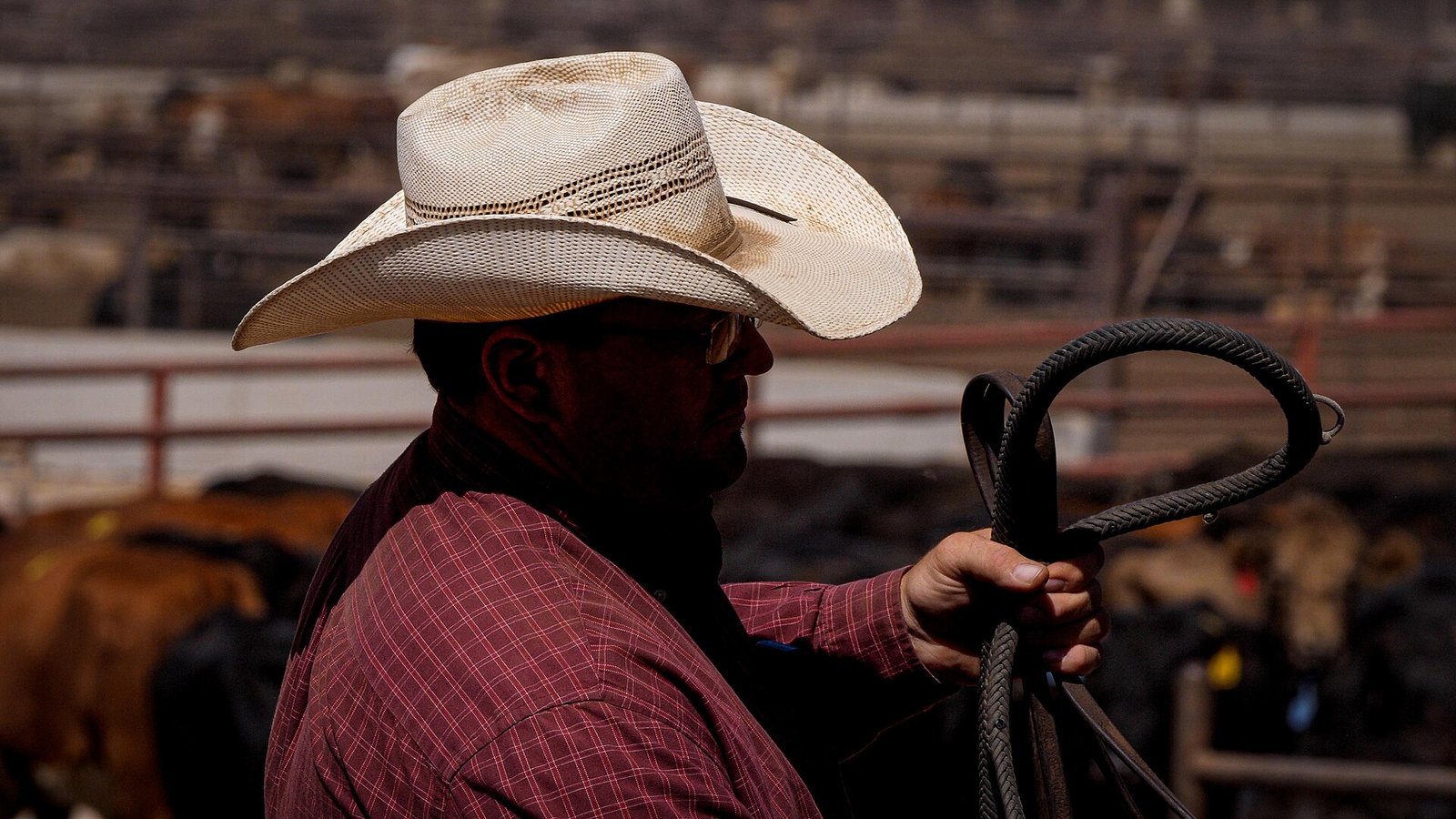
Photo: USDA photo by Preston Keres (public domain), via Wikimedia Commons
Sources
- https://www.aclu-nm.org/press-releases/aclu-of-new-mexico-sues-nm-livestock-board-over-unlawful-termination-of-black-employee-violating-the-new-mexico-human-rights-act/
- https://www.kempsmith.com/new-mexico-enacts-legislation-prohibiting-hairstyle-discrimination-and-mandating-paid-sick-leave
- https://legalclarity.org/is-the-crown-act-passed-in-all-50-states/
- https://www.nmlegis.gov/handouts/IAC%20111320%20Item%204%20Crown%20Act%20fact%20sheet.pdf
Leave a comment
Comment as a guest and verify your email, or sign in or create a reader account. Guest comments reach our review queue after email verification; account holders can submit directly for review.