
Listen to this article
Take the story with you. Choose a voice and a pace that suits you.
Or listen in another language / choose a voice
Getting your device voices ready…
The voice follows the displayed language and your browser’s regional preference when available. You can choose another narration voice.
Investigation. Evidence checked and tiered — documented, contested, unverified — through 5 November 2026.
TL;DR: Zwarte Piet blackface is not medieval, not ancient, and not explained by chimney soot. The figure was fixed in print in 1850, three years after American minstrel shows first played Amsterdam. No document proves his creator copied Jim Crow — but the developed character leaned on the minstrel stage’s own stock type, and the full stereotype was assembled inside a Dutch blackface culture that ran for a century. Fifteen years of protest then did what courts never did: the blackface is gone from the national celebration, and the campaign that removed it has declared victory and disbanded.
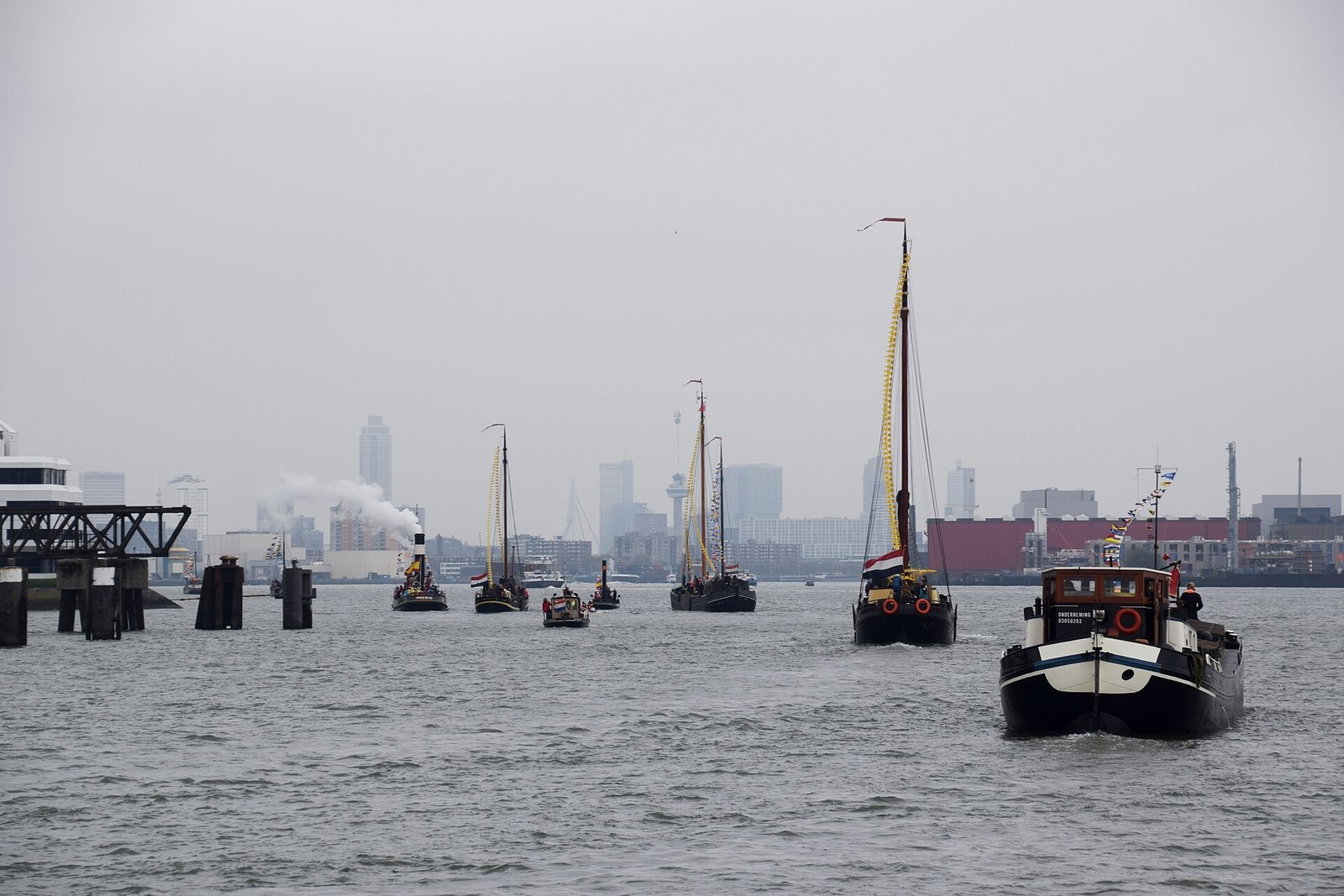
Every mid-November, a steamboat from Spain docks in a Dutch harbour town, and Sinterklaas — the Dutch Saint Nicholas, tall, white-bearded, dressed as a bishop — rides into streets full of children. Around him dance his helpers, the Pieten. In the traditional version, the one this investigation is about, each Piet is a white performer in full black makeup, with large red lips, gold hoop earrings and a curly black wig, wearing a Renaissance page costume, clowning, scattering sweets, speaking in a put-on accent. Abroad, the figure is usually introduced by his translated name, Black Pete; in the Netherlands he is simply Zwarte Piet, and for most Dutch people over a certain age he is not a controversy. He is childhood itself.
This investigation started from a blunt claim, heard often in Black American commentary on the Netherlands: that Zwarte Piet is not really an old Dutch tradition at all — that he descends from Jim Crow, the blackface character of the American minstrel stage, imported into a country that then wrapped an American caricature in the flag and called it heritage. We set out to test that claim against the record: the books, the theatre history, the court files, the polls. What follows is what the evidence supports, what it does not, and where the claim turns out to be both too strong and, in one respect, too kind.
Photo: Zwarte Pieten in traditional portrayal aboard the steamboat at the national intocht, Maassluis, 2016 — by Michielverbeek via Wikimedia Commons (CC BY-SA 4.0).
At a glance
What is Zwarte Piet, exactly?
Strip the argument away and describe the object. Sinterklaas is the centre of the Dutch winter calendar: his arrival (the intocht) is a national television event, and his feast on 5 December is the country’s main gift-giving occasion, bigger in the Dutch year than Christmas. His helpers do the physical work of the story — carrying the sacks, climbing the roofs, delivering presents down chimneys, keeping the book of which children were good.
The traditional portrayal of those helpers is a specific, stable set of signs. The Meertens Institute, the Netherlands’ own folklore research institute, listed them in 2013 without euphemism:
“A black face, large (red) lips, afro hairstyle, gold earrings, wild, unreliable, joking and clowning, childish and speaking broken Dutch.” — Meertens Institute, describing the stereotyping of Zwarte Piet, which it dates as “most manifest in the first half of the 20th century”
That list matters because the defence of the figure usually proceeds one element at a time — it is only makeup, only a costume, only soot. The institute’s point is the combination: a Black servant, played for comedy, defined by exaggerated racial features and childish incompetence, attending a dignified white master. Whatever else is contested in this story, the description is not. It is agreed by the Dutch state’s own folklore institute.
Where does Zwarte Piet come from?
Zwarte Piet history, as opposed to Zwarte Piet mythology, is short. Art historian E. Boer-Dirks established in 1993 that Dutch visual and textual sources from the 16th to the 19th century contain no fixed companion for Saint Nicholas at all — no servant, no demon, no standard helper. The Saint worked alone, or appeared himself as the frightening figure with the blackened face and chains. A written mention of “the black servant of St. Nikolaas” survives from 1836, and an 1828 sighting rests on a memoir written in 1884. That is the entire pre-history: fragments.
The figure is created, in the form the world knows, by a book. In 1850 the Amsterdam schoolteacher Jan Schenkman published Sint Nikolaas en zijn knecht — Saint Nicholas and his Servant — a 19-page picture book that also fixed the steamboat from Spain, the arrival parade, and the book of good and naughty children. His servant is a dark-skinned page in Moorish-style dress, nameless in the text, carrying the money chest and the sack. The Meertens Institute’s verdict on Schenkman is the honest one:
“Schenkman did not invent the black servant himself, but he did canonise him.” — Meertens Institute
Across the following editions the costume stabilises into the colourful page uniform — puffed breeches, beret, ruff — borrowed from the visual world of an older Europe in which Black pages were, in the words of researcher Paavo Van der Eecken, “recognisable status symbols” in art and in wealthy households. The full makeup stereotype — the lips, the wig, the earrings, the clowning broken Dutch — assembles later, reaching its most manifest form in the first half of the 20th century. One caution belongs here, because the record demands it: sources disagree on whether Schenkman’s first edition is 1845 or 1850. The 1850 date is the position of the Meertens Institute, Dutch reference works and the book’s own scholarship; the 1845 dating surfaces in a 2014 Leiden thesis. We use 1850 and flag the dispute rather than hide it.
And the chimney? The explanation every Dutch child now hears — Piet is black from the soot of the chimneys he climbs — is the youngest part of the story. The older, traditional explanation was that he is a Moor from Spain. The soot story only became prominent in the later decades of the 20th century, as discomfort with the figure grew. The Meertens Institute disposes of it in two sentences:
“No — Zwarte Piet is already black on the boat, and at that moment he has not yet been in a chimney. From crawling through chimneys one likewise does not get an afro hairstyle, red lips and Creole earrings.” — Meertens Institute
Van der Eecken adds the wardrobe evidence: Piet’s outfit always stays spotless, which is inconsistent with a man blackened by chimneys. Soot is not the origin of the figure. It is the origin of the alibi.
Did Jim Crow cross the Atlantic?
Now the transmission question, taken in pieces, because the pieces have different strengths.
The American side is fully documented. Blackface minstrelsy begins with Thomas Dartmouth Rice, who made the character Jim Crow famous in 1828 — a song-and-dance act in blackface and a woolly wig, built, by the traditional account, on the performance of an enslaved stable hand whose clothes Rice bought. It was entertainment first: a joke, a dance, a hit song. The name Jim Crow was only later fastened to the segregation laws of the American South — the caricature was beloved for decades before it was codified, which is precisely how caricatures do their deepest work. Rice took the act to London in 1836 to phenomenal success. In 1843 the Virginia Minstrels performed the first full minstrel show in New York and were playing Britain within months.
The act itself can still be watched. A 33-second clip from the 1941 Vitaphone featurette Minstrel Days — a portrayal filmed more than a century after the fact, not footage from 1828 — shows a performer in blackface and top hat working through Rice’s routine, Willie Best beside him as the stable hand, and the refrain that gave the character its choreography: “wheel about and turn about and do just so.” The film’s own narration credits Rice as the first man to bring the blackface character to the American stage. This is what “Jim Crow” was before it was anything else: a dance, a costume, a joke an audience paid to laugh at.
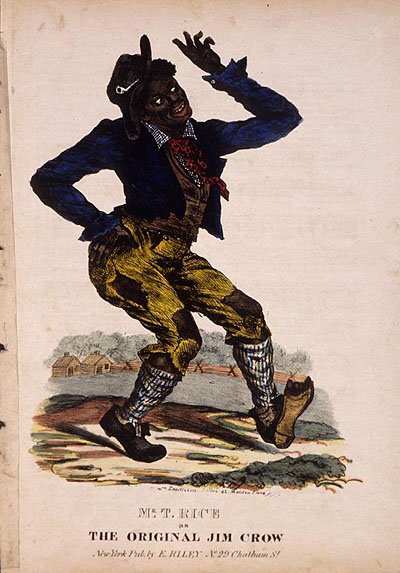
The columnist and historian Jamelle Bouie, in his “Nerd Stuff” history of Jim Crow, insists on a distinction the Dutch argument keeps missing. What most people picture when they hear the words — separate bathrooms, separate water fountains, the “symbols of the outward public disrespect,” in his phrase — “is not what the system was.” The system itself was “an authoritarian system of labor control and political control,” built to extract work and to extinguish Black political power; the social separation and the violence were its downstream mechanisms, not its essence. Hold that distinction. It is the difference between a costume and a regime — and it cuts in both directions, as the Dutch half of this story shows.
Now lay the chronology flat, because the correlation is the argument. In 1828 Jim Crow is a joke — a stage caricature, sung and danced for paying audiences. For the next six decades the caricature is repeated until it stops reading as an invention and starts reading as common sense: the culture’s default picture of what Black people are. Only then do the laws arrive — and notably not in the first years after slavery, for Jim Crow the system did not immediately follow Reconstruction; it was deliberately built in the 1890s, when biracial populist coalitions began threatening the planter and merchant order. Mississippi’s constitution of 1890 — the first Jim Crow constitution — wrote most Black voters, and a significant share of poor white ones, out of political life; the federal Force Bill that might have defended the franchise died in the Senate; Plessy v. Ferguson (1896) blessed legal separation; and Carter Glass, an architect of Virginia’s 1902 constitution, stated its purpose without euphemism: to remove the Black voter from political life. The laws took the joke’s name because the cultural work had been done first. A legislature cannot codify a caricature until the caricature has been laughed into truth — which is why this investigation treats a costume as evidence, and not as a triviality.
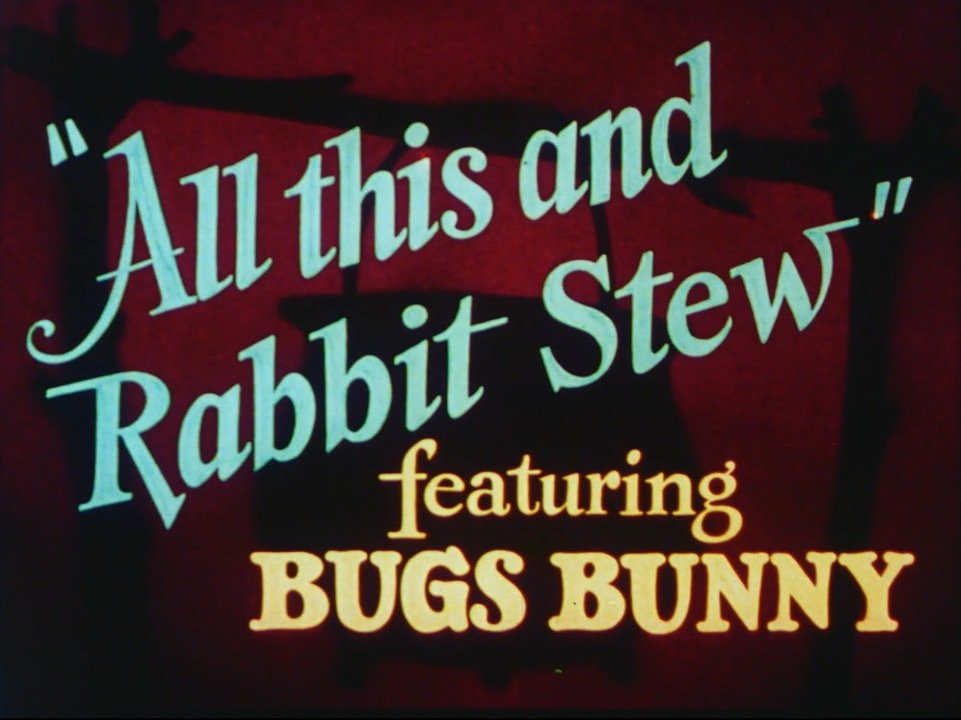
The picture’s afterlife ran through the nursery. By the 1940s the caricature was being drawn, literally, for children: Warner Bros.’ Goldilocks and the Jivin’ Bears (1944) restaged the fairy tale around an all-Black band of jazz bears, and Tex Avery’s All This and Rabbit Stew (1941) set Bugs Bunny against a shuffling, mumbling Black hunter in oversized clothes — the minstrel figure, animated. Both are among the “Censored Eleven”: eleven Warner cartoons, made between 1931 and 1944, withheld from American syndication by United Artists in 1968 because their ethnic stereotyping was judged too overt to keep circulating; they have not been officially broadcast since. The industry’s eventual verdict on its own children’s caricatures was withdrawal — delivered, notably, not by protesters but by the rights-holder itself. The mid-stage of the correlation sits here: between the joke and the law stands the generation taught the picture before it could read.
The Dutch side is also documented, and this is where the investigation’s central claim gets its strongest support. Historian Elisabeth Koning, in the Tijdschrift voor Geschiedenis (2018), establishes that in 1847 the Ethiopian Serenaders “successfully introduced American blackface minstrelsy to a Dutch public” — performing at Amsterdam’s De Duizend Kolommen theatre, returning in 1849, with Dutch newspapers sneering at the “pseudo-negroes” while audiences came. Read those dates again. American minstrelsy is playing Amsterdam in 1847 and 1849. Schenkman’s book appears in 1850. A few years later, Dutch stage adaptations of Uncle Tom’s Cabin had white Dutch actors performing in blackface — the imported form had become a local practice.
Koning’s own conclusion about Piet is the single most important sentence in the scholarly record, and it is worth quoting exactly:
“Black Pete, generally a white person wearing a blackface mask, leaned heavily on the same elements that made the blackface minstrel dandy type a success: edified clothing, a blackface mask, and anti-emancipation humour.” — Elisabeth Koning, Tijdschrift voor Geschiedenis, 2018
The “dandy” is the minstrel show’s overdressed Black buffoon — fine clothes, blackface mask, comedy at his expense. Koning places the leaning in the years after Schenkman, as the figure developed: the page costume grows grander, the clowning broader, the stereotype harder. National Geographic, the strongest mainstream summary, says Piet’s exaggerated appearance “may have also been influenced by American blackface minstrel shows, which toured throughout Europe in the mid-19th century.”
But here is what the record will not carry, and an honest investigation has to say it in the same breath. No document — no letter, diary, preface or review — shows that Jan Schenkman saw a minstrel show, or copied Jim Crow, or took his servant from any specific stage character. No source shows he consciously intended a slave; the Dutch scholarship is explicit that none has been found. And the traffic was not one-way or single-source: historian Sarah Adams has shown that Dutch theatres were staging blacked-up comic representations of Blackness from at least 1790 to 1830, decades before the minstrels arrived — a homegrown repertoire that, in her phrase, anticipated the minstrel stock characters. The black pages of European painting, the Moorish imagery of a Spain-fixated story, and a colonial empire in which slavery remained legal in the Dutch Caribbean until 1863 — abolished only thirteen years after the book — all fed the same figure. Historian Rebecca Brienen argues that whatever Schenkman intended, his 1850 audience, living in a slaveholding empire, would have read the black servant through slavery. The Meertens Institute pushes back: a direct slavery connection in 1850 “cannot, on the basis of the historical sources, be made hard.”
The claim, and the record
Analysis. So: the claim that Zwarte Piet “comes from Jim Crow” — how does it score?
It is right about the ecosystem. Zwarte Piet did not grow in a sealed Dutch garden. He was fixed in print in the exact years when American blackface was the Atlantic world’s most successful entertainment export, performed in his own city before his book existed, and his developed form leaned — on the best Dutch historical authority — on the minstrel dandy’s own elements: the fancy dress, the blackface mask, the anti-emancipation joke. A figure assembled from those parts, in that decade, inside that traffic, cannot honestly be described as untouched by minstrelsy. The defenders’ favourite firewall — blackface is an American thing, this is Dutch, therefore no connection — is false on the chronology alone.
It overreaches on the single line of descent. “Schenkman copied Jim Crow” is not in the record; “minstrelsy was in the room, and the figure grew toward the minstrel type” is. The distinction is not pedantry, because the stronger, provable version is actually the more damning one. A copy can be disowned as an accident of one schoolteacher. What the record shows instead is a culture — Dutch, European, Atlantic — that found the blackface servant funny and useful in every medium it touched: stage, print, painting, and finally the nursery.
Analysis — the Dutch turn. The Netherlands imported the first two stages and skipped the third. What crossed the Atlantic in 1847, before Schenkman’s book existed, was the joke and the picture; the Dutch tradition was then built directly on the picture — a Black servant as comic furniture at a children’s feast — and naturalised by the same mechanism, repetition, until it read as simple fact about what such a figure is. No Dutch Jim Crow laws followed, because none were needed: there was no disenfranchised Black citizenry at home to legislate against, Dutch slavery being an overseas arrangement. The picture was the point. America eventually bolted its caricature to a legal system, then spent a century dismantling the law while the picture lingered; the Netherlands kept the picture and never built the law — which is why, a century and a half later, the Dutch argument is still fought over a costume.
And in one respect the claim is too kind to the Netherlands. Framing Piet as an American import lets Dutch culture off as a passive recipient. The record shows Dutch blackface on stage before the minstrels came, a Dutch empire still holding slaves when the book was printed, and Dutch illustrators spending the next century hardening the stereotype to its “most manifest” form. Jim Crow did not need to be smuggled in. The ground was already prepared, and much of the crop was homegrown. The same reckoning is now reaching the museum stores, where the Netherlands has begun returning looted colonial artefacts — a restitution argument that turns on the same question: what a country does with the inheritances of empire once it can no longer call them innocent. Nor is the “ancient tradition” framing available as a shield: the figure in his known form is a 19th-century print invention, younger than the minstrel show itself. What is old here is not the Piet. What is old is the caricature.
Fifteen years of fighting over a children’s party
Criticism of Zwarte Piet is older than the modern campaign — Surinamese activists were organising against the figure in the 1980s, and in 1987 the actress Gerda Havertong used a Sesamstraat segment to say on children’s television what Black Dutch parents had long said at home:
“Every year it is the same. As soon as Sinterklaas enters the country, black people, adults as well as children, are being called Black Pete.” — Gerda Havertong, Sesamstraat, 1987 (as quoted in academic summaries)
The modern fight starts in 2011, when the collective Nederland Wordt Beter and its Zwarte Piet is Racisme campaign — slogan by the Curaçao-born artist Quinsy Gario, fronted increasingly by the poet Jerry Afriyie — stood silently at the national arrival in Dordrecht in slogan T-shirts and were arrested, on camera, with force the National Ombudsman later found disproportionate. In January 2013 four UN mandate-holders sent the Dutch government an allegation letter about the figure. That October, the Working Group’s chair Verene Shepherd said in a television interview that the group could not understand why the Dutch could not see the figure as a throwback to slavery — and the Netherlands detonated. A pro-Piet Facebook page gained some two million likes in two days. The experts themselves had to issue a clarification that is still worth reading, because almost nobody read it at the time:
“This was not an ‘investigation,’ nor was there any intention to reach a judgment… Ultimately, this is for the people of the Netherlands to discuss and decide.” — UN experts’ statement, 21 November 2013
In early 2014 the campaign groups merged into Kick Out Zwarte Piet (KOZP). What followed was a decade of attrition on both sides: mass arrests at Gouda in 2014; the UN’s CERD committee recommending in 2015 that the Netherlands eliminate the features of the character “experienced by many people of African descent as a vestige of slavery”; the Children’s Ombudsman’s 2016 conclusion that the figure’s current form could lead to bullying, exclusion and discrimination; and, on the other side, an escalation into physical obstruction — most notoriously in November 2017, when pro-Piet supporters blocked the A7 motorway with their cars to stop KOZP’s buses reaching the Dokkum arrival. All 34 blockaders were convicted in 2018; the court’s position, as summarised from the judgment, was that “taking the law into your own hands will not be tolerated in a democratic constitutional State.” The mayor’s ban on the KOZP protest that day was later ruled unlawful. In 2018 protesters were met with eggs, stones and smoke bombs across 18 towns; in 2019 a KOZP planning meeting in The Hague was attacked; in 2022 attackers stopped cars carrying KOZP activists and Amnesty observers near Staphorst — three men were convicted in 2024.
The turn, when it came, came from inside the establishment. In June 2020, in the weeks of the George Floyd protests, Prime Minister Mark Rutte — who had once defended the figure with “Black Pete is simply black” — told parliament he had changed:
“I myself have also experienced major changes about Black Pete. I also belonged to that group that said, ‘Black Pete is simply black.’… I expect in a few years there will be no more Black Petes.” — Mark Rutte, June 2020
He proposed no ban, then or ever. None was needed. Facebook banned blackface caricatures in August 2020; retailers pulled the products; libraries pulled the books; and the broadcasters and city committees — the people who actually stage the tradition — completed the change themselves.
The timeline
| 1828 | T.D. Rice makes the blackface character Jim Crow famous in the United States |
| 1836–1843 | Rice conquers London; the Virginia Minstrels take the full minstrel show to Britain |
| 1847 | The Ethiopian Serenaders introduce American minstrelsy to Amsterdam audiences; they return in 1849 |
| 1850 | Schenkman’s Sint Nikolaas en zijn knecht fixes the black servant in print |
| 1853 | Dutch Uncle Tom’s Cabin stage adaptations put Dutch actors in blackface |
| 1863 | The Netherlands abolishes slavery in its colonies |
| 1890 | Mississippi’s constitution, the first Jim Crow constitution, disenfranchises most Black voters; the federal Force Bill fails in the Senate |
| 1896 | Plessy v. Ferguson: the US Supreme Court blesses legal segregation |
| 1941 | All This and Rabbit Stew draws the minstrel caricature into a Bugs Bunny cartoon |
| 1968 | United Artists withdraws the “Censored Eleven” cartoons from syndication |
| 1987 | Gerda Havertong raises the slur on Sesamstraat |
| 2011 | Zwarte Piet is Racisme campaign; Dordrecht arrests ignite the national debate |
| 2013 | UN experts’ letter; Shepherd interview; the two-million-like backlash |
| 2014 | Kick Out Zwarte Piet forms; Amsterdam court calls Piet a negative stereotype; Council of State overturns on competence |
| 2015 | CERD recommends eliminating the stereotyping features |
| 2017 | A7 motorway blockade; 34 convictions follow |
| 2019 | National televised arrival goes exclusively roetveegpiet |
| 2020 | Rutte’s reversal; Facebook bans blackface; COVID empties the streets |
| 2025 | KOZP and Nederland Wordt Beter dissolve, declaring their goals achieved |
What does the law actually say?
Less than either side claims — and what it says is mostly about everything except the figure himself.
The most quoted ruling in the debate is the Amsterdam District Court’s judgment of 3 July 2014, which found in its reasoning that Zwarte Piet “is a negative stereotype of Black people” and could be experienced as offensive, engaging the objectors’ right to respect for private life. Read the holding, though, and it is narrow: the mayor of Amsterdam had failed to weigh interests properly in granting the arrival permit, and had to reconsider. The court did not ban Piet and did not hold a permit could never be granted. Four months later the Council of State, the Netherlands’ highest administrative court, overturned the judgment entirely — not by defending Piet, but by ruling that a mayor granting an events permit may judge public order and safety only, and is not authorised to judge the content of festivities. The famous “court ruled Piet is racist” line therefore rests on reasoning in a judgment that no longer stands, overturned on the ground that the question was never the mayor’s to answer. The Council did not rule Piet is not racist. It ruled the permit office is the wrong room for the question.
Beyond that case, the legal cupboard is bare in both directions. Article 1 of the Dutch constitution prohibits discrimination; the General Equal Treatment Act and the hate-speech articles of the Criminal Code implement it. No Dutch court has applied any of them to prohibit a Sinterklaas committee from fielding blackface Piets, and the Public Prosecution Service stated in 2015 it would not prosecute the figure’s use. The Netherlands Institute for Human Rights found discriminatory stereotyping in the figure as portrayed, in a 2014 school complaint — an advisory opinion, not a court order. Geert Wilders’ PVV twice proposed the opposite statute, a “Zwarte Piet law” freezing the figure in blackface by legislation; it was never enacted. Dutch law, in short, has never banned Zwarte Piet and has never protected him. Every conviction arising from the whole controversy is for violence or obstruction — the blockaders, the attackers at Staphorst — never for wearing the makeup or for protesting it.
The international layer is recommendation, not ruling. CERD’s 2015 text is the anchor document:
“Even a deeply rooted cultural tradition does not justify discriminatory practices and stereotypes.” — UN Committee on the Elimination of Racial Discrimination, concluding observations on the Netherlands, 2015
The UN Special Rapporteur on racism, Tendayi Achiume, after her 2019 visit, went further in words while remaining, in law, advisory:
“There can be no doubt that Black Piet embodies degrading and dehumanizing racial stereotypes.” — Special Rapporteur Tendayi Achiume, 2019
The one body that did act with binding effect was a private one. In April 2021 the Meta Oversight Board upheld Facebook’s removal of a short video of a child meeting two blackface Pieten, under the platform’s ban on blackface caricatures — reasoning that such caricatures are inextricably linked to racist stereotypes and that documented Dutch cases link the figure to discrimination and violence. A minority of the Board dissented on the evidence linking that specific video to harm. It is a sign of where the argument ended: the decisive “court” for Zwarte Piet turned out to be a social-media company’s appeals panel.
What does it do to the people inside it?
This is the section where honesty about evidence matters most, because the strongest claims on both sides outrun it.
What is documented is testimony, and a great deal of it. Black Dutch children told the Children’s Ombudsman of being called Zwarte Piet in the schoolyard — a slur with a season, documented since Havertong raised it in 1987. The Ombudsman’s 2016 report, based on interviewing children aged roughly ten to sixteen, concluded the figure in its current form could contribute to discrimination, bullying and exclusion, contrary to the UN Convention on the Rights of the Child — while the Ombudsman herself noted that no proper research had been conducted on the celebration’s impact on children. Survey work fills part of that gap: a 2022 peer-reviewed study records that a majority of Surinamese-Dutch respondents (60%) and half of Antillean-Dutch respondents (49%) have experienced prejudice linked to the Black Pete figure. The Meta Oversight Board’s majority, reviewing the record, noted documented cases in which Black children felt scared and unsafe in their homes during the festival and afraid to go to school.
What is not documented is the clinical version. No controlled Dutch study isolating Zwarte Piet’s effect on Black children’s measured self-esteem was found in this investigation, and the article will not pretend otherwise. The supportable finding is the one the official bodies actually reached: the portrayal can contribute to bullying, exclusion and discrimination, and is experienced by many of the people it depicts as injurious to their dignity.
The psychology runs on the other side too, and it is also measured. The same 2022 study (Van Veen and colleagues, Social Psychological Bulletin) found that among ethnic Dutch respondents, attachment to the traditional figure is predicted by strength of national identification and by social-dominance orientation — which is to say, for many defenders the argument was never really about a children’s character; it was about who gets to define Dutchness. That finding explains the debate’s ferocity better than any theory of individual malice. Most defenders are not performing cruelty: in December 2020, 78% of Dutch respondents told EenVandaag they did not see Zwarte Piet as a racist figure, against 17% who did. Anthropologist Gloria Wekker named the underlying structure “white innocence” — the national self-image, in her phrase, of “a small, but just, ethical nation; color-blind, thus free of racism” — an image that makes the accusation itself feel like the offence. A tradition can be sincerely loved without a racist thought in the room, and still land, every November, as a caricature on the one child in the classroom whose hair and skin are the costume. Both of those sentences are true, and the fifteen-year fight is what happened while the country tried to hold them at the same time.
Roetveegpiet: the compromise that ate the tradition
The exit, when it came, wore the alibi as a costume. Roetveegpiet — the soot-smudge Piet — keeps the page suit, drops the blackface, the afro wig, the earrings and the red lips, and gives the performer soot streaks on their own skin: the chimney story made literal. Broadcasters moved first (RTL went soot-only in 2016), then the cities: Amsterdam all-sooty from 2017, Rotterdam by a negotiated “Pietenakkoord” to 100% sooty in 2019, Utrecht completing its switch in 2018–19. In September 2019 the NTR announced the televised national arrival — Apeldoorn, that November — would feature roetveegpieten exclusively, the endpoint of a stated policy of “every year a small step, every year a little less black.” Afriyie’s response marks the moment: “Today is a beautiful, historic day.”
The polling shows a country dragged, then walking. Two different poll series tell it, and they must not be merged. Ipsos I&O, asking Dutch adults to choose a future, found support for only traditional Piets falling from 65% in 2016 to 39% in 2020 and 33% in 2022 — then rising to 38% in 2024, a rise the pollster itself attributes to a Simpson’s paradox: support fell or held flat within most voter groups, but the most pro-traditional electorate, the PVV’s, had grown much larger. EenVandaag, asking the blunter question — must the appearance change? — found “must not be changed” falling from 89% in 2013 to 71% in 2019 to 55% by December 2020, where it roughly stayed; acceptance of sooty Piets at the national arrival climbed over the same years from 31% to 54%. The municipal census tells the same story from the street: the AD newspaper counted 239 towns with blackface Piets and 19 sooty in 2019; by 2021 it counted 123 municipalities sooty-only, 32 mixed, and just 10 still blackface-only. In December 2025, Kick Out Zwarte Piet and Nederland Wordt Beter dissolved on the date they had set themselves, declaring their three goals achieved. Afriyie’s claim — “we have changed Zwarte Piet to Piet” — is documented as his claim, and it is true at the level of national television, big-city arrivals, major retailers and most schools. It is not true everywhere: traditional Piet persists in smaller towns, private parties and football terraces, defended most fiercely in places like Staphorst and Volendam.
The Kingdom’s Caribbean part tells the story with the volume up. Curaçao’s government ended its subsidy in 2020, calling the celebration one “with discriminatory aspects for people of color”; a private entry continued anyway. Former Curaçao minister Alex Rosaria’s verdict, in the Curaçao Chronicle, strips the soot story of its last cover:
“Since we don’t have chimneys in Curacao, shouldn’t the servants here be free of any soot?… It’s our tradition, they say. Well: racism is also a tradition.” — Alex Rosaria, Curaçao Chronicle
Aruba dropped blackface from its official entry in 2020 — then, in 2025, brought full blackface back, to parliamentary outrage on the island. The argument is over in the Netherlands’ official spaces. It is not over in the Kingdom.
The other caricature: Judeska and the Bon Bini machine
If caricature in Dutch culture began and ended with Sinterklaas, the story would be tidier than it is. The Netherlands’ biggest comedy franchise of the last decade is Bon Bini Holland and its sequels — five films, more than two million admissions on the distributor’s count, audience awards stacked up — built around the Curaçaoan-Dutch comedian Jandino Asporaat playing five characters at once. The most famous is Judeska: a Rotterdam fast-food worker, auntie, and force of nature, played by Asporaat himself in a wig, bright-blue eyeshadow to the forehead and long pink stick-on nails — loud, crude, and permanently one insult from a fight. Asporaat’s own summary is the character sheet:
“She doesn’t look for a fight, she IS a fight.” — Jandino Asporaat, on Judeska
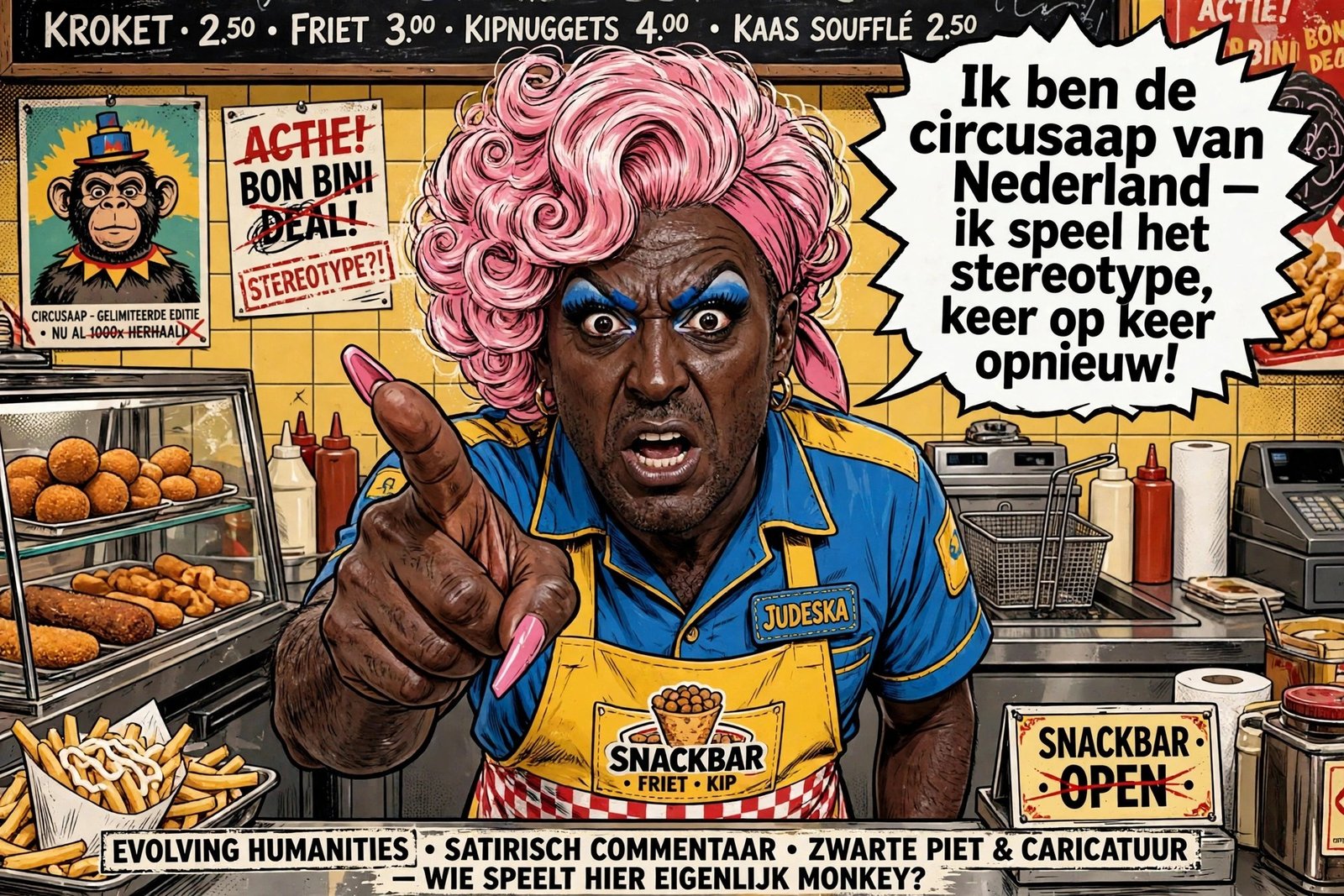
The framing behind this investigation cast Judeska as the modern descendant of the Piet caricature — a Black Caribbean woman as a national joke, the femme fatale of the old four-continents imagery shrunk to a snack-bar counter. The record supports a more careful version, and the differences are the story. Judeska is not blackface: she is created and performed by a man born in Willemstad, Curaçao, playing — by his own account — a woman from Curaçao, in a body of work a Utrecht University thesis analyses as ethnic self-mockery. That thesis is double-edged: it finds the early self-mockery largely reproduced negative discourses about his own community, functioning as a survival strategy in a television culture that offered few other doors. Inside Caribbean-Dutch scholarship the argument is live: the Curaçaoan scholar Aart Broek listed Judeska among emancipatory achievements — “the loud imagining of the emancipated own-ness” — and recorded, in 2025, an academic colleague’s objection that stereotyping a certain kind of Afro-Curaçaoan women and men cannot count as emancipation at all. Asporaat’s defence, in a Volkskrant interview quoted by KRO-NCRV, hands the responsibility to the audience:
“If you think all women on Curaçao talk like that, that’s your shortcoming, not mine.” — Jandino Asporaat
The Dutch reviewing record noticed the machinery without ever quite indicting it. FilmTotaal, on the 2023 sequel, wrote that “it wouldn’t be a real Bon Bini film if dodgy stereotypes weren’t thrown around,” listing the film’s own catalogue — and the country’s major broadsheet film desks largely never reviewed the franchise at all. One comparison the record does not contain should be flagged, because it is the first one an American reader reaches for: no Dutch or English coverage found in this investigation compares Judeska to Tyler Perry’s Madea; the comparison Asporaat and his reviewers actually make is to Eddie Murphy’s multi-role work in The Nutty Professor, which Asporaat names as his model. And a 2015 allegation that Judeska was plagiarised from Anjelah Johnson’s American fast-food character Bon Qui Qui — made on air by DJ Giel Beelen — was never adjudicated and sits in the record as an allegation only.
The sharpest divergence from the expectation behind this investigation is the last one. There is no documented overseas backlash to Judeska: no international trade-press reviews, no Rotten Tomatoes presence, no diaspora campaign. The films barely travelled beyond the Netherlands and the Dutch Caribbean — where, on Curaçao, they are the best-attended Dutch films ever shown. The discomfort this investigation expected to find in non-Dutch reviews exists, but it lives at home: in the academic debate, in the stereotype-conscious reviewers, in the KRO-NCRV argument that a stereotype repeated often enough works against emancipation whoever performs it. The pattern underneath is the one this investigation keeps meeting. The chocolate sweet long sold as the negerzoen became Buys Zoenen in 2006, after a slavery-victims foundation asked, with the company calling it modernisation. HEMA’s moorkop became the chocobol in 2020, in the name of the spirit of the times, to furious backlash. Again and again: a caricature defended as just what it has always been called, a complaint from the people it depicts, a rename in soft language, and a fight about whether anything was ever wrong. Zwarte Piet is not an exception in Dutch culture. He is the largest instance of its recurring argument.
What we could not verify
- Whether Schenkman’s first edition appeared in 1845 or 1850 — reputable sources conflict; Meertens, Dutch reference works and the book’s scholarship say 1850, a 2014 Leiden thesis underpins 1845
- The earliest appearance of the chimney-soot explanation — claimed for 1911 in one reference version and the 1940s in another; no primary text was opened that settles it
- Any document showing Schenkman attended, saw or copied a minstrel performance — none exists in the scholarship reviewed; the influence case rests on chronology, milieu and the developed figure’s form
- Recent Hart van Nederland panel figures (62–72% pro-traditional, 2023–2026) circulating in partisan republications — the primary reports were not opened, so the figures are not published here
- A current census of how many Dutch arrivals still use full blackface — the last municipal census opened is the AD’s from 2021; claims about 2026 town-by-town would be extrapolation
- Non-Dutch critical reception of Judeska — essentially absent from the record; the films were barely reviewed or distributed outside the Netherlands and the Dutch Caribbean
- The exact date the full stereotype (lips, wig, earrings, accent) first appeared complete — the evidence shows it assembling gradually and “most manifest” in the first half of the 20th century, not debuting on a single day
- Whether a Dutch court has ever ruled on an employee disciplined over performing or refusing blackface Piet — no such judgment was found in this research, which is a limit of the search, not proof none exists
Sources
- Zwarte Piet — Wikipedia (history, depiction, debate overview) — en.wikipedia.org
- Meertens Institute, “Piet en Sint — Frequently Asked Questions” (2013) — dekomediant.nl
- Elisabeth Koning, “Zwarte Piet, a blackface character: A century of blackface entertainment in the Netherlands,” Tijdschrift voor Geschiedenis 131/4 (2018) — aup-online.com
- Paavo Van der Eecken interview, UAntwerpen Magazine — magazine.uantwerpen.be
- National Geographic, “The ‘Black Pete’ Christmas character is dividing a country” — nationalgeographic.com
- UN experts’ statement, “Black Pete & Sinterklaas” (OHCHR, 2013) — ohchr.org
- Special Rapporteur Tendayi Achiume, end-of-mission statement on the Netherlands (OHCHR, 2019) — ohchr.org
- Koen Lemmens, “The dark side of ‘Zwarte Piet’: a misunderstood tradition or racism in disguise? A legal analysis” (2017) — researchgate.net
- Meta Oversight Board, Case 2021-002-FB-UA, “Depiction of Zwarte Piet” — globalfreedomofexpression.columbia.edu
- Ipsos I&O, “Nederlanders over Zwarte Piet,” report 2024/297 — ipsos-publiek.nl
- Zwartepietendebat — Dutch Wikipedia (EenVandaag polling series, municipal history) — nl.wikipedia.org
- Nederland Wordt Beter — Wikipedia (movement history, dissolution) — en.wikipedia.org
- Van Veen et al., “National Identification, Social Dominance Orientation, and Attitudes Towards Black Pete in the Netherlands,” Social Psychological Bulletin (2022) — spb.psychopen.eu
- Sarah J. Adams, “Blackface Burlesque: Changing Praxes and Poetics of Blackness in the Dutch Repertoire before Minstrelsy, 1790–1830” — dspace.library.uu.nl
- Bon Bini Holland — Wikipedia — en.wikipedia.org
- FilmTotaal, review of Bon Bini: Bangkok Nights (2023) — filmtotaal.nl
- KRO-NCRV Brandpunt+, “Stop casting Asian actors as ‘crazy Chinese'” (2024; quotes Asporaat’s Volkskrant interview) — kro-ncrv.nl
- Alex Rosaria, “Black Petes… a despicable racist tradition,” Curaçao Chronicle — curacaochronicle.com
- The People’s Tribune SXM, “After 15 years, Dutch anti-blackface group declares victory — but Aruba brings him back” — thepeoplestribunesxm.com
- Der Spiegel (English), “Netherlands Says Goodbye to Blackfaced Zwarte Piet” — derspiegel.substack.com
- Jamelle Bouie, “Jim Crow,” Nerd Stuff video essay (transcript supplied for this investigation)
- C. Vann Woodward, The Strange Career of Jim Crow (Oxford University Press, 1955)
- “Jump Jim Crow” performed by Billy Wayne, clip from Minstrel Days (Vitaphone, 1941) — youtu.be
- Censored Eleven — Wikipedia — en.wikipedia.org
Leave a comment
Comment as a guest and verify your email, or sign in or create a reader account. Guest comments reach our review queue after email verification; account holders can submit directly for review.