Listen to this article
Take the story with you. Choose a voice and a pace that suits you.
Or listen in another language / choose a voice
Getting your device voices ready…
The voice follows the displayed language and your browser’s regional preference when available. You can choose another narration voice.
Investigation. Evidence checked and tiered — documented, contested, unverified — through 6 November 2026. Allegations are attributed; nothing in this report treats an allegation as a finding.
TL;DR: A claim now circulating widely holds that Black people are hunted as a game in small towns in central France. No source found documents that as a practice. But one real village case sits underneath the claim — Royère-de-Vassivière, in the Creuse, where complainants allege a racist pursuit on the night of 15–16 August 2025 — and the French state's handling of it is documented in detail: a prosecutor who discarded the racist motive, a government that never publicly reacted, and a parliament exchange in which the case was named and then not answered. Around it, the official record shows racist violence in rural France rising, and repeatedly struggling to keep its name in court.
The claim reached a wide audience in October 2026, through a widely shared post in which two men describe it plainly: in small towns in the middle of France, groups go out looking for Black people to beat, as a game — under the on-screen headline "BLACK PEOPLE ARE HUNTED IN THIS PART OF RURAL FRANCE."
The claim named no town. It named no date, no victim, no incident. And yet it landed on ground that was already prepared — because fifteen months earlier, in a village of some 570 people in the Creuse, a group of friends had filed complaints alleging something very close to what the claim describes, in words that entered the French parliamentary record as a chasse aux Noirs dans la Creuse — a hunt for Black people in the Creuse.
This investigation separates three things the online debate keeps fusing into one. First, the general claim in circulation: a recurring, organised practice of hunting Black people as a game in rural France. Second, the Creuse case itself: a specific, heavily reported night, with two irreconcilable versions and a judicial outcome that satisfied neither. Third, the documented pattern: real racist violence in France between 2024 and 2026, prosecuted as such, including two cases seized by the national anti-terrorism prosecutor. The first claim is unproven. The second is contested. The third is established — and it is the third, together with the state's response to the second, that carries the weight of this report.
At a glance
The claim, tested
Start with the claim itself, because the honest findings about it are mostly negative — and they matter.
The claim is asserted in the present tense — "they go out" looking for Black people to beat, as a game — and called very dangerous; a second voice recalls first hearing of it as a child and thinking it was like a movie — "it's not possible." Read carefully, that is transmitted knowledge delivered as a warning, not a dated first-person account. Neither man is named, and no version of the claim this investigation found names the Creuse case, Royère-de-Vassivière, or any incident at all. A longer supporting account was said to exist; this investigation could not locate it — not in YouTube search, not in an index of the posting channel's videos, which run to dozens of titles on travel and expat themes, none of them about France, racism or hunting. It may sit behind a bio link or a paywall. As of 6 November 2026, its existence and content are unverified, and nothing in this report relies on it.
The comment debate under the post, sampled across some fifty recent comments, splits into recognisable camps. There is affirmation and testimony — "I went to school there. It's terrible and everyone gaslights you the whole time." There is the dominant imported frame: "They got sun down towns overseas!?" — the American sundown town, a documented institution of racial exclusion after dark, mapped onto a country where no equivalent system has been documented. There are demands for the location — "Name me the town?" — which are, as an evidentiary matter, a fair challenge to a claim that names none. There is outright rejection: "The fact he didn't name one city tells you everything." And there is a substantial strand calling for retaliation and arming, which tells its own story about what a claim like this does once it travels.
Two checks complete the picture. No fact-check of the claim exists at any major desk this investigation searched — not at AFP Factuel, not at France 24's Observers, not at Le Monde's Décodeurs, Libération's CheckNews, Franceinfo's Vrai ou Faux, or Snopes — as of 6 November 2026. And the claim's geography never travelled in the other direction either: the Creuse case, with its full judicial paper trail, received no coverage in English, Spanish, German or Dutch indexed press that this investigation could find. A French local case that never left France; an English-language general claim that circled the world with no paper trail at all. That asymmetry is not a footnote. It is close to the whole story.
The verdict on the claim, stated plainly: no historian, human-rights monitor, court record or newsroom found for this report documents a recurring, organised practice of hunting Black people as a game in small towns in central France. France does have a documented history of organised racist group violence — the ratonnades, the punitive expeditions against North Africans that scarred Marseille and the Midi in 1973, when up to fifty Algerians were killed nationally in a single year, sit in the academic record, as do 731 racist crimes between 1970 and 2000 in the database assembled by the sociologist Rachida Brahim. But those expeditions targeted North Africans, in cities, in a post-colonial war's long shadow. They prove a capacity. They do not document the practice the claim asserts. What documents something — one night, one village, contested in almost every particular — is the Creuse case. So to the Creuse.
One night in Royère-de-Vassivière
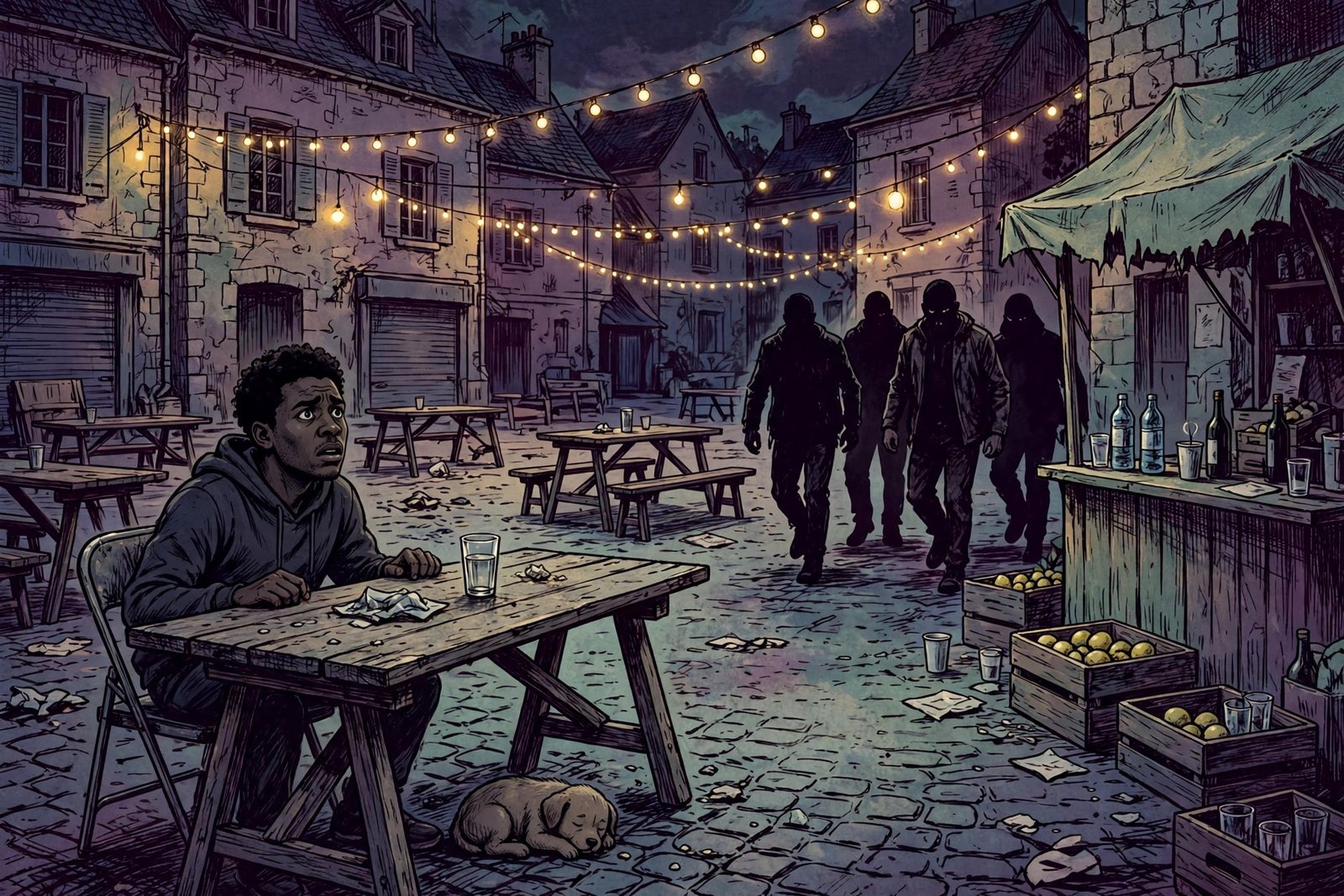
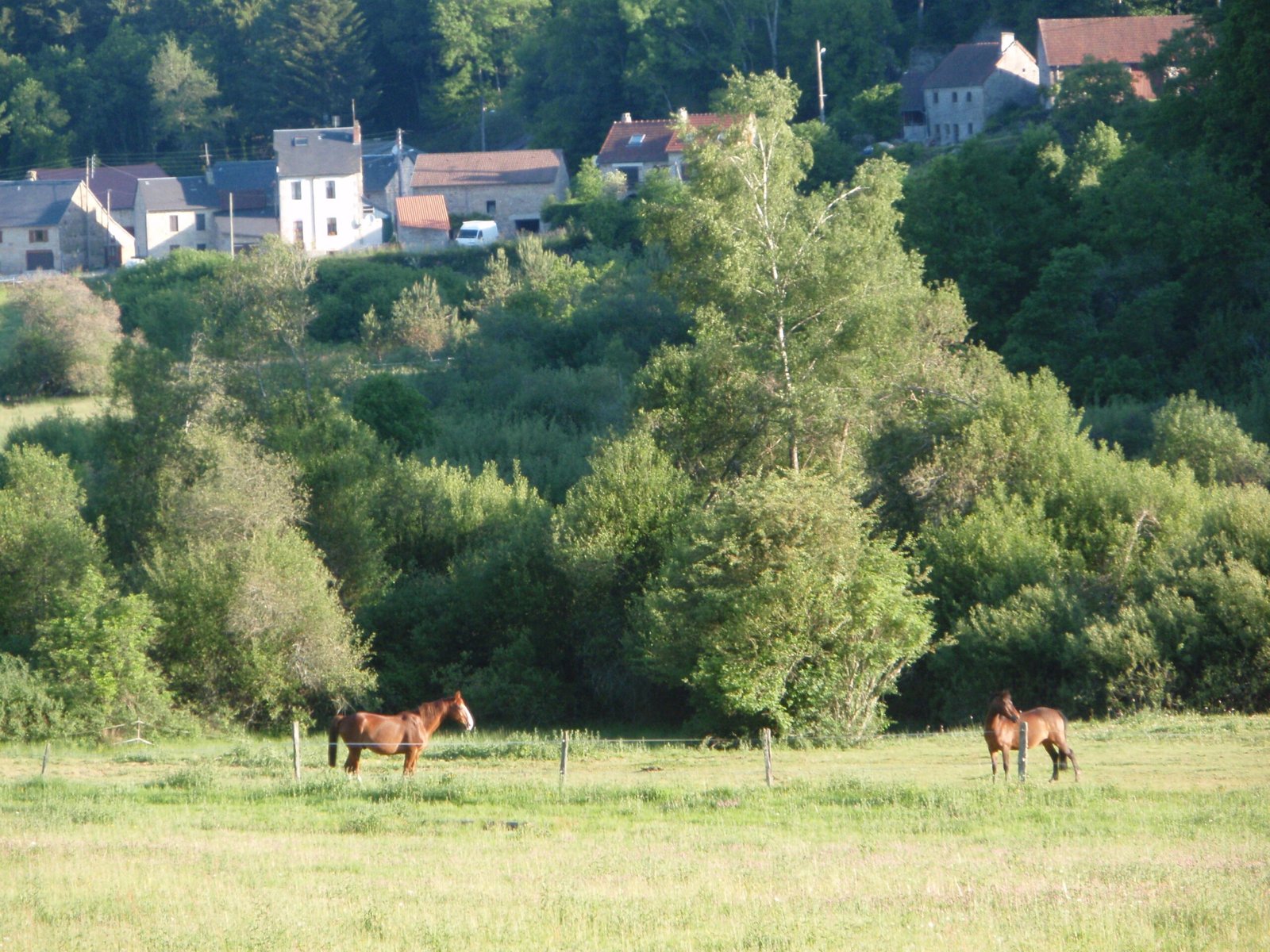
Royère-de-Vassivière sits on the Millevaches plateau in the Creuse, in Nouvelle-Aquitaine, near the lake that shares its name. On the night of Friday 15 to Saturday 16 August 2025, the village was holding its summer festival — the fête du 15 août, more precisely its agricultural fair, the comices agricoles. What follows is the complainants' account, as reported by Mediapart, which read four of the complaints, and consistently by Libération and the local Journal IPNS. It is alleged. It has never been accepted by a court. It is presented here because it is the allegation the whole national argument is about.
After two in the morning, near the drinks stand, a member of the organising committee — also president of the local hunting association — approached a group of about ten friends and, on the complainants' account, reproached the group's only Black member, a man of 26, aggressively, over his dog not being on a lead. The young man says the dog was "a three-month-old puppy lying at my feet under the table." Then, allegedly, the first racist insult — one complainant says another corroborates it:
"You have no business here, dirty Black [man]." — Alleged insult, as recorded in the complaints reported by Mediapart, 26 August 2025
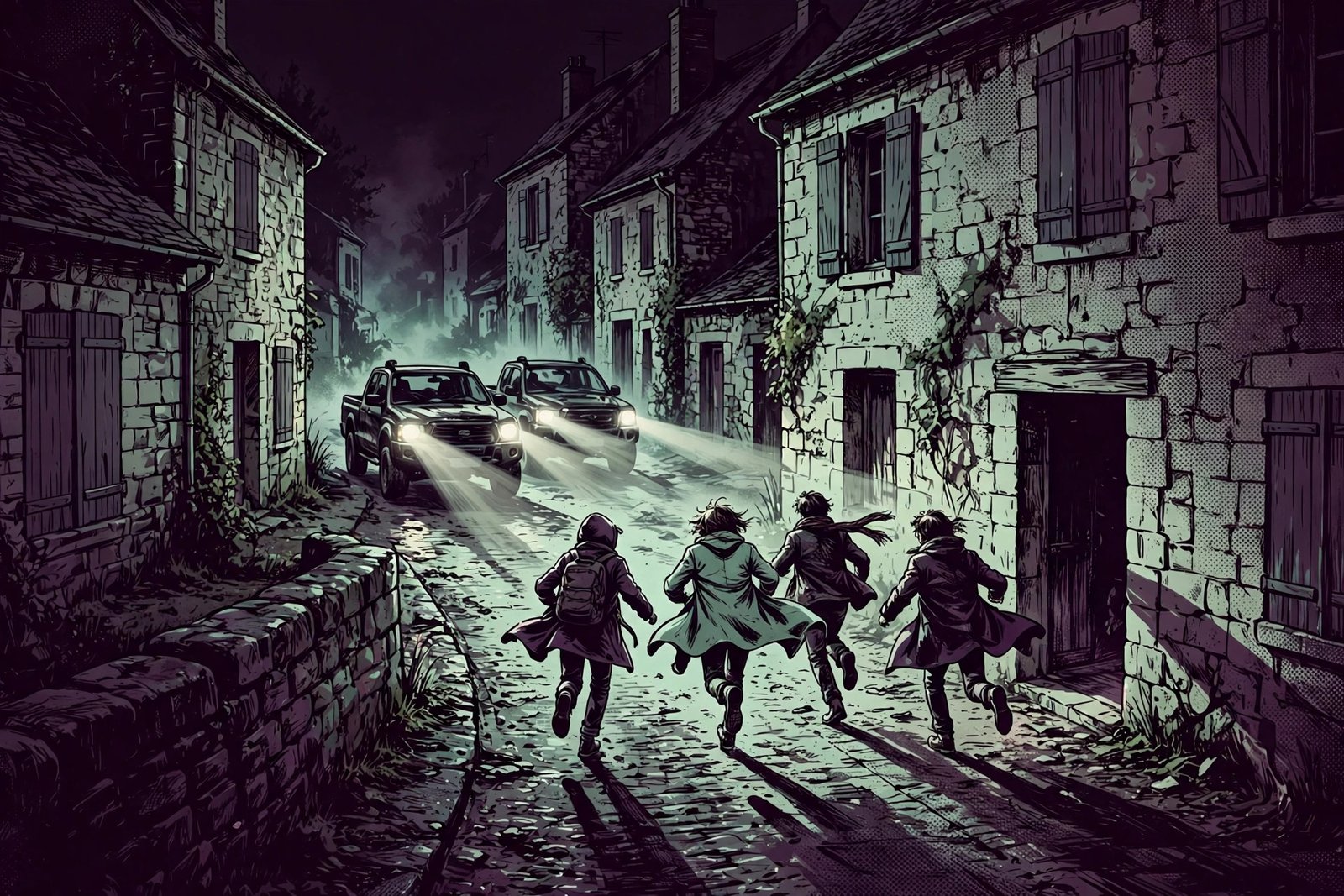
Blows followed, on this account: punches and kicks. A woman complainant of 20 alleges she was grabbed by the throat, thrown to the ground and kicked until she lost consciousness. A complainant of 25 alleges an assailant pinned an elected official who had tried to intervene to the ground, pressing an elbow against his neck. The group fled — and alleges it was then pursued through the village by up to five pick-ups and some fifteen people on foot, communicating by walkie-talkies, with cries the complainants reported as:
"Where is that n*, we're going to kill him" — Alleged cry during the pursuit, as reported in the complaints
"The n* hunt is open" — Alleged cry, reported as heard by one complainant via another witness
The local Journal IPNS, published on the plateau itself, recorded the same phrases from Place de la Mayade, the village square: attackers heard saying "where is the n," "we're going to kill him," "it's the n hunt." The main complainant sheltered — Mediapart, which read the complaints, says in a cellar — until gendarmes arrived in the small hours. At a press conference on 25 August, he rejected the framing that would later become official:
"No, it was not a fight between drunk people. We lived through a beating by an organised gang, and our only response was flight and getting to safety. We were ambushed." — The main complainant, press conference, 25 August 2025
The medical record is not in dispute in the same way: bruising and post-traumatic symptoms, with total work incapacity — ITT, in the French medico-legal measure — of six to fifteen days depending on the person. The complainants' lawyer acted for seven complainants; five complaints had been filed by 25 August, for group violence with premeditation, public insults, incitement, and racist violence and insults; by early September, the Journal IPNS reported seven filed. On Monday 25 August, more than three hundred people rallied in the village behind a banner that read: "In our villages, no racism, no violence."
The other version was present from the first day's coverage, and an honest report has to carry it in full. A municipal councillor on the organising committee described, via the regional daily La Montagne, a group of about ten drunk young people at the end of the evening trying to steal cups:
"They started throwing bottles at us, and we didn't let it go. They ran off afterwards. But yes, there was shouting, that's for sure." — A municipal councillor and organising-committee member, via La Montagne
The hunting-association president called it a "bousculade" — a scuffle — and said "there wasn't even a fight":
"I am an honest person, I am not at all racist, I am of no political side. But they have made a political story out of it. That disgusts me." — The president of the local hunting association, to Mediapart
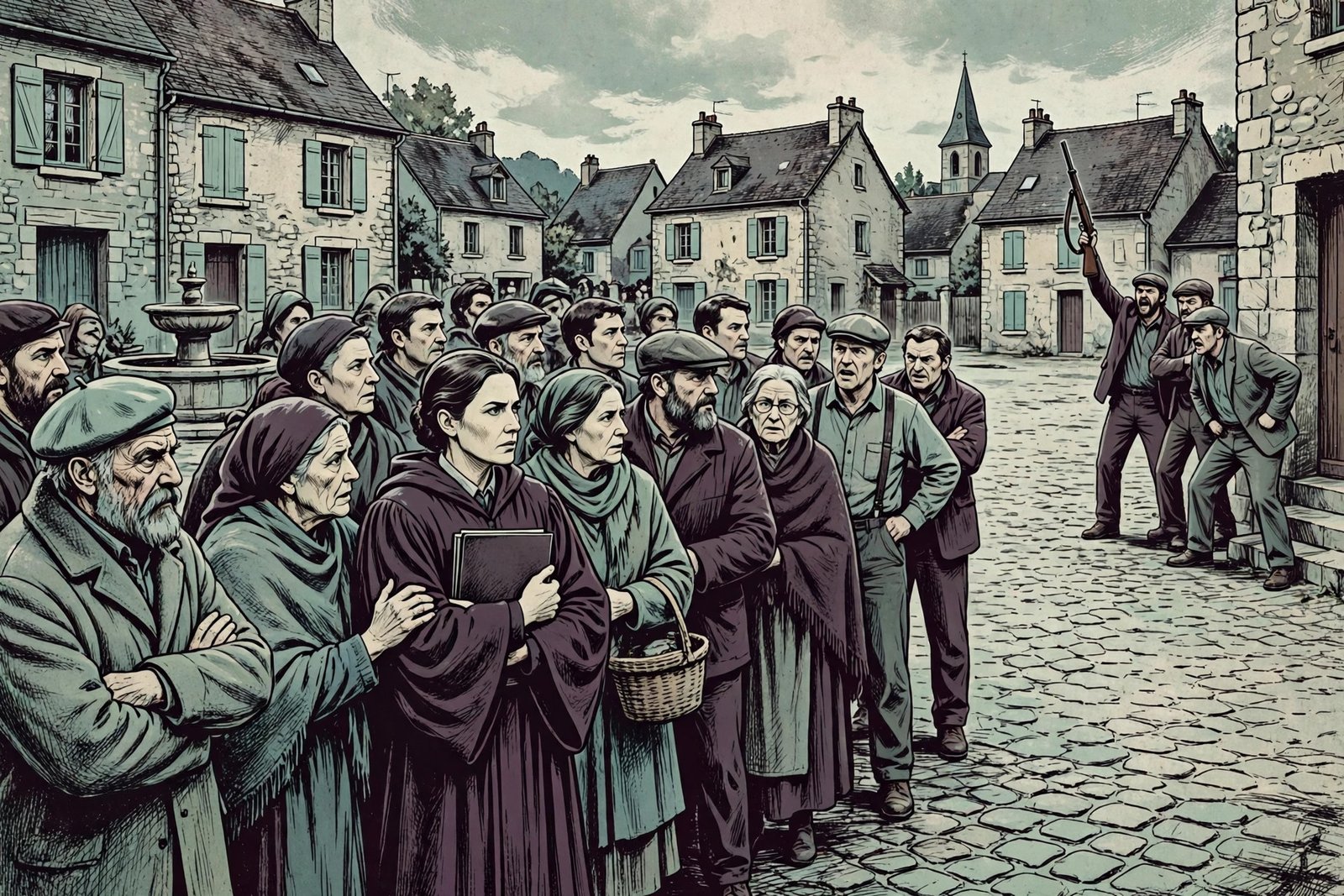
A gendarmerie source, relayed by La Montagne, landed between the two accounts: discriminatory remarks were confirmed; a "chasse à l'homme" — a manhunt — was denied. No arrest or police custody is reported at any stage, in any source this investigation found. The mayor first declined to comment, calling the affair a private matter; the organising committee's statement condemned "any act of violence" and renewed its support for the injured, without mentioning any racist character. No public statement by the prefect of the Creuse was found.
One correction belongs here, because the circulating version of this story gets it wrong, and getting it wrong changes what the night was. There were no firearms in the night itself, in any press source. The rifle threats and Nazi salutes in the record were directed at the victims' lawyer, around the support rally of 25 August. The lawyers' union, the Syndicat des avocats de France, corroborated that separately on 29 August: since the rally, the lawyer had faced far-right harassment; witnesses reported individuals performing Nazi salutes while she was heckled; threats allegedly heard included "next time, I'll come back to see her with a rifle." She filed a complaint; the union recorded fifteen days of work incapacity for her, and a bar committee letter to the Justice Minister later documented death and rape threats and doxxing against her. A lawyer threatened with a rifle for representing complainants in a village violence case is not a detail. It is part of the record of what happened next — and it happened in daylight, around a solidarity rally, not in the contested dark of the festival night.
Reader documents — the Creuse case in Parliament: the parliamentary question that carried this case into the national record is reproduced in full in the documents section below, with a direct download.
The prosecutor decides
On 5 November 2025, the public prosecutor of Guéret issued the decision that defines the case in law. Reported the same day by La Montagne, France Bleu, Franceinfo and Le Journal du Dimanche, it discarded the racist motive entirely. Investigators, Franceinfo noted, had "observed significant discrepancies in the complainants' versions." Of everything alleged — the insult, the beatings, the pursuit, the cries — the prosecution retained a single act of violence, with incapacity of less than eight days, against one complainant, with no racist aggravating circumstance. The one man prosecuted, who had no criminal record, would not face a court: his case was settled by composition pénale, a negotiated penal settlement, requiring a citizenship course and compensation to the victim. Everything else was classé sans suite — closed without further action.
"Only one person under investigation, with no criminal record, is therefore being prosecuted by way of a composition pénale comprising the obligations to complete a citizenship course and to compensate the victim." — Guéret prosecutor's communiqué, 5 November 2025, as reproduced from La Montagne
The headlines wrote the conclusion plainly: "Justice discards racist motivations in the violence of the night of 15 August at Royère-de-Vassivière"; "The 'hunt for the Black man' thesis discarded by justice." A week later, on 12 November, the victims' lawyers replied, expressing:
"Their astonishment at the decisions taken" — The victims' lawyers, 12 November 2025
They said they were considering remedies. Whether any remedy was actually filed, and whether the settlement was executed, could not be verified from press sources — a gap this report flags rather than fills.
Two readings of the November decision now circulate, and both outrun the record. On one side, far-right commentators seized on it to brand the August coverage "fake news." But the prosecutor retained a violence charge: "motive not retained" is not "nothing happened," and the complainants' counsel contests the decision on the record. On the other side, the strongest version of the August claim — an organised racist hunt, established — is not what the evidence, as tested by investigators who cited real discrepancies between accounts, was found to support. What sits between those two overclaims is the documented residue: discriminatory remarks confirmed by a gendarmerie source; injuries certified at up to fifteen days; seven complainants; one minor violence conviction-by-settlement; a lawyer harassed with Nazi salutes and a rifle threat; and a racist motive alleged by victims and witnesses that the justice system, applying its standard of certainty, declined to retain. That pattern — allegation, investigation, motive discarded — will recur through every case in this report. It is, arguably, the report.
Parliament asks. The minister answers — about something else
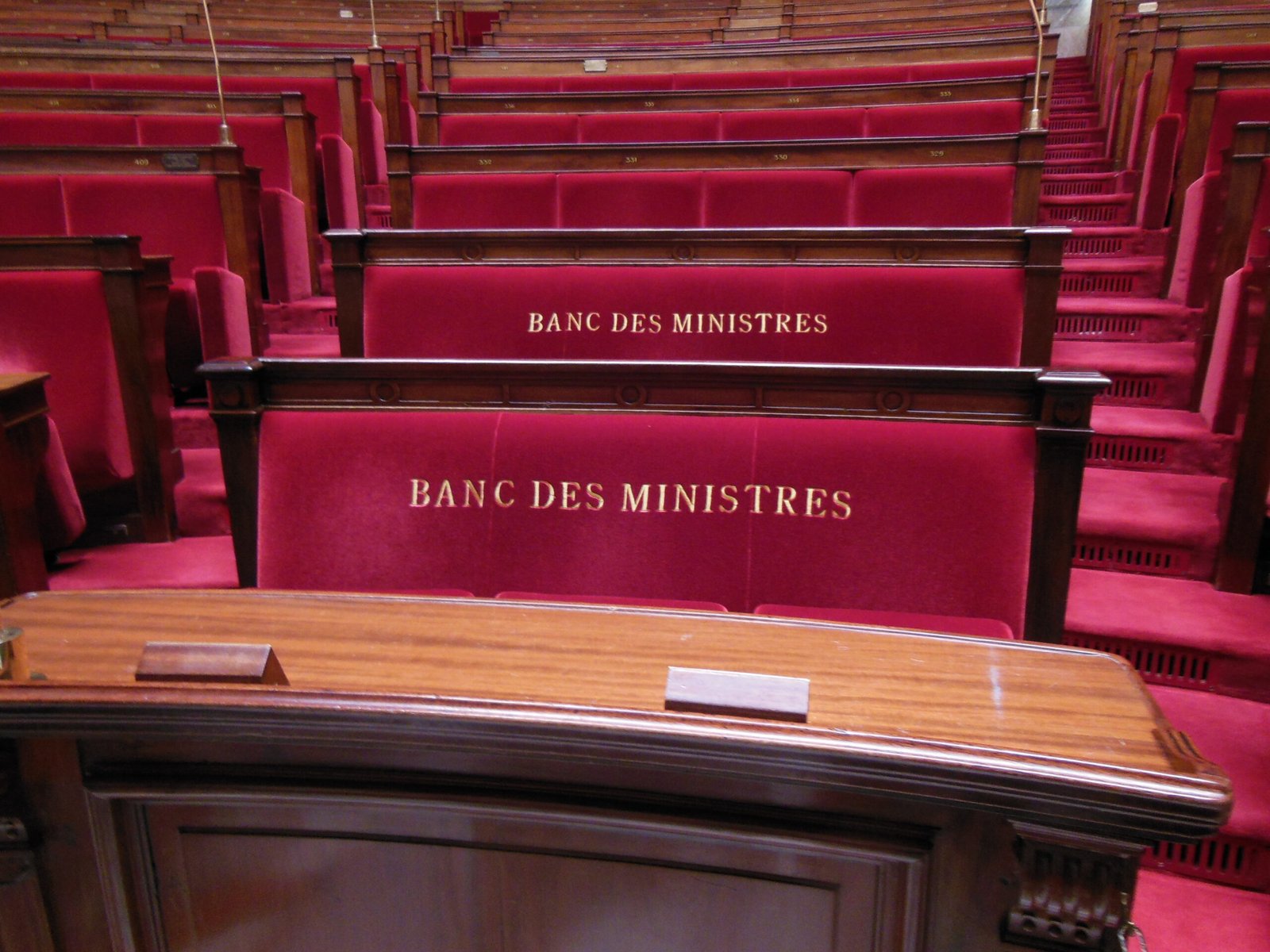
The Creuse case reached the national stage once, and the exchange is worth reading closely, because it is the precise, documentable form of the silence this report is about.
On 29 October 2025, in a question to the government in the National Assembly, the deputy Sabrina Sebaihi raised the Brienne-le-Château affair — a skydiving-club party, eleven days earlier, at which men had dressed as Ku Klux Klan members and others in blackface around a fire. Her question ranged wider, across what she called negrophobia advancing in plain sight:
"Negrophobia is advancing in plain sight: racist murders, a hunt for Black people in the Creuse, blackface trivialised on television, racial insults on social networks, in the street, at work — that is the daily life of millions of French people." — Sabrina Sebaihi, National Assembly, 29 October 2025
"Faced with this, the government's silence is an inexcusable fault. That silence legitimises hatred, trivialises violence and ranks lives in a hierarchy. By not condemning, you send the message that indignation comes in shades: the darker the skin, the more the indignation fades." — Sabrina Sebaihi, National Assembly, 29 October 2025
The Interior Minister, Laurent Nuñez, answered in the same sitting. On Brienne, he was unambiguous — pressed twice, "Do you condemn these acts?", he replied:
"I condemn them very clearly, I have said so! The government is indignant; I expressed that condemnation without ambiguity." — Laurent Nuñez, Interior Minister, National Assembly, 29 October 2025
He described the Brienne staging as profoundly shocking, saluted the parachuting federation president who had reported it to prosecutors, confirmed that two of those involved were Paris fire brigade servicemen facing a disciplinary inquiry, and closed on the government's anti-racism policy: "we are likewise uncompromising and will let nothing pass."
The Creuse — named in the question, in a list the minister had just heard — receives not one word in the answer. No confirmation, no condemnation, no commitment, no acknowledgement that the case exists. And the parliamentary exchange is not an outlier. This investigation ran targeted searches for any reaction to the Royère case by the Interior Minister of the time, the government spokesperson, the Prime Minister, the state's anti-racism delegation or the presidency, across August and September 2025 and after: none was found, in the coverage or in the record. Opposition parties reacted — the left's parliamentary group formally referred the case to the Guéret prosecutor; deputies wrote to the prefect demanding seizure of weapons and suspension of hunting licences; the Greens blamed the Interior Minister's rhetoric for creating the breeding ground. From the government: nothing that any search could find. Months later, in July 2026, a deputy recalled the case on the Assembly floor and said the ministers "were in airplane mode." The phrase is partisan. The underlying fact — no ministerial reaction found, then or later — is a search result this investigation can stand over, stated exactly as it is: evidence of no widely reported reaction, not proof that no word was ever uttered anywhere.
Interactive — test the silence yourself: the full text of Question No. 930 and the minister's answer are downloadable below. Read the question, then search the answer for "Creuse." The count is zero. That is the finding, and you do not have to take this report's word for it.
Reader download: National Assembly — Question to the Government No. 930, full official record (PDF)
Brienne: the party, the trial, the acquittal
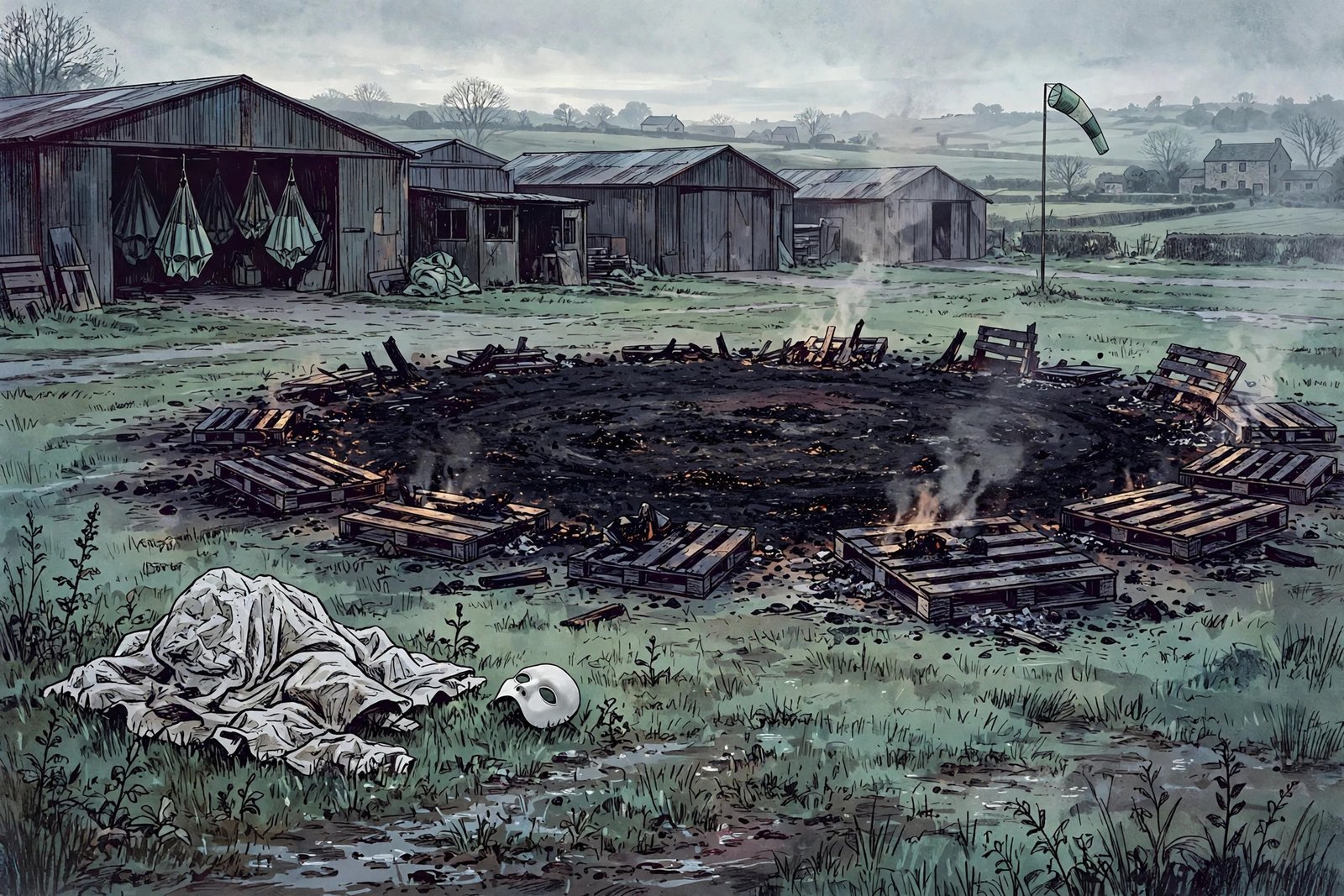
The case the minister did answer deserves its own account, because its arc ends where the Creuse case ended — with a court declining to find what victims and witnesses said was in front of it.
On the night of 18 to 19 October 2025, at the airfield of Brienne-le-Château in the Aube, a skydiving club held its season-closing party. The theme, trial reports say, was "Superheroes, super-villains." Five participants wore white hooded Ku Klux Klan robes; three wore blackface; a ninth filmed. Around a pallet fire, the robed participants mimed strangling and executing the blackfaced ones. The local paper broke the story two days later; the president of the French Parachuting Federation reported the matter to the prosecutor the same day and called the scene:
"Chilling, of an absolute horror" — The president of the French Parachuting Federation, October 2025
The federation's statement added that the scene was "prepared in advance" and insisted: "This is not at all an alcohol-fuelled excess." It filed a complaint and banned all nine from jumping as a precaution. The Paris fire brigade opened an internal inquiry into two off-duty servicemen among the participants, who were later suspended as a precaution. The Troyes prosecutor opened an inquiry for public provocation to hatred or violence on racial grounds.
At trial in Troyes on 2 December 2025, nine defendants aged from their early twenties to their mid-fifties faced that charge. The prosecution pointed to the mimed agony of the "victims" and framed the case as the trivialisation of a latent racism; it requested fines. The defence pleaded ignorance and context — for one defendant, the Klan was "just a sect," and image searches had shown "no visible racist character"; the evening was, in the phrase that ran through the defence, "just a game between friends." A fact that became legally decisive hovered over the charge: provocation had to be public, and the defence maintained the video had circulated only in a private messaging group.
On 9 January 2026, the court acquitted all nine. The president of the court, as reported:
"Although the scene depicted may offend, we considered that it contains no call to hatred or violence" — President of the Troyes court, 9 January 2026
SOS Racisme responded that the general acquittal:
"Arouses profound indignation and acute concern as to the message it sends in the current context of a resurgence of racist acts and discourse" — SOS Racisme, 9 January 2026
Whether anyone appealed the acquittal could not be verified. The federation's precautionary ban stands in the record; no final disciplinary outcomes were found. So the Brienne file closes, like the Creuse file, with the imagery undisputed — robes, blackface, a fire, a mimed execution, all of it filmed — and the legal characterisation refused. What the law required, a call to hatred or violence, the court could not find in a Ku Klux Klan tableau performed as a party game. Readers can judge for themselves what that gap between the visible and the provable does to public trust; the pattern section that follows suggests it is not an isolated gap. Blackface defended as harmless party dress has a longer European history than one night in the Aube: our investigation into Zwarte Piet, the blackface figure at the heart of the Dutch Sinterklaas festival, follows a neighbouring country arguing its way through the same defence — that it was only a game, only a costume, only tradition.
The pattern: what prosecutors have established, 2024–2026
If the circulating claim fails for want of evidence, the documented pattern needs none supplied by advocates. It is built from prosecutors' own characterisations. All suspects below are under formal investigation; none is reported convicted in the sources found, and the presumption of innocence applies to each.
La Grand-Combe, 25 April 2025. In a commune of fewer than five thousand people in the Gard, a 22-year-old Malian man was cleaning the Khadidja mosque before Friday prayer when an attacker stabbed him — fifty-seven wounds in the prosecutor-based reporting — and filmed the dying man while uttering anti-Islam insults. The suspect surrendered in Italy days later and was placed under formal investigation for assassination because of race or religion. The national anti-terrorism prosecutor, the PNAT, followed the case but did not take it, judging the act isolated, without ideological claim or organisational link; the prosecutor described drivers that were "deeply personal — the urge to kill someone, whoever the target," against a background of "morbid fascination." The Prime Minister called it an "Islamophobic ignominy"; the President condemned racism and hatred because of religion without using the word Islamophobia — a refusal that became its own controversy, as did the Interior Minister's late and contested reaction. Then the case took the turn that recurs throughout this report: a first psychiatric assessment concluded the suspect's discernment had been abolished by a psychotic disorder, and he was moved from prison into compulsory psychiatric hospitalisation while a second assessment was ordered. As of November 2026, no final ruling on criminal responsibility and no trial date had been found. A racist assassination, filmed by its perpetrator, may never reach an assize courtroom — not because the motive was rejected, but because the mind behind it may be ruled absent.
Puget-sur-Argens, 31 May 2025. A Tunisian hairdresser was shot five times by his neighbour outside his salon in this Var town; a second neighbour was wounded. The gunman had published racist videos before and after the shooting, saying Arabs had to be killed. On 2 June 2025 the PNAT seized the case — the first time since its creation in 2019 that the anti-terrorism prosecutor took a homicide potentially linked to the far right. The suspect was placed under investigation for assassination and attempted assassination in connection with a terrorist enterprise, because of race, ethnicity, nation or religion; he acknowledges the shooting and denies racist or terrorist motive. The Interior Minister told the Senate:
"It is first of all a racist crime… racism is a poison, a poison that can kill" — The Interior Minister, Senate, 4 June 2025
The procedure is still ongoing, with no trial date found. Note what this case establishes against the Creuse silence: when the state chose to, it could name a racist killing as racist, at ministerial level, within days. The machinery of recognition exists. Its use is selective.
Cappelle-la-Grande, 31 August 2024. A 43-year-old specialised educator was run over, repeatedly, in front of his ten-year-old daughter, and died at the scene in this small town adjoining Dunkirk. The suspect — the former partner of the victim's partner — claims an accident. The family and associations allege months of racist insults and harassment. In January 2025, the justice system did not retain the racist motive, without excluding it later. Then, in June 2026, the Dunkirk prosecutor asked the investigating judge to retain murder "because of race, ethnicity, nation or religion" after all — a reversal revealed months later, whose adoption by the judge remains unconfirmed. The president of SOS Racisme had written, in February 2026:
"The judicial institution's too-frequent denial of racism is disastrous" — President of SOS Racisme, Le Monde, February 2026
Trappes and La Verrière, 23 October 2026. The pattern's extreme end is not rural, and this report says so plainly: these are suburbs west of Paris. A 39-year-old man fired a wartime submachine gun in bursts at eight locations across twelve kilometres, killing a 26-year-old amateur mixed martial arts fighter of Congolese origin and wounding seven people, four seriously — thirty victims in total on the PNAT's widest count, including a twelve-year-old girl hit outside a pharmacy. The PNAT seized the case within hours, on the qualification of assassination in connection with a terrorist enterprise with the racist circumstance. Per the anti-terrorism prosecutor, the suspect recognised having:
"Specifically targeted people of Muslim type, African or North African" — The suspect's account in custody, as reported by the national anti-terrorism prosecutor, 29 October 2026
He contested any terrorist intention, considering his action legitimate, prosecutors said; at his home were found a copy of Mein Kampf and dozens of self-made patriotic stickers. One early report — repeated widely, and repeated in an early statement by the Ligue des droits de l'Homme — placed party tracts in his car. The PNAT denied it, and the newspaper that first reported it corrected the record: the items were homemade stickers found at his home. This report does not repeat the tracts claim as fact, and flags it because the correction matters as much as the error: in a story about racist violence, accuracy is the whole argument. The President visited Trappes the same evening and called the attack a turning point — "the first time" a planned terrorist act had targeted compatriots for their skin colour or attributed religion. That claim was itself wrong in its broad form: Puget-sur-Argens had already been seized as racist terrorism the year before, and earlier attacks had killed for religion. A correction followed the same evening, narrowing the claim. The family, meanwhile, said days later that no minister had called them, and a promised national tribute had, at last report, no date.
Lay the four cases side by side and the themes organise themselves. The violence is real, and officially recognised as racist in three of the four. The recognition, though, is unstable: seized as terrorism in one town, routed to psychiatry in another, discarded then revived in a third, answered with presidential presence in a suburb and with silence in a village. The variable is not the evidence alone. It is which cases the institutions decide to see whole.
The numbers: a floor, not a ceiling
France counts racist crime through the Interior Ministry's statistical service, the SSMSI, and its 2025 release — published in March 2026 — is the spine of the official picture. Police and gendarmerie recorded 9,737 racist, xenophobic or anti-religious crimes and offences in 2025, up 5% on the year before. The composition matters more than the headline: physical violence rose 11% to 583 recorded attacks on life and physical integrity — including three completed homicides and three attempted homicides — while insults, provocations and defamation, the largest category, rose 6%. Victims of crimes and offences numbered 10,143. The series runs 8,428 recorded crimes and offences in 2023, 9,350 as first published for 2024, 9,737 in 2025: three consecutive years at or near historic highs, with the violent share rising fastest in the latest year.
| Measure (SSMSI) | 2025 | 2024 | Change |
|---|---|---|---|
| Racist crimes and offences recorded | 9,737 | 9,295 | +5% |
| Attacks on life and physical violence | 583 | 524 | +11% |
| Threats | 1,851 | 1,889 | −2% |
| Insults, provocations, defamation | 5,738 | 5,425 | +6% |
| Damage to property | 544 | 486 | +12% |
| Victims (crimes and offences) | 10,143 | 9,723 | +4% |
Reader download: Interior Ministry (SSMSI) — Racist, xenophobic and anti-religious offences in 2025, official release (PDF)
Two limits define what these numbers can say. First, there is no official anti-Black breakdown. The SSMSI series is built on the legal definition of racism and does not distinguish motives — antisemitic, anti-Muslim, anti-Asian, anti-Black. The national human rights commission states this explicitly. The only proxy in the data is that foreign nationals of African countries are over-represented among victims, which is not an anti-Black count. Any figure presented anywhere as an official French count of anti-Black offences is, on the record, fabricated or mislabelled — and a state that cannot count anti-Black crime separately cannot claim to know its scale. The nearest disparate-impact figure comes from the Defender of Rights' 2025 survey of identity checks: men perceived as Black, Arab or Maghrebi are four times more likely to be stopped than the rest of the population, and twelve times more likely to undergo a "pushed" check — a search, a pat-down, being taken to the station.
Second, the recorded figures are a floor. The ministry's own victimisation survey finds more than 1.7 million adults saying they were victims of at least one racist attack in 2023 — of whom 3.5% filed a complaint. The human rights commission's formulation is blunter:
"1.2 million people over 14 say they are victims each year of at least one racist attack… Yet 97% of them do not file a complaint. Under-reporting is not falling in France." — National Consultative Commission on Human Rights
The commission attributes the silence to distrust of institutions, difficulty in filing complaints, and the low number of convictions — a triad this report's case files illustrate from the inside. The judicial yield, on the commission's own figures for 2024, was 1,907 convictions from more than ten thousand cases handled by prosecutors, with convictions for discrimination itself running at between zero and eight per year. A system that convicts in single digits for discrimination, while recording nearly ten thousand racist offences, has a gap between promise and outcome that no communications strategy can close.
The plan that ran aground
In January 2023, the Prime Minister launched the national plan against racism, antisemitism and origin-based discrimination — PRADO 2023–2026: eighty actions across five axes, from naming the reality of racism to supporting victims, prepared with the human rights commission and the Defender of Rights, and launched, the commission would later recall, with unprecedented political backing. The government's own follow-up claimed half the measures completed by May 2025, and 70% achieved by the time a successor plan was launched in July 2026.
The independent post-mortem arrived first. In March 2026, the National Consultative Commission on Human Rights published its evaluation of the plan under a headline that left nothing to paraphrase: "a very disappointing record."
"Three years later, the CNCDH expresses its deep disappointment: the balance sheet is marked by failing governance resulting in a very low rate of concrete implementation of the planned measures." — National Consultative Commission on Human Rights, evaluation of the 2023–2026 plan, March 2026
"The evaluation reveals that several ministries quite simply abandoned whole sections of the Plan, without explanation or consultation of the follow-up committee." — National Consultative Commission on Human Rights, March 2026
Ministry by ministry, the grades were bleakest where this report's subject lives. Of the Interior Ministry — the ministry of police, of prefects, of the Creuse's silence: "no measure was fully implemented, half having been abandoned." Strengthening victimisation data: not implemented. Strengthening the penal response: not implemented. The commission's vice-president compared the plan to "a ship launched with many bottles of champagne that quickly ran aground in the sand." The state's anti-racism delegation replied that the evaluation contained numerous inaccuracies. The successor plan, launched in July 2026 with fifty-five measures, was received coolly by the associations; the Prime Minister's absence was read as disengagement from the top of the state, and the president of SOS Racisme remarked that nobody in government had spoken of racism for a long time, and that a minister finally saying the word was "always something."
Reader download: National Consultative Commission on Human Rights — Rapport 2025 press release (PDF) — and the commission's plan evaluation is linked in the sources below.
There is a final institutional irony, and this report handles it plainly because both halves of it are true. The organisation whose alert did most to amplify the Creuse case — the Ligue de Défense Noire Africaine, the LDNA — was dissolved by the French government by decree on 29 September 2021, after a procedure announced by the Interior Minister of the day, who called it a racist structure calling for hatred and discrimination. The dissolution decree's grounds included violent actions and the spread of an ideology of hatred — and, notably, an accusation that the league, under cover of denouncing anti-Black racist acts, instrumentalised cases involving Black people to accredit a permanent suspicion of racism. Its challenges to the dissolution were rejected. It never stopped operating: it signs communiqués from Brussels, including the Creuse alert of September 2025, which attributed the Nazi salutes and rifle threat — correctly, as the lawyers' union's corroboration shows — to supporters of the accused, aimed at the victims' lawyer. When the Guéret prosecutor discarded the racist motive two months later, the government's 2021 framing of the league acquired new life in commentary. But the victims' complaints, their lawyer, their medical certificates and their rally exist independently of the LDNA, and this report has kept them separate throughout. A dissolved organisation's amplification does not falsify a complaint; nor does a complaint validate everything an amplifier says about it. The state's position, though, invites a question it has never answered: if the body that reports anti-Black violence is dissolved for reporting it too loudly, and the ministry charged with answering it implements none of its own plan — who, in the French Republic's design, is left to say the thing out loud?
What the law requires — and what it cannot see
Legal analysis. French law does not treat racist motive as a separate crime; it runs as an aggravating circumstance through the penal code, and that architecture explains much of what this report has documented. To retain the circumstance, investigators must establish intention "with the certainty required by law" — a standard that group violence at night, amid alcohol and contradictory testimony, is structurally ill-suited to meet. The Creuse decision is that standard at work: discrepancies between complainants' versions were cited expressly, and what survived was the one act of violence that could be proved without its motive. The Brienne acquittal is the same architecture on a different charge: public provocation required a public call to hatred or violence, and a court held that a mimed lynching at a private party, however offensive, contained no such call. In the Bendjaballah case, the circumstance was refused in January 2025 and requested again in June 2026 — proof that the characterisation is revisable, and that its first refusal is a prosecutorial judgement, not a fact of nature. And in the two deadliest files, the law's other gate — criminal responsibility — may close the La Grand-Combe case before motive is ever tried, while the PNAT's terrorist qualification in Puget-sur-Argens and Trappes remains, at the time of writing, an investigative characterisation awaiting trial. None of this makes the outcomes wrong in law. It makes them predictable: a system that requires certainty about what was in a crowd's mind at two in the morning will reliably produce findings about fists and none about hatred. The victims' lawyers' "astonishment" and SOS Racisme's charge of institutional denial are, in legal terms, complaints about where that certainty threshold is set — and thresholds are policy choices, not laws of physics.
Psychological analysis. The human mechanisms in this record are as documented as the legal ones. Group violence at festivals follows a known grammar: alcohol, darkness, an in-group boundary suddenly policed — a dog off a lead, cups allegedly stolen — and deindividuation doing the rest, until a person becomes a category and a category becomes a target. The alleged cries in Royère, if they were shouted as complainants say, mark the moment of transformation precisely: a named individual disappears, and a hunt is announced. The defence grammar is equally consistent across cases separated by hundreds of kilometres: it was a scuffle, a game, a joke between friends — framings that ask listeners to weigh intent as the perpetrators felt it rather than impact as the targeted experienced it, and that courts, bound to intention, are primed to accept. For the targeted, the research consensus on racist victimisation is unambiguous about the sequelae: hypervigilance, withdrawal from public space, and the specific corrosive effect of official non-recognition — being told, in effect, that what happened to you happened, but not to you, not for the reason you know it happened. Fifteen days of certified incapacity measure the body. Nothing in the file measures the village a young man no longer walks through at night. And at population level, the commission's tolerance index sits near its historic high — 64 out of 100 — even as recorded offences climb: a majority society that reports itself tolerant, alongside minorities who report themselves hunted. Both measurements are real. The distance between them is the subject of this investigation.
What we could not verify
• Any longer interview expanding on the claim: none could be located — title, date, length and content unverified; no France or racism title appears in the posting channel's indexed videos.
• A verbatim transcript of the original post; the short phrases quoted are those on which multiple summaries of it converge, plus its on-screen text.
• The Guéret prosecutor's original communiqué text of 5 November 2025; the settlement passage quoted is via a La Montagne-sourced reproduction, corroborated in substance by four outlets.
• Whether the Royère complainants filed any remedy after 12 November 2025, and whether the composition pénale was executed.
• Whether the Brienne acquittal was appealed, and the final disciplinary outcomes for the two firefighters and the nine participants.
• Whether the investigating judge adopted the Dunkirk prosecutor's June 2026 request to retain the racist motive in the Bendjaballah case.
• Any government or prefectural statement on the Royère case: none found in targeted searches — a finding of no widely reported reaction, not proof of absolute non-existence.
• Any dedicated fact-check of the claim at a major desk, as of 6 November 2026: none found.
Conclusion: the hunt that could not be proved, the silence that could
The claim asked the wrong question in the right direction. There is no evidence that rural France hunts Black people as a game — no monitor, court or newsroom documents the practice, and this report will not pretend otherwise. But walk the documented record and a harder picture assembles itself. A village group alleges a racist pursuit, and the state answers with one settled misdemeanour and silence. A parliament names the case, and the minister answers another. A Klan tableau is filmed at a party, and a court finds no call to hatred in it. A mosque cleaner is stabbed fifty-seven times on camera by his killer, and the case drifts toward a psychiatric ward. A hairdresser is shot by a neighbour who broadcast his hatred, and the state — to its credit, once — calls it terrorism. Recorded racist offences stand at historic highs; the violent share climbs fastest; ninety-seven in a hundred victims never complain; and the ministry charged with the government's own anti-racism plan fully implemented none of it. You do not need a hunt to explain why a young man would believe there is one. You only need the record of what happened when the people who said it happened to them went to the state — and what the state said back. In the Creuse, it said nothing at all.
Documents for readers
• National Assembly — Question to the Government No. 930, full official record (PDF) — the question that named the Creuse, and the answer that did not.
• National Consultative Commission on Human Rights — Rapport 2025 press release (PDF)
Sources
• Assemblée nationale — Question to the Government No. 930 and the Interior Minister's answer, 29 October 2025
• Ministère de l'Intérieur (SSMSI) — Info Rapide No. 61, offences in 2025
• CNCDH — Evaluation of the 2023–2026 anti-racism plan, March 2026
• CNCDH — Rapport 2025, June 2026
• Mediapart (full text via Université Populaire de Toulouse) — Investigation into the Royère-de-Vassivière night, 26 August 2025
• Journal IPNS — Local reporting from the Millevaches plateau, 1 September 2025
• Syndicat des avocats de France — Statement on the harassment of the complainants' lawyer, 29 August 2025
• LDH Troyes et Aube — On the Brienne-le-Château party, 21 October 2025
• LDH — National statement on the Trappes attack, 24 October 2026
• Sénat — Interior Minister on the Puget-sur-Argens killing, 4 June 2025
• Le Monde — Trappes: thirty victims identified, 3 November 2026
• Le Monde — SOS Racisme on judicial denial of racism, February 2026
• Instagram — Post by @rebel_relics_lab, 25 October 2026
Photos: Lac de Vassivière, near Royère-de-Vassivière — via Wikimedia Commons (CC BY-SA 4.0). Village of Masgrangeas, Royère-de-Vassivière — via Wikimedia Commons (CC BY-SA 3.0). The hemicycle of the National Assembly — via Wikimedia Commons (CC BY-SA 3.0).
Leave a comment
Comment as a guest and verify your email, or sign in or create a reader account. Guest comments reach our review queue after email verification; account holders can submit directly for review.