Listen to this article
Take the story with you. Choose a voice and a pace that suits you.
Or listen in another language / choose a voice
Getting your device voices ready…
The voice follows the displayed language and your browser’s regional preference when available. You can choose another narration voice.
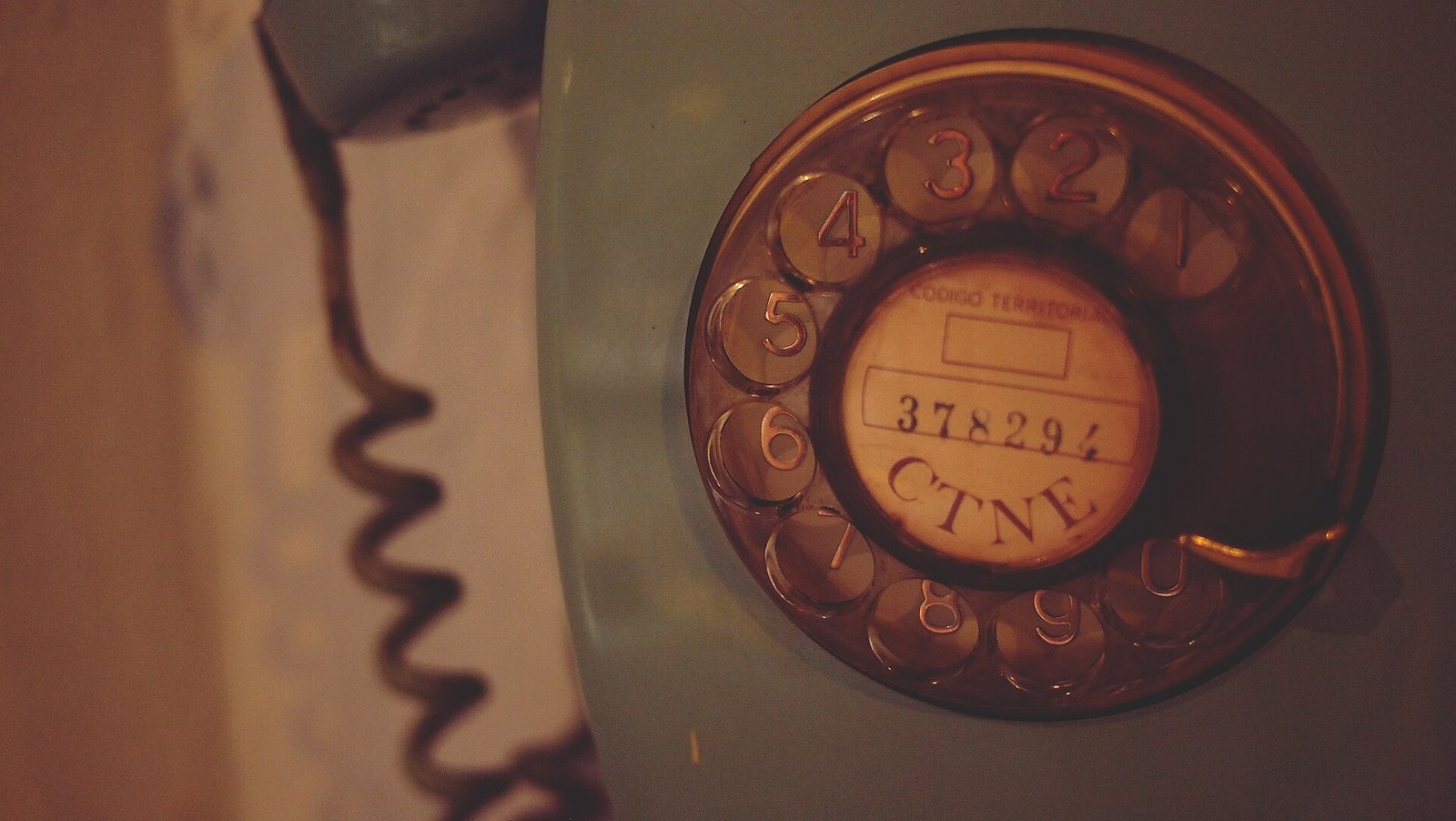
You carry its descendant everywhere and almost never think about it. That neglect is the opening James Gleick exploits in The Telephone: A New History, published by Farrar, Straus and Giroux on 10 November 2026 at 544 pages and $35, according to the publisher. This The Telephone James Gleick review is a review of the book through its published record — the publisher’s account and the critics who have weighed it — and the verdict forming around it is unusually consistent: a rich, pleasurable history of the wired century that goes quiet just as the phone becomes the computer in your pocket.
Information verified through 19 November 2026.
Gleick arrives with credentials reviewers keep citing. He is the author of Chaos and The Information, a finalist for the Pulitzer Prize and the National Book Award, as the publisher notes. Book Marks’ weekly tally, summarised in coverage of the week’s best-reviewed books, placed The Telephone first in nonfiction with four rave and three positive reviews. Publishers Weekly and Kirkus Reviews both gave it starred reviews, per the publisher’s page.
The Telephone James Gleick review: what the book covers, and covers well
The publisher’s description frames the invention as no lone-genius moment. In 1876 Alexander Graham Bell spoke the famous words — “Mr. Watson — come here — I want to see you” — but the book presents the invention as “a contest replete with bribery, fraud, and speculation,” in which nobody, inventors included, understood what the device was for. From there the publisher traces a century of consequences: the words “hello” and “goodbye” entering ordinary speech, an all-female operator profession that by 1920 outnumbered nurses and waitresses combined, and a Bell System that became, in the publisher’s words, the largest monopoly in history and the sole owner of every phone in America.
Critics have responded most warmly to that social sweep. Alexandra Jacobs in The New York Times, quoted by the publisher, says the book “restores the old instrument to its rightful place in history” and burnishes a mundane tool with “dignity and mystique.” Air Mail, which made it an Editor’s Pick, calls it “a joy to read” and lingers on the same details — women gaining a foothold in the workplace through the switchboard, Western Union deriding the early product, “hello” itself popularised by the telephone. Publishers Weekly, also via the publisher, calls it “an enthralling deep dive” that turns an everyday device into “a prism through which to see the world anew.”
The Telephone A New History worth reading for the middle chapters
The Los Angeles Review of Books gives the fullest account of the book’s method. Gleick opens not in 1876 but with a fire just after midnight on 27 February 1975 at a switching centre on New York’s Second Avenue, which cut telephone service across 300 blocks of Lower Manhattan. His governing question, quoted there, is how a technology changes the people who adopt it. The review praises his refusal of the great-man story: Johann Philipp Reis demonstrated a working “Telephon” in Frankfurt in 1861, Elisha Gray filed his caveat on the same day — 14 February 1876 — that Bell filed his patent application, and Western Union built a rival network on Gray’s and Edison’s patents before selling it to Bell in 1879.
The James Gleick telephone history Bell monopoly arc gets equal weight in Reason’s review, which calls the tale “brilliantly” told and follows Gleick through Theodore Vail’s 1907 slogan — “One Policy, One System, Universal Service” — the regulatory settlements that followed, and the system’s eventual breakup under antitrust law in 1984. LARB, for its part, singles out the literary chapter as the book’s richest, following the telephone through Muriel Spark’s Memento Mori and the device’s long career as a dramatic engine. Readers who like their technology history braided with culture — Mark Twain complaining about one-ended conversations, operators, party lines, the network effect arriving subscriber by subscriber — are the readers this book was built for.
Where reviewers part company with it
Both long reviews land on the same reservation. LARB argues that after its lively reportage the book “ends by waving vaguely at how much has changed,” giving the smartphone transformation only a few summary paragraphs and Steve Jobs a single mention (Los Angeles Review of Books). Reason raises the matching complaint: the book “invests little in the AT&T breakup, or the rise of 21st century competition via cable, satellite, and wireless.” Neither reviewer treats this as fatal. Both treat it as a choice with a cost — the story stops being a history of the present at exactly the point where the present gets strange.
One further dispute belongs in any honest recommendation. The Alexander and Mabel Bell Legacy Foundation has publicly disputed the book’s account of Bell and Gray, arguing that its theft-and-bribery claims rest on sources whose credibility it does not disclose. That statement is an interested party’s challenge, not a settled correction, and the mainstream reviews above do not adopt it. Still, readers who care about the patent fight should know the telling is contested, and read the invention chapters as Gleick’s argued version rather than the last word.
Analysis: Judged as the best history of the telephone book currently on the new-release table, The Telephone earns the claim for its first four-fifths — the invention contest, the operators, the monopoly, the culture. Judged as a history of the phone you actually use, it deliberately declines the job. Buy it for the wired century and you will get the rave reviews’ book. Buy it to understand the smartphone and you will finish it, as LARB did, waiting for a drama that gets a paragraph. At $35 for 544 pages, that is still a fair trade for history readers, gift-buyers shopping for a curious relative, and anyone who has ever wondered why we say “hello” at all.
Photo: Daria Nepriakhina, via Wikimedia Commons (CC0)
Sources
- Macmillan / Farrar, Straus and Giroux — The Telephone: A New History, book details and reviews https://academic.macmillan.com/academictrade/9780374618940/thetelephone/
- Los Angeles Review of Books — Hanging on the Telephone https://lareviewofbooks.org/article/telephone-new-history-james-gleick-telegraph-pop-culture/
- Reason — James Gleick’s ‘The Telephone: A New History’ details the rise and fall of Ma Bell https://reason.com/2026/11/10/the-rise-and-fall-of-ma-bell/printer/
- Air Mail — Editor’s Picks: “The Telephone” by James Gleick https://airmail.news/books/2026/11/editors-picks-78
Leave a comment
Comment as a guest and verify your email, or sign in or create a reader account. Guest comments reach our review queue after email verification; account holders can submit directly for review.