Listen to this article
Take the story with you. Choose a voice and a pace that suits you.
Or listen in another language / choose a voice
Getting your device voices ready…
The voice follows the displayed language and your browser’s regional preference when available. You can choose another narration voice.
The Myanmar Rohingya genocide ruling landed on Thursday, 19 November 2026, at the end of a three-hour reading in The Hague. The International Court of Justice found that Myanmar committed genocide against the Rohingya during the 2016–2017 “clearance operations” in northern Rakhine State. Information verified through 20 November 2026.
Nine judges voted for the finding. Six voted against. Human Rights Watch called it the first time the ICJ has found a country responsible for committing genocide, and noted that the ruling is final and cannot be appealed. CNN put the same point in the court’s own terms: this was the first time in the court’s 80-year history that it held a state accountable for genocide.
What the Myanmar Rohingya genocide ruling actually found
The court did not deal in generalities. It found that Myanmar’s security forces and other state organs intentionally committed three acts listed in Article II of the Genocide Convention: killing members of the group, causing serious bodily or mental harm, and imposing measures intended to prevent births.
Intent is the hard part of any genocide case, and the judges addressed it head-on. Considering the totality of the evidence, the court concluded that genocidal intent was “the only reasonable inference” that could be drawn, and it rejected counterinsurgency or forced displacement as reasonable alternative explanations. Presiding Judge Yuji Iwasawa used similar language in the courtroom, saying the scale and nature of the atrocities were characteristic of an intent to destroy a substantial part of the group.
The numbers behind that language are stark. According to the court, an estimated 10,000 Rohingya were killed during the clearance operations, and the 2017 operations prompted some 700,000 Rohingya to flee across the border to Bangladesh. Nearly 400 villages — about 40 per cent of the villages in three northern Rakhine townships — were partially or totally destroyed.
Myanmar had argued its operations were legitimate counterterrorism against a Rohingya insurgent group. The court rejected that defence, finding the military did not distinguish between militants and civilians.
ICJ genocide judgment reparations: what Myanmar was ordered to do
A finding alone was not the whole judgment. The court also found that Myanmar violated its obligations to prevent genocide and to punish those responsible.
The orders that followed were specific. Myanmar must cease ongoing violations, enact legislation giving full effect to the Convention, and take immediate steps to investigate persons reasonably suspected of acts contrary to the Convention and, if warranted, prosecute and punish them. It must provide assurances of non-repetition, adopt measures of restitution including the safe, voluntary and dignified return of displaced Rohingya and the reunification of families, and compensate the Rohingya for the damage caused.
How much compensation, and in what form, is still open. The court reserved the amount and modalities for a later phase and told Myanmar to transmit, within two years of the judgment, a report on the restitution measures it has adopted. Gambia was entitled to seek reparations on behalf of Rohingya victims, the court held, and where restitution is materially impossible, compensation is the required substitute.
Rohingya refugee return from Bangladesh: ordered, not yet possible
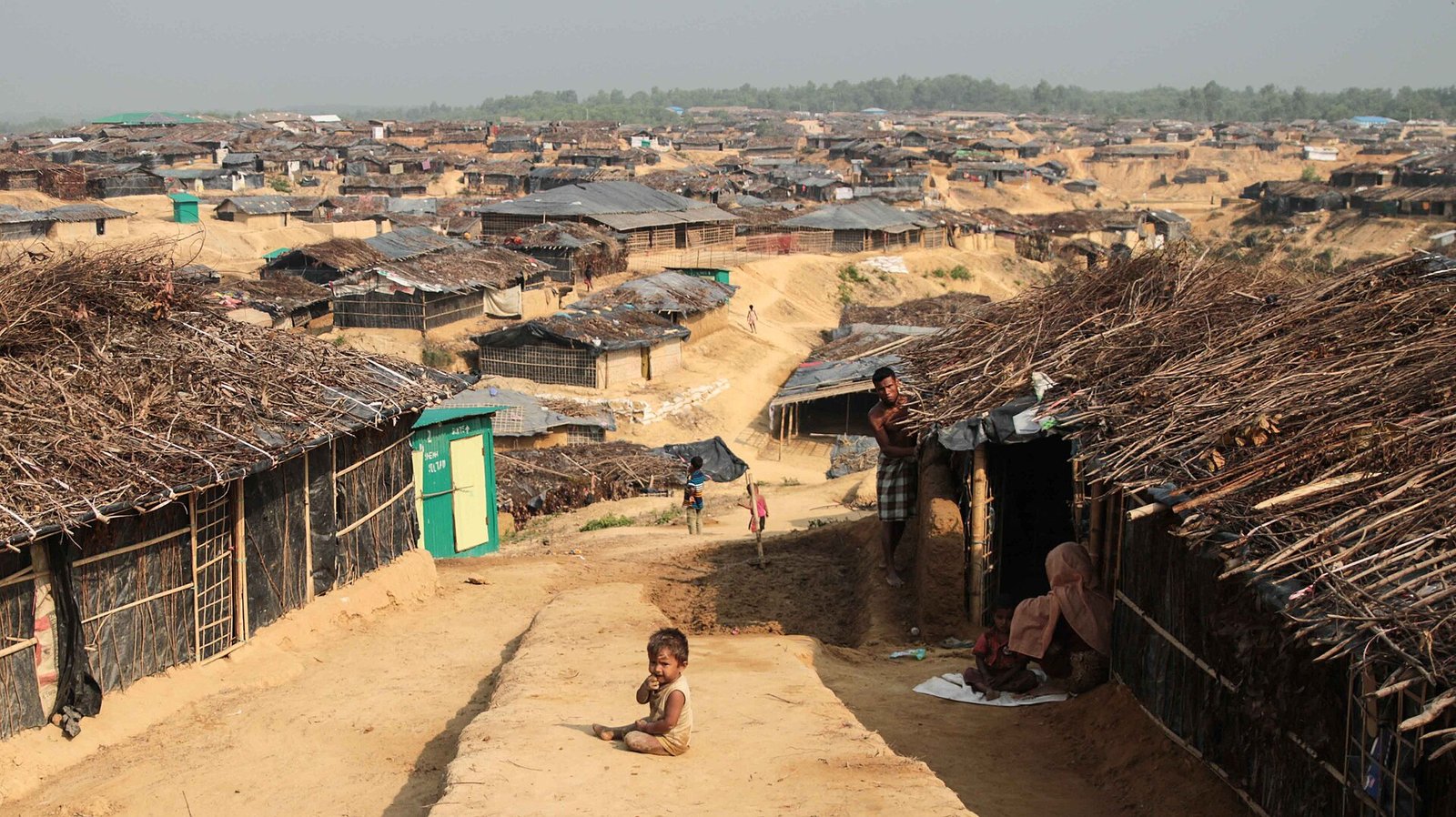
For the people in the camps, the legal words meet a hard geography. More than 740,000 Rohingya fled to Bangladesh in 2017, and the camps around Cox’s Bazar now host more than 1.2 million people.
Murshid Alam, who was 12 when he was driven from his home and now works with young people in the camps, told CNN the ruling was “the difference between being told our history was a tragedy, and being told our history was a crime that must be answered for”. He also said what return would have to mean: home in Rakhine “with our rights, our citizenship, and our dignity fully restored.”
That is not the Rakhine that exists today. The Arakan Army controls the vast majority of the state, including areas bordering Bangladesh, and has itself been accused of widespread abuses against civilians, while the military has stepped up airstrikes as it loses ground.
Enforcement is the other gap. ICJ judgments are legally binding, but the court has no power of its own to enforce them; a party that believes the other has not complied can turn to the Security Council, which has never acted on that discretionary power.
The Gambia v Myanmar Genocide Convention case, and why it reaches further
The case itself broke ground before the verdict did. The Gambia filed it in November 2019, the first time a country with no direct connection to the alleged crimes used its membership of the Genocide Convention to bring a case before the ICJ. Eleven other parties to the Convention intervened on limited questions of interpretation, and the court’s reading of the Convention on those points is legally binding for them too.
Analysis: The precedent will be tested soonest in the other genocide case already before the court. Human Rights Watch expects the reasoning to have a profound impact on pending Genocide Convention cases, including the case South Africa filed against Israel in December 2023. The United States, for its part, reacted cautiously: a State Department spokesperson told CNN it was studying the decision to assess its implications, stressing the importance of the Convention’s proper interpretation. Reactions gathered by Reuters on the day framed the verdict the same way from the other side — a landmark for accountability whose meaning will be argued over in capitals as much as in courtrooms.
None of that changes a single camp ration this week. What changed on Thursday is the record: the world’s court has named what happened, assigned it to a state, and put a two-year clock on that state’s first report back.
Photo: John Owens (VOA), via Wikimedia Commons (Public domain)
Sources
- https://news.un.org/en/story/2026/11/1168836
- https://www.hrw.org/news/2026/11/19/world-court-finds-myanmar-committed-rohingya-genocide
- https://www.cnn.com/2026/11/19/asia/icj-myanmar-genocide-rohingya-ruling-intl-hnk?cid=external-feeds_iluminar_meta
- https://www.reuters.com/world/asia-pacific/reactions-top-un-court-finds-myanmar-guilty-genocide-against-rohingya-2026-11-19/
Leave a comment
Comment as a guest and verify your email, or sign in or create a reader account. Guest comments reach our review queue after email verification; account holders can submit directly for review.