Listen to this article
Take the story with you. Choose a voice and a pace that suits you.
Or listen in another language / choose a voice
Getting your device voices ready…
The voice follows the displayed language and your browser’s regional preference when available. You can choose another narration voice.
The MINURSO mandate ends in Western Sahara. The story closed, quietly, at midnight. On 1 November 2026 the United Nations mission that had watched a ceasefire and waited for a referendum for 35 years ceased operations, after the Security Council failed to renew its mandate on Friday, the UN said (UN News). A smaller team now oversees an orderly withdrawal. The territory’s future? Still unsettled.
Information verified through 2 November 2026.
How the MINURSO mandate ends in Western Sahara
This was not a planned farewell. A draft resolution from the United States was vetoed by Russia, and a rival Russian text — a one-year extension to 31 October 2027 — failed to win the nine votes it needed, according to the UN’s account of Friday’s divided council (UN News). The Associated Press reported the same deadlock from Casablanca, noting that Russia’s veto blocked a US text that would have backed Morocco’s demand for sovereignty and ended the mission next year (AP via WCB).
Reactions split along familiar lines. Morocco’s royal palace welcomed the non-renewal and called the mission an instrument to internationalise the dispute, while the Polisario Front called the outcome unacceptable and Algeria’s foreign ministry spoke of deep regret and excessive bias in the US draft (AP via WCB). Reuters, carried by BusinessWorld, reported Morocco’s foreign minister calling the referendum reference in the mission’s name an anachronism (BusinessWorld).
Secretary-General António Guterres tried to hold a line in the middle. His statement said the departure “does not abrogate” the people’s “inalienable right to self-determination”, and it thanked mission personnel, including Special Representative Alexander Ivanko, who led MINURSO through the difficult period after hostilities resumed in 2020 (UN News).
A referendum that never happened
MINURSO — the UN Mission for the Referendum in Western Sahara — was created under Security Council resolution 690 in 1991, in line with settlement proposals Morocco and the Frente POLISARIO had accepted in 1988 (UN News). People in the territory were meant to choose between independence and integration with Morocco. They never got the vote.
Why not? The voter list. Morocco wanted eligibility to include Sahrawis living in the territory it controls; the Polisario objected that this would tilt the result towards integration and insisted on Spain’s colonial census, the AP explained (AP via WCB). So the mission stayed, and stayed. It monitored. It reported. Twenty of its personnel lost their lives over 35 years, a fact Guterres marked in his statement (UN News).
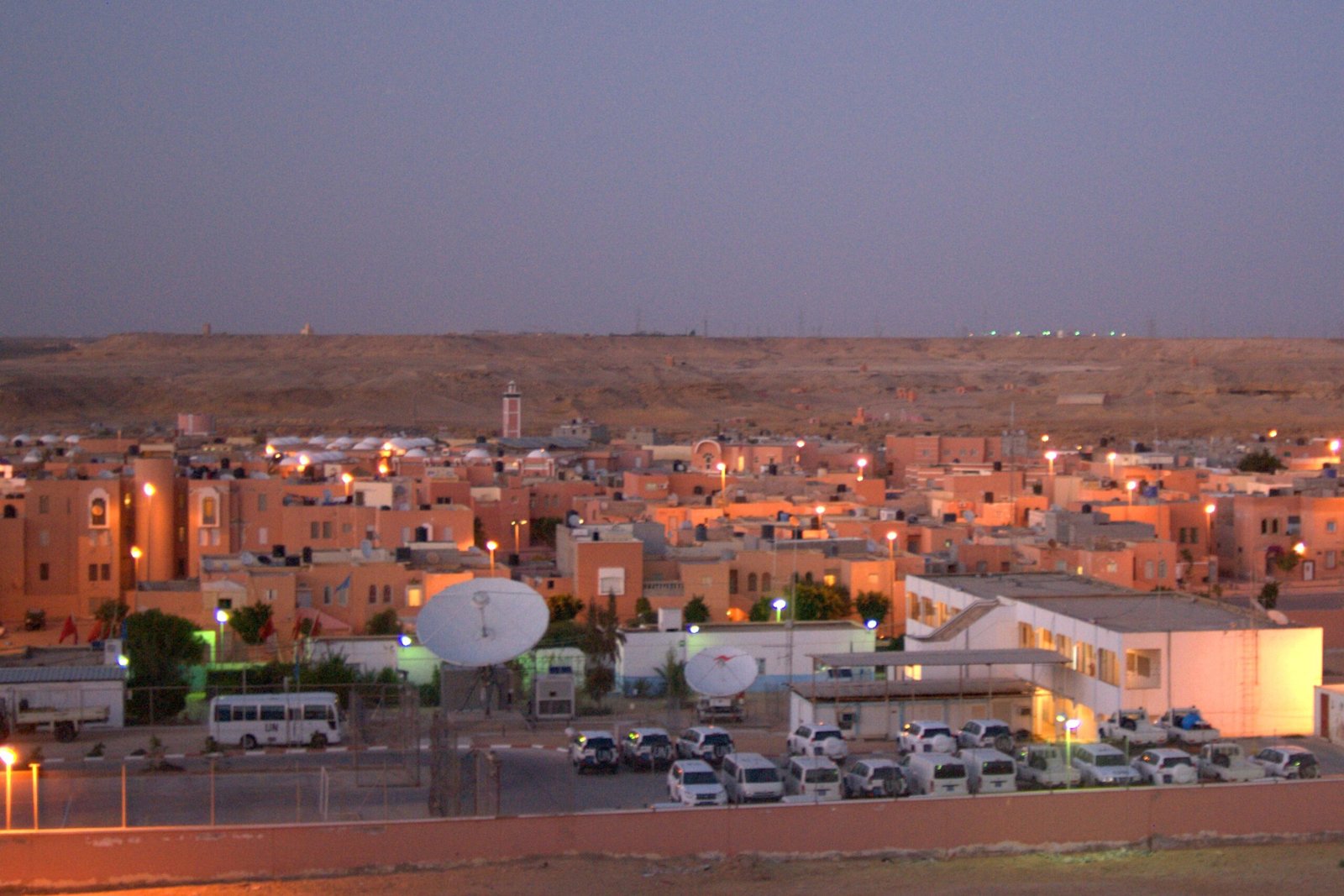
At the end, the mission was headquartered in Laayoune, with nine team sites — four west of the berm and five east of it — a liaison office in Tindouf, about 200 civilian staff, military observers and staff officers from more than 35 countries, and a dedicated mine action capability (UN News). The AP put its authorised strength at 534 personnel and its 2026–2027 budget at more than $62 million, with Egypt, Ghana and Pakistan among the top military contributors (AP via WCB).
Morocco put forward an Autonomy Proposal in 2007, envisaging the territory as self-governing under Moroccan sovereignty, and a US-drafted resolution last year described that plan as the “most feasible” solution (UN News; BusinessWorld).
The Western Sahara peacekeeping mission ends, the dispute does not
Western Sahara is a vast desert territory roughly the size of Colorado on Africa’s northwestern Atlantic coast, rich in minerals and fisheries, once ruled by Spain and claimed by both Morocco and the pro-independence Polisario Front (AP via WCB). The UN classifies it as a non-self-governing territory. Morocco administers nearly all of it, except a narrow strip east of a Moroccan-built sand wall.
The fighting did not wait for diplomacy. After Morocco annexed the territory in 1975, armed conflict lasted more than 15 years; the Polisario withdrew from the 1991 ceasefire in 2020 after clashes, and the territory has since seen tensions and low-intensity hostilities, according to the UN (AP via WCB). The dispute is also the major flashpoint in the rivalry between Morocco and Algeria, which arms, funds and hosts the Polisario and severed diplomatic relations with Rabat in 2021.
That context explains the warning in Guterres’s statement. He “remains concerned about the security situation throughout the Territory and the risk of escalation of hostilities” and called on all concerned to exercise maximum restraint (UN News).
What happens next in Western Sahara
Practically, a liquidation period began on 1 November. A smaller team reporting to the UN Department of Operational Support will oversee the transport of assets belonging to troop-contributing countries back to their nations and the disposal of UN equipment, and Guterres asked for the parties’ full cooperation so it finishes in an orderly way (UN News).
Politically, the UN says its work continues through the Secretary-General’s Personal Envoy, Staffan de Mistura, towards “a just, lasting and mutually acceptable political solution” providing for self-determination (UN News).
Analysis: the mission’s end removes the referee without settling the match. Monitoring made incidents easier to verify; without it, claims from either side of the berm will be harder to check independently, and a local clash will carry more diplomatic weight because nobody neutral is watching in the same way. That risk is an inference from the mission’s stated monitoring role, not a prediction — the ceasefire’s parties, not the UN, will decide what happens on the ground.
Photo: MINURSO headquarters in El Aaiun, Western Sahara, by cingularite, via Wikimedia Commons (CC BY-SA 2.0)
Leave a comment
Comment as a guest and verify your email, or sign in or create a reader account. Guest comments reach our review queue after email verification; account holders can submit directly for review.