Listen to this article
Take the story with you. Choose a voice and a pace that suits you.
Or listen in another language / choose a voice
Getting your device voices ready…
The voice follows the displayed language and your browser’s regional preference when available. You can choose another narration voice.
Here is a test worth running in your head. Take a newborn, a patient in a coma, and an adult with profound cognitive disability. On some modern accounts, none of them currently shows self-awareness, autonomy or fluent language. Are they persons in the full sense, or persons on probation? A paper published this week in Humanities and Social Sciences Communications argues that human dignity and personhood stand or fall on how you answer, and that the safer, older answer is the one much of bioethics has drifted away from (Frantz, Rego and Barbas, via DOI).
The authors — Patrícia Frantz, Francisca Rego and Stela Barbas — state their thesis in one sentence: human dignity presupposes being, and personhood is grounded in what a human being is rather than in what a human being is capable of doing (DOI). The article was reported on 27 October 2026 (Scienmag).
Information verified through 28 October 2026.
What is personhood in philosophy, once the two words come apart?
The paper opens with a split. In bioethical and legal writing, human being and person have come apart: personhood gets defined through functional or psychological traits such as self-awareness, autonomy, linguistic capacity or relational aptitude, the authors write (DOI). Once a trait does the work, the category wobbles. Show the trait and you are in. Lose it — through developmental stage, illness or disability — and full moral consideration can be withdrawn, leaving what the authors call selective inclusion and legal asymmetry, with moral standing assigned by consensus instead of possessed by the person (Scienmag).
Their diagnosis goes one level down. The split, they argue, reflects the weakening of realist accounts of what a person is (DOI). Dignity, on that path, stops being intrinsic and becomes contingent — and the most vulnerable lose protection first.
The Boethius definition of a person, and why wording carries weight
Against the trait test, the authors reach back to Boethius, whose definition of a person as “an individual substance of a rational nature” they describe as a cornerstone of Western philosophical anthropology for centuries (DOI). One distinction does the heavy lifting. Rational nature, in this tradition, names the kind of being someone is — not the reasoning they are performing at a given moment (Scienmag). A sleeping philosopher and a patient who will never speak both keep the nature. Neither has to demonstrate it on demand.
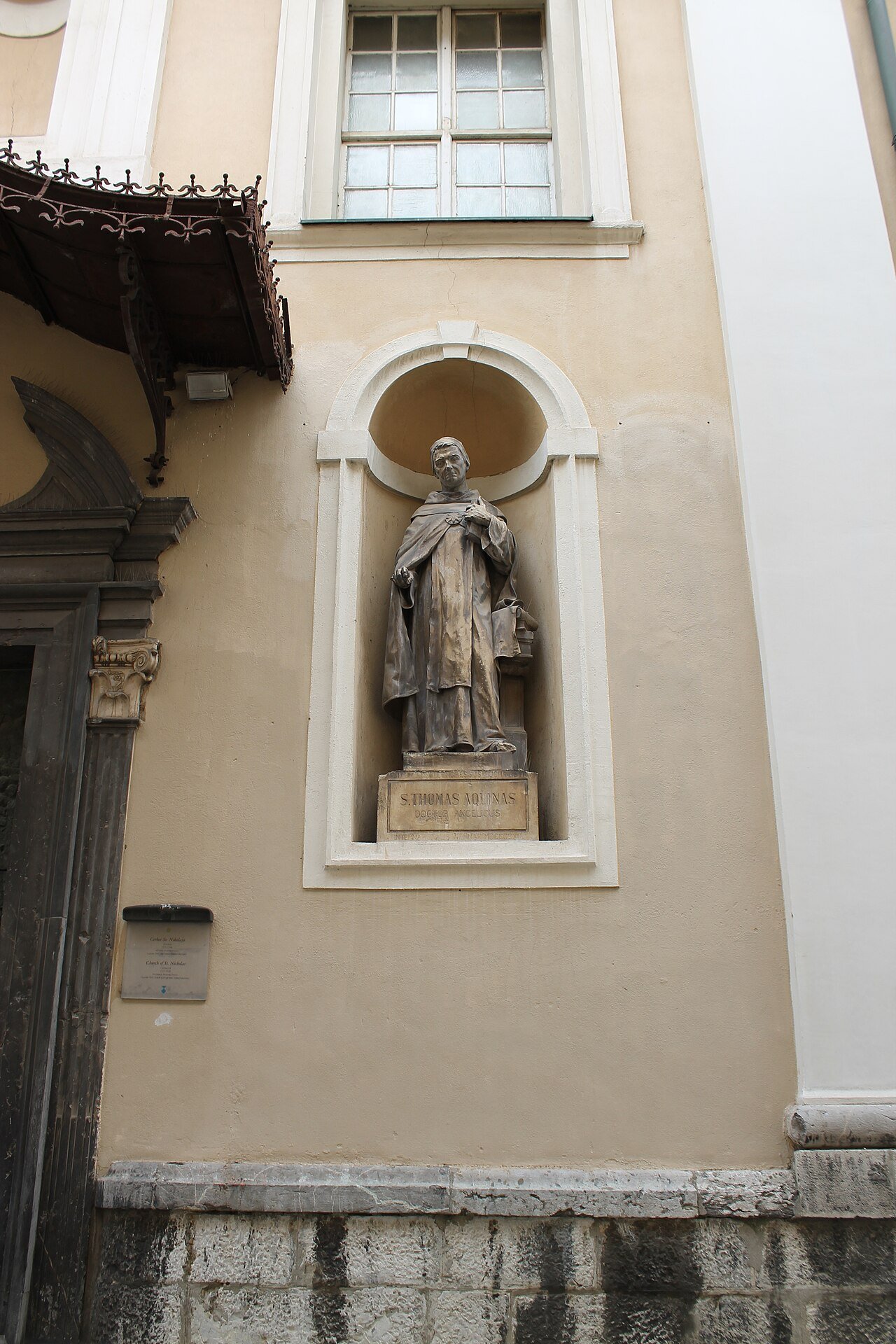
Thomas Aquinas developed the framework, treating the person as a composite of matter and form whose dignity lies in being rational and self-transcending, the paper says; personhood there is essential, not accidental or performative, and not a societal role or a granted status (Scienmag).
The authors are not simply scolding the twentieth century. Phenomenology, existentialism and personalism were right, they grant, to insist that affectivity, freedom and relationality had been underplayed, and thinkers such as Edith Stein and Karol Wojtyła tried to deepen the metaphysical account rather than replace it (Scienmag). The risk arrives when consciousness is ranked over substance, so that a person dissolves into a bundle of observable, negotiable functions.
Their bridge figure is Leonardo Polo, who distinguishes the personal act of being from human nature without separating them — refusing two opposite reductions, the person as nothing but nature and the person as nothing but consciousness (Scienmag). On that account, intellectual and volitional acts express a deeper identity instead of defining it. Being precedes doing. That is the paper in four words.
Does dignity depend on what a person can do? Human dignity and personhood in three hard cases
The authors test their framework where it bites. First, disability: definitions built on autonomy, rational function or communicative capacity can treat people with profound cognitive or physical disabilities as holding diminished moral status or incomplete personhood (Scienmag). The journal article itself names the wider stakes in its introduction, linking the separation of human being from person to debates over abortion, euthanasia and the instrumental use of human life at its most vulnerable stages (DOI). Readers who disagree with the authors on those questions can still follow the structural point: a trait-based threshold has to put the line somewhere, and someone living will fall on the far side of it.
Second, enhancement. Genetic manipulation aimed at improving humans treats the person as a project to be optimised rather than a given, a view the authors tie to posthumanist rejections of any fixed human nature (Scienmag).
Third, machines. If the appearance of consciousness, relationality or autonomy is enough for personhood, a system could qualify while some human beings do not — an outcome the authors present as a warning about the test itself, not as a prediction (Scienmag). What is at stake, they argue, is not only whether personhood gets extended to new entities, but whether its link to human nature quietly breaks (Scienmag).
A bedside version of the same claim appeared this year in Palliative & Supportive Care, where a palliative physician argued that a patient in a coma has less capacity, not less personhood, citing the Frantz team’s earlier work (Cambridge Core). Standing, on both accounts, does not shrink when reasoning falls silent.
The authors add a limit of their own. Realist metaphysics does not exhaust every possible ontology of the person, they note; any adequate account of dignity just needs some conception of being strong enough to ground permanent, universal worth (Scienmag). Autonomy, relationality and affectivity survive in their picture — demoted from foundations to expressions.
Analysis: the paper’s force is practical, not nostalgic. Every hospital, court and legislature already runs on some answer to its question, usually an unexamined one. Trait tests feel humane because the people administering them imagine themselves passing. Grounding dignity in being asks less of the vulnerable and more of everyone else: protection that need not be earned, demonstrated or renewed.
Photo: John Samuel, via Wikimedia Commons (CC BY-SA 4.0)
Sources
- https://doi.org/10.1057/s41599-026-09198-1
- https://scienmag.com/philosophers-argue-human-dignity-rests-on-being-not-on-what-we-can-do/
- https://www.cambridge.org/core/journals/palliative-and-supportive-care/article/embodied-relational-dignity-an-anthropology-of-personhood-for-clinical-ethics/6B53EA92AD1B943F2ECBEE197B08E4E5
Leave a comment
Comment as a guest and verify your email, or sign in or create a reader account. Guest comments reach our review queue after email verification; account holders can submit directly for review.