Listen to this article
Take the story with you. Choose a voice and a pace that suits you.
Getting your device voices ready…
The voice follows the displayed language and your browser’s regional preference when available. You can choose another narration voice. Enhanced device voices are preferred; availability varies.
It began, improbably, with empty classrooms. Last month, students at high schools in Paris’s working-class northern suburbs started protesting about teacher shortages and shabby facilities. On Saturday 17 October, that school movement converged with something much larger — the accumulated anger of a country paying more for fuel, food and rent while the public services around it fray. More than half a million people joined marches in scores of cities. By Sunday morning, France was counting one dead protester, hundreds of injured police, a burned town hall and thousands of wrecked shops. Information verified through 19 October 2026.
What burned
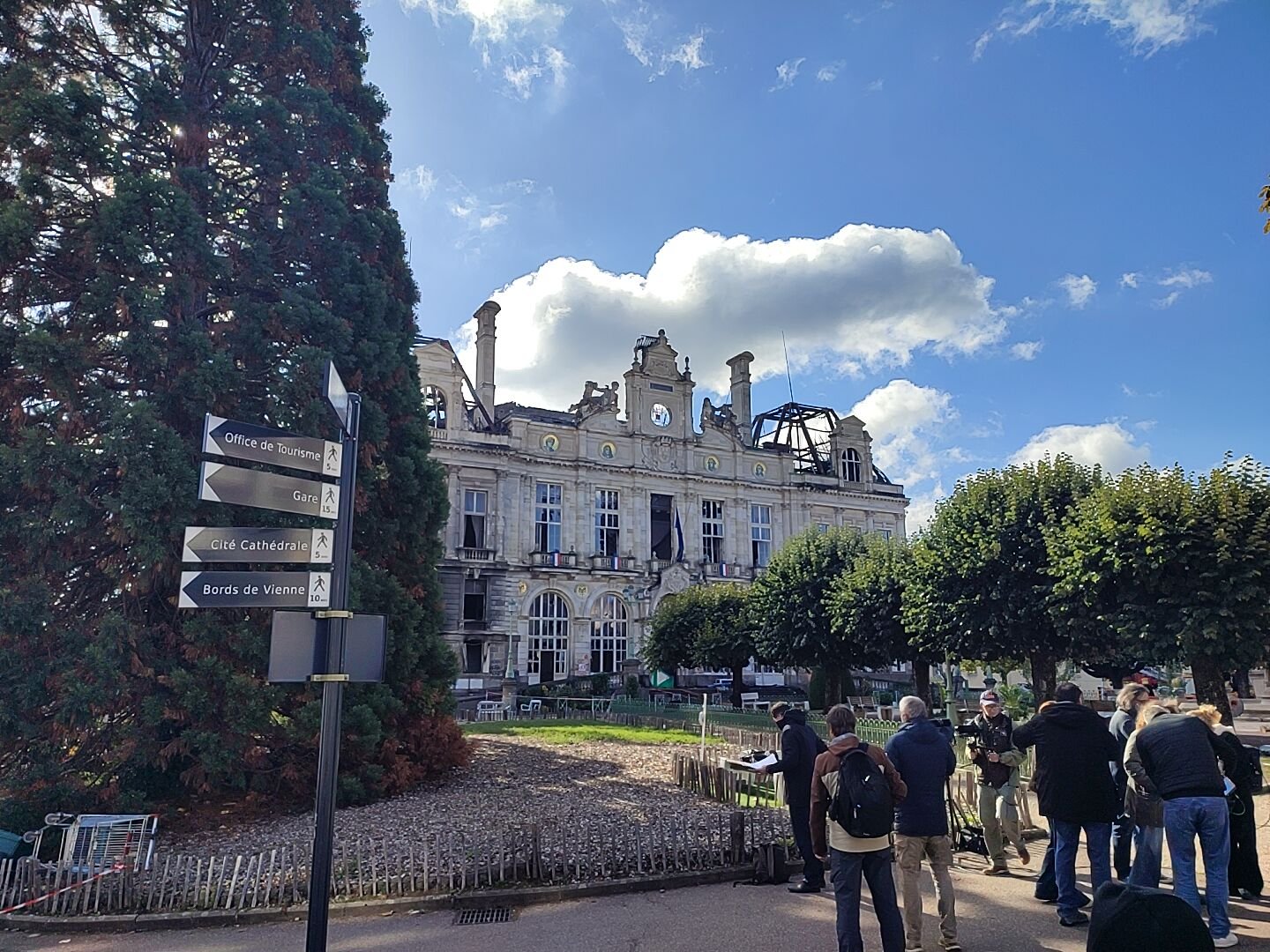
Most of the marching was peaceful. The damage came from fringe groups who peeled away from the processions and went for the symbols closest to hand: prefectures, luxury boutiques, supermarkets, police vehicles. In Limoges, rioters torched the 143-year-old city hall, which was partially destroyed in the arson attack. In Bordeaux, a masked mob got inside the residence of the local prefect, and the city’s mayor put the number of looted stores at up to 100. Paris woke to smashed windows, burnt-out bicycles and spray-painted walls.
The state’s own tally grew as the weekend went on. Police detained some 1,800 people on Saturday alone, 855 of them in Paris — a record for the capital — and the interior minister put injured officers at more than 500. One protester died after suffering a cardiac arrest during the Paris demonstrations. By Monday, the weekend total stood at some 2,400 arrests, and the government said more than 3,000 shops had been pillaged or damaged.
President Emmanuel Macron, posting on X while the unrest was still unfolding on Saturday night, wrote: “No room for violence in our Republic.” Those who had ransacked, attacked and looted, he said, “will be prosecuted and punished.”
A government with no money to give
Here is the bind Paris is in. The crowds were protesting, in large part, about underfunded services and the cost of living. Answering them properly costs money, and France’s public finances are, as Reuters puts it, extremely strained. The government has already hiked emergency spending this year to help farmers, fishermen and hauliers cope with fuel costs driven up by the Iran war. On schools, it has pledged to send some 3,000 fully qualified teachers who have not yet started work into the gaps. It has not committed to a substantial increase in school funding.
What it offered on Monday was order first, compensation second. Partial curfews are being organised in some municipalities, and police numbers will rise, especially if protests return next weekend — though the government has not said by how many. Businesses get state-financed furlough support so employers can avoid layoffs, plus funds to cover immediate cashflow; the details of both are still to come, and insurers are expected to absorb part of the damage. The mayors of France’s biggest cities spent Monday demanding answers about why so few officers were in place to see it coming.
Analysis: The cruel arithmetic is that the unrest makes the underlying problem worse. Every demand on the list — teachers, wages, cheaper fuel, functioning services — runs into the same wall, which is a state trying to cut its deficit in a parliament where it has no majority. A weekend of fires does not loosen that wall. It raises the price of borrowing against it, which is exactly what happened on Monday morning.
The bill arrived on Monday
Markets delivered their verdict before the politicians had finished theirs. France’s 10-year bond yield jumped 13 basis points to 4.9%, pushing the premium investors charge France over Germany to 146 basis points, the widest in two weeks. The CAC 40 fell 1.5%, the big banks BNP Paribas and Societe Generale dropped 3% each, and the euro slid against the dollar, the pound and the yen. Carrefour’s chief executive said the retailer’s losses from protest damage would run into the tens of millions of euros.
There is more of this scheduled. Moody’s reviews France’s credit rating on Friday, and a downgrade is possible. The minority government still has to pass a 2027 budget built on spending cuts through a deeply divided parliament, and it can be toppled if no compromise holds. Protesters have already called a fresh round of demonstrations for Saturday 24 October, and unions have set strikes for 5 November over budget cuts and pay. Schools, where this started, are now closed for a two-week break.
Beyond France’s borders, the weekend is being watched nervously. Clashes broke out in Italy on Sunday at demonstrations over the same pairing of poor services and high prices, and several European governments have advised their citizens in France to avoid large crowds. And behind everything sits the 2027 presidential election, at which Macron steps down: Marine Le Pen, already the frontrunner in polls and long the law-and-order candidate, is the obvious beneficiary of a crisis about disorder. The streets have quieted. None of the forces that filled them have gone anywhere.
Sources
- Reuters — “France faces aftermath of worst unrest in years” (Oct. 18, 2026): https://www.reuters.com/world/europe/france-faces-aftermath-worst-unrest-years-2026-10-18/
- Reuters — “France in turmoil: What might follow a weekend of riots?” (Oct. 19, 2026): https://www.reuters.com/world/europe/france-turmoil-what-might-follow-a-weekend-riots-2026-10-19/
- Reuters — “French markets tumble as riots add to political crisis” (Oct. 19, 2026): https://www.reuters.com/business/finance/french-markets-tumble-riots-add-political-crisis-2026-10-19/
- Reuters — “European governments warn citizens over security in France after riots” (Oct. 19, 2026): https://www.reuters.com/world/european-governments-warn-citizens-over-security-france-after-riots-2026-10-19/
Photo: Alacoolwiki, CC BY 4.0, via Wikimedia Commons
Leave a comment
Comment as a guest and verify your email, or sign in or create a reader account. Guest comments reach our review queue after email verification; account holders can submit directly for review.