Listen to this article
Take the story with you. Choose a voice and a pace that suits you.
Or listen in another language / choose a voice
Getting your device voices ready…
The voice follows the displayed language and your browser’s regional preference when available. You can choose another narration voice.
Fall 2026 college enrollment barely moved. Preliminary data released on 29 October 2026 by the National Student Clearinghouse Research Center put total postsecondary enrollment up just 0.2 percent on last fall, with undergraduate enrollment up 0.6 percent and graduate enrollment down 1.6 percent, according to the Clearinghouse’s report page. A year earlier, undergraduate enrollment had grown 2.4 percent. Information verified through 30 October 2026.
“Enrollment is essentially flat, or growing by less than 1 percent across the board,” Matthew Holsapple, the Clearinghouse’s senior director of research, told reporters, in remarks reported by Inside Higher Ed. He resisted calling it a decline: “The important change this fall isn’t widespread decline; it’s the loss of that broad-based growth we saw last year and had been seeing since the pandemic.”
The figures are early. They rest on 7.92 million enrollments reported by 46 percent of institutions as of 24 September 2026, and the final fall numbers arrive in January 2027, the Clearinghouse says.
Master’s enrollment decline fall 2026: down 3.7 percent, and steepening
The graduate drop has one main driver. Master’s enrollment fell 3.7 percent, while doctoral enrollment slipped only 0.5 percent, according to the Clearinghouse highlights. Last fall, master’s numbers were down just 0.4 percent on the year before, Higher Ed Dive reported. A small dip became a slide.
Why? The data cannot say, and Holsapple was careful on the point. “All we can see is that those enrollments are changing,” he said, in Inside Higher Ed’s account. This is, though, the first academic year in which new caps on graduate student loans apply. Under the One Big Beautiful Bill Act signed in July 2025, new graduate borrowers lost access to Grad PLUS loans from 1 July 2026 and face an annual federal borrowing cap of $20,500 for most graduate programs, The EDU Ledger reported. George Boggs, president emeritus of the American Association of Community Colleges, pointed to the economy, high tuition and those loan limits, plus federal restrictions on admitting international students, as likely pressures on master’s programs, in the same report.
That matters beyond the students themselves. Master’s programs have become a critical revenue source for many institutions, Higher Ed Dive noted. A 3.7 percent fall lands on budgets, not just headcounts.
Community college enrollment growth fall 2026: the only sector still adding students
Undergraduates split by sector. Community colleges grew 1.2 percent — the only sector showing growth — while public four-year institutions rose 0.3 percent and private nonprofit four-year institutions were flat at 0.0 percent, according to the Clearinghouse. Even the community college gain is a slowdown: those colleges had grown 3.5 percent last fall, Higher Ed Dive reported.
Boggs tied the pattern to price. “Prospective college students and their parents are very concerned about the affordability of college,” he told The EDU Ledger, adding that attending a lower-cost community college while living at home is “an attractive option.” He also cited dual enrollment — about 3 million high school students now take college classes, 70 percent of them at community colleges, he said.
Age cuts the same way. Undergraduate enrollment fell slightly among 18-year-olds (down 0.7 percent) and 21- to 24-year-olds (down 0.8 percent), while other age groups held steady or grew slowly, per the Clearinghouse.
Computer science enrollment decline fall 2026: the sharpest fall of any field
The subject-level numbers are anything but flat. Computer and information science enrollment fell 12.4 percent at four-year institutions, 12.3 percent at two-year colleges and 10.4 percent at graduate level — a second straight year of double-digit losses, according to the Clearinghouse. “Computer science led years of strong growth before reversing direction last fall,” Holsapple said, in Higher Ed Dive’s report. “This year, it’s even more pronounced.”
Health majors went the other way, growing 6.2 percent in four-year undergraduate programs, 4.3 percent at two-year colleges and 2.0 percent at graduate level, the Clearinghouse reported. Engineering also rose by more than 6 percent, while visual and performing arts and liberal sciences each fell by more than 4 percent at undergraduate level, according to Higher Ed Dive.
Fall 2026 college enrollment: what January’s final figures could change
Analysis: a flat headline can hide a reshuffle. Students are still enrolling — they’re choosing cheaper entry points, shorter routes into health and engineering jobs, and fewer expensive master’s degrees in the first year of tighter loan caps. Whether the master’s slide is a one-year shock from the new borrowing rules or the start of a longer contraction is exactly what January’s final figures, and next fall’s, will have to answer.
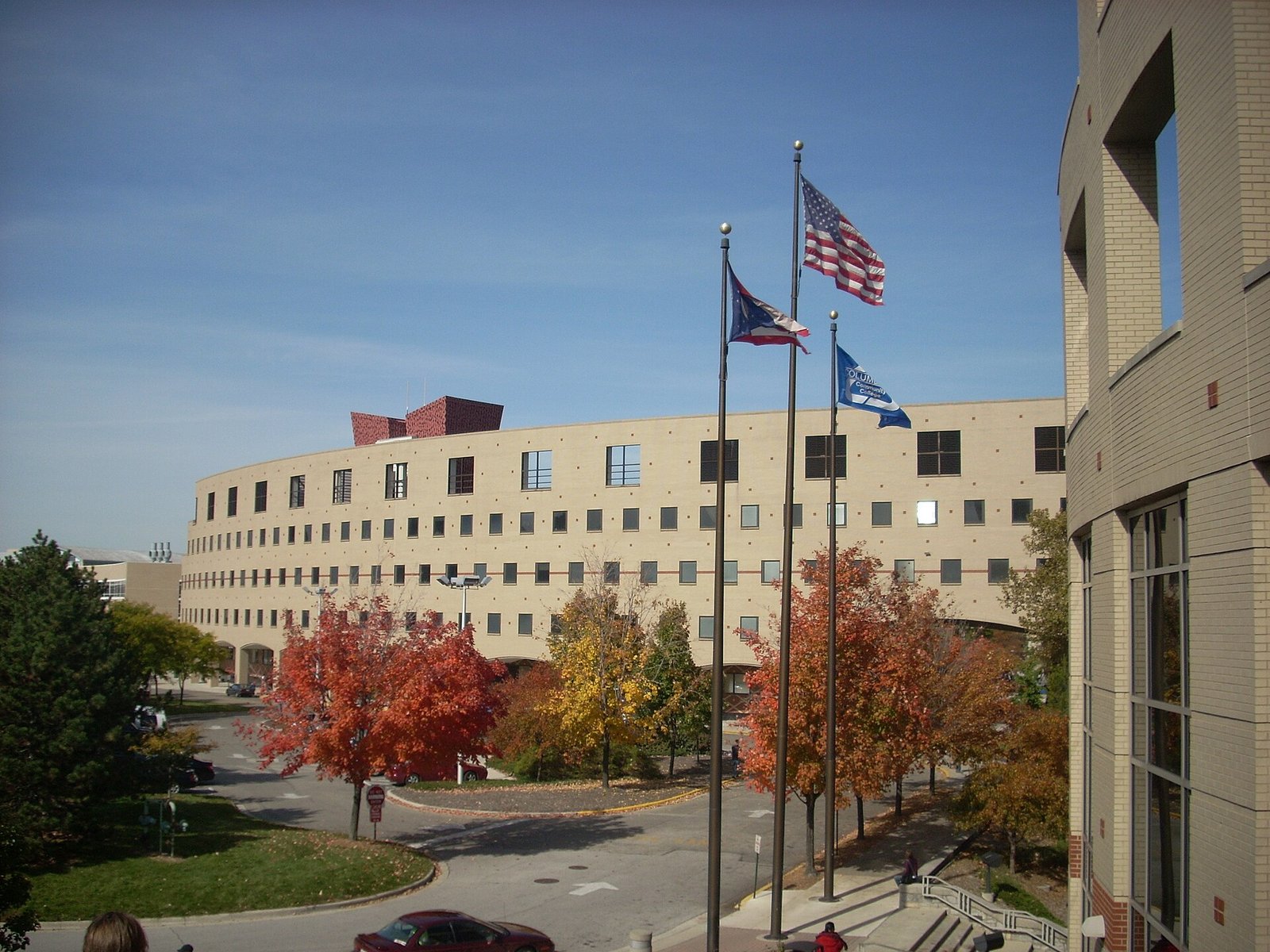
Photo: LongestAugust, via Wikimedia Commons (public domain) — Columbus State Community College in Columbus, Ohio.
Sources
- https://nscresearchcenter.org/prelim-fall-enrollment-trends/
- https://www.insidehighered.com/news/quick-takes/2026/10/29/preliminary-enrollment-data-shows-slower-growth
- https://www.highereddive.com/news/undergraduate-enrollment-inched-up-this-fall-while-masters-dips-37/873114/
- https://www.theeduledger.com/institutions/article/16050264/fall-college-enrollment-holds-steady-as-masters-programs-slide-clearinghouse-finds
Leave a comment
Comment as a guest and verify your email, or sign in or create a reader account. Guest comments reach our review queue after email verification; account holders can submit directly for review.