Listen to this article
Take the story with you. Choose a voice and a pace that suits you.
Or listen in another language / choose a voice
Getting your device voices ready…
The voice follows the displayed language and your browser’s regional preference when available. You can choose another narration voice.
The DR Congo Ebola outbreak deadliest on record reached a new milestone on 31 October 2026, when government data showed 5,026 deaths among 10,351 confirmed cases. That is a fatality rate of nearly 50 per cent, according to figures from the Congolese Ministry of Health reported by the Associated Press and summarised in outbreak coverage. Information verified through 1 November 2026.
This is the country’s 17th Ebola outbreak. It became Congo’s deadliest in August, passing the 2,299 deaths recorded between 2018 and 2020, and it now ranks as the second-largest Ebola epidemic ever, behind only the 2014–2016 West Africa outbreak that killed more than 11,000 people (World-Intel, drawing on Al Jazeera and Reuters reporting).
Why the Bundibugyo Ebola virus has no vaccine ready
The strain matters. This outbreak is driven by Bundibugyo ebolavirus, not the Zaire species behind several earlier epidemics. Tools built for Zaire do not transfer automatically. The Ervebo vaccine protects against Zaire ebolavirus but has no established protection against Bundibugyo, and there are currently no licensed vaccines or specific treatments for Bundibugyo virus disease (IntInsight outbreak analysis).
So responders are left with the older toolkit: supportive care, fluids, monitoring, isolation, safe burials and contact tracing. Clinical trials are under way, but doctors on the ground are still treating symptoms while research continues (News One USA).
That gap helps explain the speed. A vaccine-backed response can ring-fence cases. A response without one has to find every chain of transmission by hand — in places where finding people is the hardest part.
DR Congo Ebola outbreak deadliest on record: Ebola cases pass 10,000, mostly in the east
Cases have been recorded in eight of Congo’s 26 provinces, across 67 health zones. Ituri and North Kivu, in the north-east, account for the overwhelming majority of infections and deaths, and Ituri remains the epicentre (IntInsight).
Two numbers show why containment keeps slipping. About 80 per cent of new infections are occurring outside previously monitored chains of transmission, according to the Africa Centres for Disease Control and Prevention — meaning most new patients were not on any contact list when they fell ill. And roughly one-third of recorded deaths happened outside treatment centres, before patients could be tested or treated (IntInsight).
Conflict compounds all of it. Ituri is a conflict zone. Health teams have faced attacks, supply routes break down, and workers at one treatment centre in Ituri went on strike in October over months of unpaid wages, the Associated Press reported via the same analysis. You can’t trace contacts in a village you can’t safely enter.
Cases across borders, and a new US Ebola travel attestation from the CDC
The outbreak has crossed borders. Kenya has recorded eight confirmed cases and two deaths, Uganda reported cases earlier in the epidemic, and Nigeria’s single confirmed patient was evacuated to Switzerland, according to Associated Press reporting summarised by IntInsight. Reporting on the exact status of cases in each neighbouring country varies between outlets, and those details should be treated as provisional.
Further afield, the response is now touching ordinary travellers. From 3 November, anyone boarding an international flight into the United States must attest that they have not been in the Democratic Republic of the Congo in the previous 21 days — the maximum incubation period for Ebola, the Centers for Disease Control and Prevention says. Connecting through a Congolese airport counts as being present. Passengers who refuse will not be allowed to board, and the order covers adults, children, crew, US citizens and connecting passengers alike (USA Today).
The CDC also said, as of 27 October, that more than 10,200 cases and nearly 5,000 deaths had been confirmed in Congo, that no related cases had been reported in the US, and that the likelihood of spread there is low. The State Department maintains a Level 4 “do not travel” advisory for Congo (USA Today).
Analysis: the attestation rule is best read as a signal of scale, not of imminent risk to American travellers. The real emergency remains regional. The World Health Organization’s Africa office has called for scaled-up control measures, better access to affected areas and stronger community outreach (News One USA). Whether that arrives faster than the virus moves through unmonitored chains is, plainly, the open question of the next few weeks.
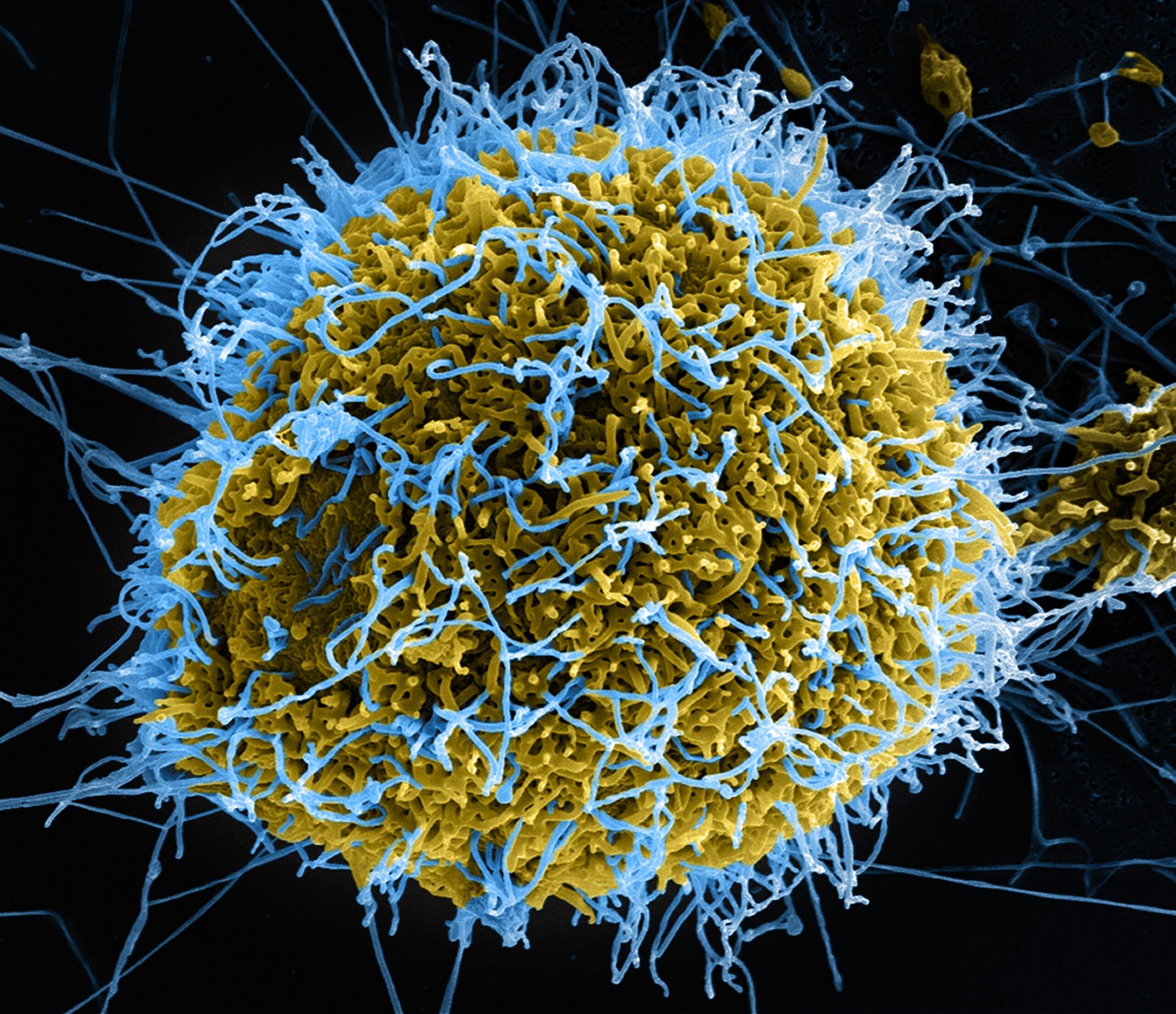
Photo: NIAID, via Wikimedia Commons (CC BY 2.0)
Leave a comment
Comment as a guest and verify your email, or sign in or create a reader account. Guest comments reach our review queue after email verification; account holders can submit directly for review.