Listen to this article
Take the story with you. Choose a voice and a pace that suits you.
Or listen in another language / choose a voice
Getting your device voices ready…
The voice follows the displayed language and your browser’s regional preference when available. You can choose another narration voice.
Bar Hill frog bones were never supposed to be the headline find. Between 2016 and 2018, archaeologists working ahead of the A14 road scheme between Cambridge and Huntingdon uncovered more than 280,000 artefacts spanning roughly 12,000 years, among them a Roman amulet carved as the Gorgon Medusa and the earliest physical evidence of beer production in Britain (Smithsonian Magazine). Yet the puzzle people kept returning to was much smaller. One ditch at Bar Hill, in rural Cambridgeshire, held some 8,000 amphibian bones.
That is a lot of frogs for one ditch. Vicki Ewens, a senior zooarchaeologist at the Museum of London Archaeology (MOLA), told the Observer in 2022 that in her London-based experience, sites simply do not produce frogs in these numbers, and called the concentration extraordinary (Smithsonian Magazine). Ten years after the bones first came out of the ground, researchers at Bournemouth University and MOLA say they know what happened, and the answer was hunting overhead the whole time (Bournemouth University).
How the Bar Hill frog bones were read a second time
The new study, published in the journal Environmental Archaeology, began with a news story. Paul Clarkson of Bournemouth University read about the find, contacted Ewens, and the two started a fresh round of analysis on bones that had already been excavated, counted and puzzled over (Bournemouth University). Clarkson compared the damage on the bones with patterns documented in earlier predation studies. Breakage and traces of digestion pointed away from mammals and people, and towards birds of prey (Smithsonian Magazine).
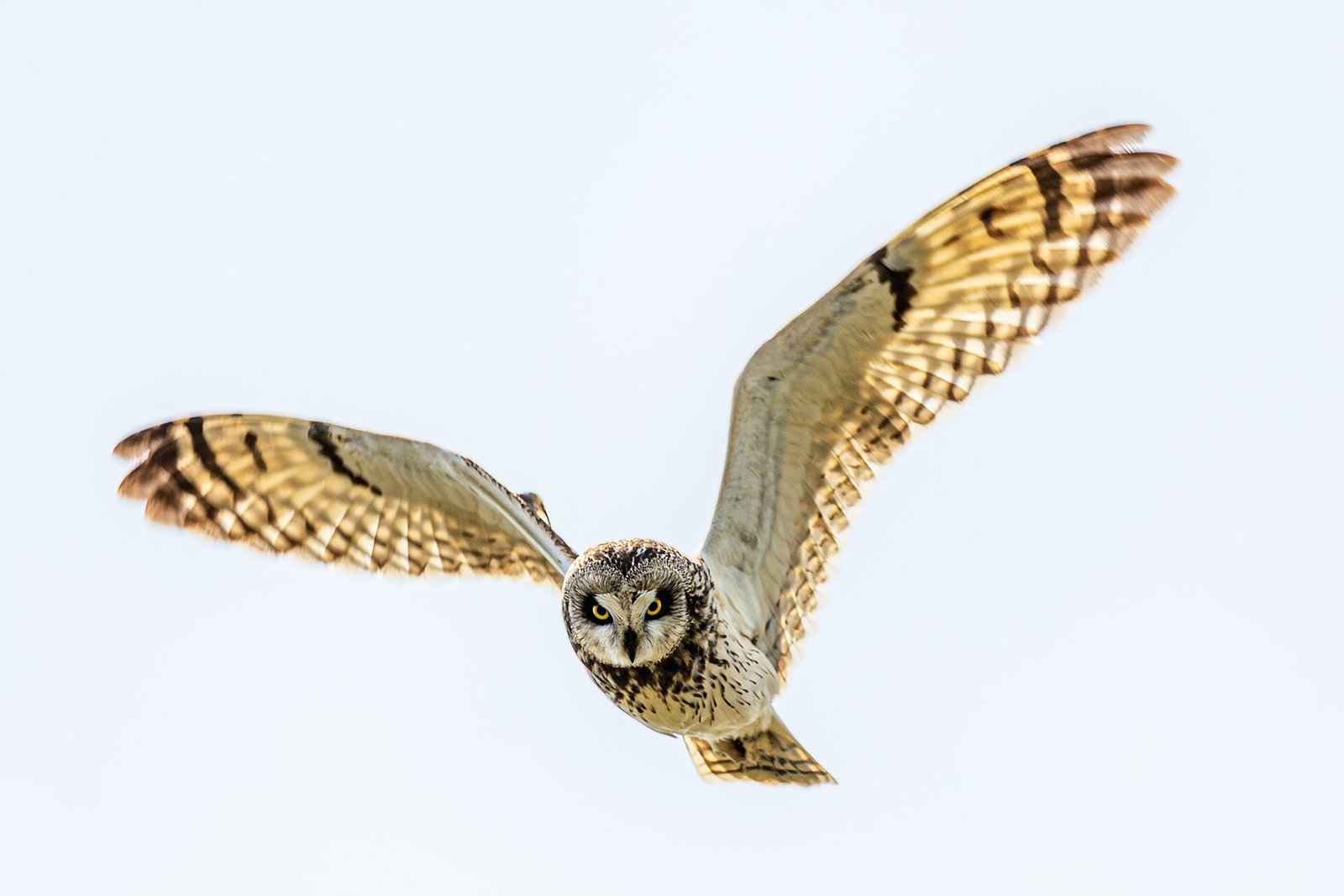
The team ruled out several familiar amphibian hunters, including otters, grey herons and grass snakes, because the bones were lightly digested and relatively unbroken, a pattern the authors say fits medium-sized birds such as short-eared owls (Smithsonian Magazine). Hen harriers likely roosted and hunted alongside them (Bournemouth University).
Age gave the story its tight timeline. Measuring the frogs’ distal humeri, their upper arm bones, using a method Clarkson and colleagues described in a 2025 paper, the researchers found that a large share of the animals died in their first or second year of life (Smithsonian Magazine). Bournemouth puts it more plainly: most died young, eaten in the winter of their first year (Bournemouth University). Radiocarbon dating carried out by the University of Vienna placed the remains about 1,700 years ago, in the second or third century CE (Archaeology Magazine).
An 8,000 frog bones Roman ditch, filled in a single year
Site evidence shows the ditch filled within one year, so the bones cannot be a slow accumulation across generations (Bournemouth University). The study describes a short, intensive predation event running from autumn into the following spring, probably along the frogs’ migration routes to and from their hibernation sites (Smithsonian Magazine). Most of the bones belonged to common frogs and toads, though shrews, voles and mice were mixed in, and the assemblage represents no fewer than 469 individual animals (Smithsonian Magazine).
Earlier explanations did not survive this evidence. The frogs might have fallen into the gully and become trapped. They might have died in a hard winter during hibernation. They might have been food for Iron Age people, though the absence of cut marks on the bones always made that reading shaky (Smithsonian Magazine). Radiocarbon dating also moved the deposit forward in time: the gully had first been read as part of an Iron Age roundhouse enclosure, but the bones belong to Roman Britain, centuries later (Smithsonian Magazine).
A short-eared owls frog feast needed a changed landscape
Predators alone do not explain the scale. Why were there so many young frogs in one place, in one winter? The authors point to water. Levels in the Fens, the marshy wetland around the gully, retreated during the Roman period, and frogs in the drying ponds reproduced faster, leaving shallow, temporary pools full of young animals (Smithsonian Magazine; SciTechDaily).
People had reshaped the hunting ground too. Snail, pollen and charcoal evidence shows that woodland in the valley, dense in the Iron Age, was gradually felled to create grazing land for livestock (Bournemouth University). Short-eared owls hunt over open grassland. By the Roman period, open patches left the frogs with little tree cover between them and the birds working the ground from above (Smithsonian Magazine).
The owls may also have needed people to stay away. The authors note that short-eared owls choose quiet roosting sites, so the spot was probably rarely visited at that season, perhaps because livestock were being moved on a seasonal pattern; avoidance for social or ritual reasons is also possible, and the researchers leave that question open (Smithsonian Magazine). One human trace did turn up among the bones: a Roman-era brooch. On its own, the team argues, it is not enough to show that people deposited the remains deliberately (Smithsonian Magazine).
What A14 archaeology frog bones say about Roman Britain
Clarkson calls the result an owl’s eye view of the past, a phrase that also gives the paper its title, “An Owl’s Eye View: Human-Animal Entanglement at the Roman Fen Edge” (SciTechDaily). His point is that the bones record two histories at once: the lives of people near the Roman Fens, and the lives of the wild animals sharing their landscape (Bournemouth University).
Ewens makes the smaller claim, and it may be the stronger one. Even the smallest animal recovered on a site, she says, can help explain past environmental conditions and human activity across a wider landscape (Bournemouth University). A ditch of frog bones turns out to hold evidence of retreating water, cleared woodland, grazing herds, seasonal movement and a winter’s hunting, none of it written down by anyone at the time.
Information verified through 28 November 2026.
Photo: Stephan Sprinz, via Wikimedia Commons (CC BY 4.0)
Sources
- Smithsonian Magazine — Archaeologists in England discovered 8,000 Roman-era frog bones in a single ditch. They just solved the mystery: https://WWW.SMITHSONIANMAG.COM/smart-news/archaeologists-in-england-discovered-8000-roman-era-frog-bones-in-a-single-ditch-they-just-solved-the-mystery-how-the-amphibians-ended-up-there-180989868/
- Bournemouth University — Ancient frog mystery solved: https://www.bournemouth.ac.uk/news/2026-11-10/ancient-frog-mystery-solved
- Archaeology Magazine — 8,000 frog bones in a Roman ditch were left by owls, study finds: https://archaeologymag.com/2026/11/8000-frog-bones-in-a-roman-ditch-by-owls/
- SciTechDaily — Scientists finally solve the 1,700-year-old mystery of 8,000 dead frogs: https://scitechdaily.com/scientists-finally-solve-the-1700-year-old-mystery-of-8000-dead-frogs/
Leave a comment
Comment as a guest and verify your email, or sign in or create a reader account. Guest comments reach our review queue after email verification; account holders can submit directly for review.