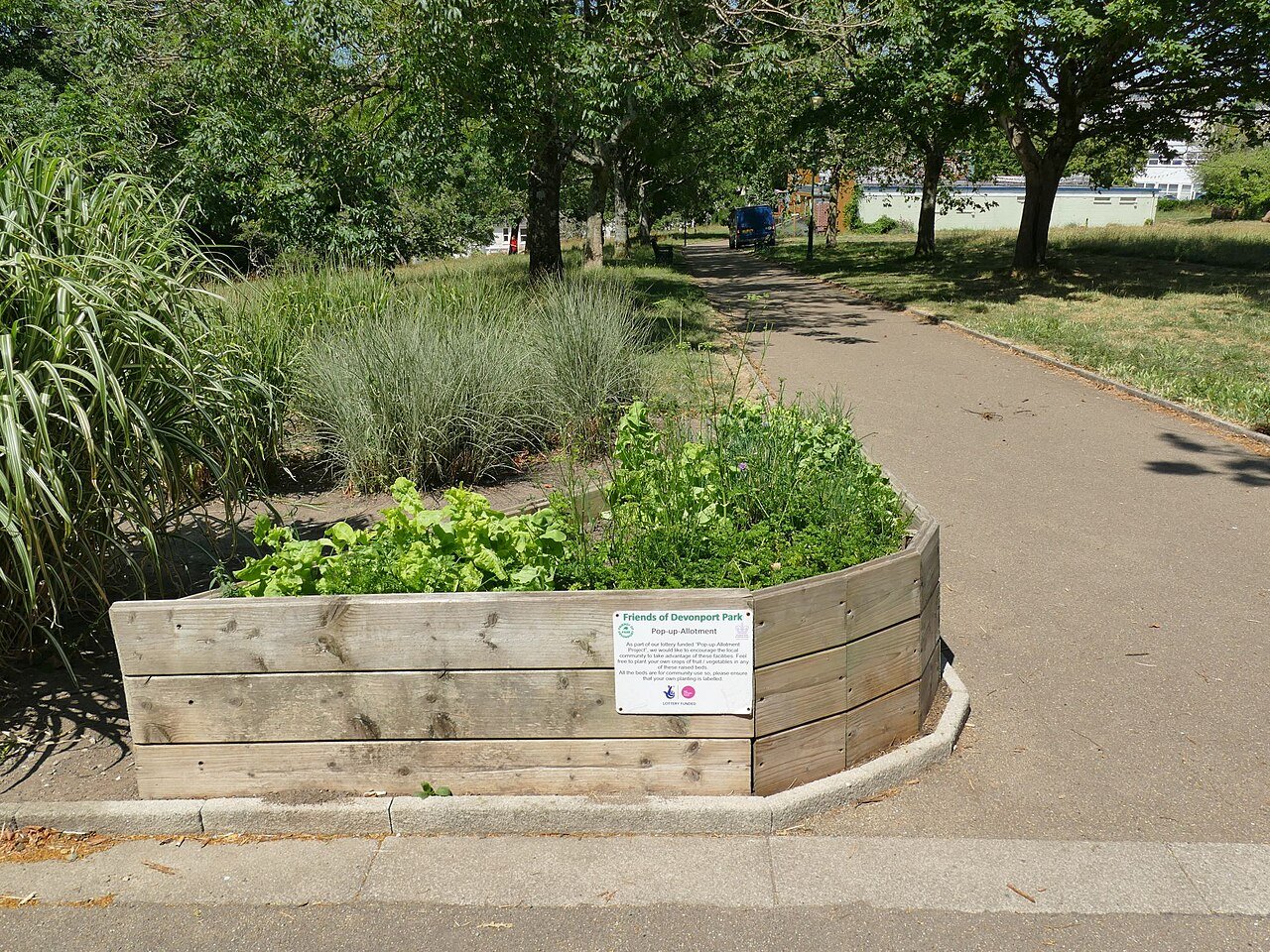

The visible achievement of a community garden may be a row of vegetables. Less visible is the agreement that keeps someone watering when the weather changes, makes space for a new member, and decides what happens when a plot is left unattended.
New York City’s GreenThumb gardeners’ handbook sets out practical guidance for groups using shared garden spaces. It illustrates how community gardening combines cultivation with organization. A garden needs social arrangements as well as soil and tools. [1]
Access is a daily practice
A locked gate can protect equipment while making the garden’s public role harder to understand. Opening hours, signs, and a clear way to ask about joining help people know whether the space is for them. Informal familiarity among existing members may be welcoming to some visitors and difficult for others to enter.
Shared rules need to account for different capacities. Someone unable to lift heavy equipment may contribute through recordkeeping or communication. A narrow idea of useful work can exclude people who would strengthen the group in other ways.
Make responsibility visible
A task that belongs to everyone can quietly become the responsibility of one reliable person. Writing down recurring jobs and arranging handovers can prevent that imbalance from becoming permanent. The organization need not be elaborate to be clear.
The garden’s social value comes partly from this repeated cooperation. People encounter one another while doing something with a tangible result, and disagreement has a concrete setting in which to be resolved. A thriving garden therefore deserves attention as a small public institution. Its harvest includes food, but its continuity depends on the less visible work of making shared ground genuinely shareable.