Listen to this article
Take the story with you. Choose a voice and a pace that suits you.
Or listen in another language / choose a voice
Getting your device voices ready…
The voice follows the displayed language and your browser’s regional preference when available. You can choose another narration voice.
The CD sales comeback 2026 is the strangest chart story in music this year, because the compact disc was supposed to be finished. Napster wounded it. Streaming buried it. Then, in the first six months of 2026, Americans bought millions more of the silver discs than they had a year earlier, and the format the industry had written off became its fastest-growing album product.
Start with the two scoreboards, because they measure different things. The Recording Industry Association of America (RIAA), counting from the industry side, says CD shipments rose 45.7 percent to 17.5 million units in the first half of 2026, while wholesale CD revenue jumped 58.6 percent to about $171 million, eCoustics reported in its breakdown of the RIAA mid-year data. Luminate, counting what shoppers actually bought at retail, put CD sales at 16.3 million units, up 16 percent, the same eCoustics analysis noted. Different methods, same direction. The disc is moving again.
What the CD sales comeback 2026 numbers actually show
Context keeps the story honest. CDs are not beating vinyl, and nothing is beating streaming. Vinyl shipped 26.5 million units in the same six months and earned more than three times the CD revenue, while streaming brought in about $4.9 billion, roughly 82 percent of all United States recorded-music revenue, according to the RIAA figures summarised by Statista. CDs accounted for less than 3 percent of the total. Total physical revenue reached $731.5 million, up 25.9 percent.
So why does a format with a 3 percent share get a headline? Because of the direction of travel. CD revenue fell across the full year of 2025 while vinyl kept climbing, so the first half of 2026 is a reversal, not a trend continuing politely upward, eCoustics pointed out. Vinyl, the established comeback act, grew a modest 2.4 percent in Luminate’s retail count. CDs grew nearly seven times faster by that measure.
K-pop lit the fuse, but it is not the whole fire
The easiest explanation is fandom, and it is partly true. Luminate credits collectible K-pop releases as a major driver of the growth, with BTS’s ARIRANG named as a standout, Statista reported. K-pop editions are built to be collected: multiple versions, photo books, cards, alternate artwork. One fan buying three variants is not a rounding error. That is the business model.
Strip K-pop out, though, and the rise survives. CD sales still grew 6.7 percent without it, Luminate found, via eCoustics. Something broader is going on.
Price is part of it. A new LP routinely costs $30 to $40 at retail. A CD offers the same album, owned outright, for much less, in a smaller box, with perfect digital audio you can rip to your own library, eCoustics argued. For a young listener starting a collection on a thin budget, the maths is not mysterious.
Then there is the strangest finding in the whole dataset. Just over half of the Gen Z and millennial buyers who bought a CD do not own a CD player, Luminate found, via Statista. Read that twice. A large share of the revival is people buying a music format they cannot play, because the object itself — the artwork, the booklet, the act of handing money to an artist instead of a platform — is the point.
Ownership is the product now
Peter Marston, a communication studies professor at California State University, Northridge, hears dissatisfaction underneath the nostalgia. “There’s dissatisfaction with spending your money and getting nothing, which is what you get when you subscribe to Spotify or Netflix,” he said, describing a physical collection as a manifestation of a listener’s tastes, CSUN Newsroom reported. A bought album cannot vanish when a licensing deal changes. It needs no login, tracks nothing, and works with no connection — points Engadget also made in setting out the format’s upside, noting that longtime Rolling Stone critic Rob Sheffield has called the CD the “best invention ever for deep listening,” Engadget reported.
The friction is real, too. Cars and laptops mostly ship without disc drives now, so a new collector has to buy a player before playing anything, though portable and desktop machines, many with Bluetooth, are easy to find online, Engadget noted.
Marston is the sceptic in this story, and his caution deserves space. He sees young buyers chasing nostalgia for an era they never lived through, expects physical formats to stay a niche rather than reclaim the mainstream, and offers a dry test for a true revival: “When the true resurgence in physical media has fully arrived, there will be a key indicator. They go back to making new cars with CD players,” he told CSUN Newsroom. No carmaker has passed that test yet.
Analysis: The honest reading of 2026 is neither “CDs are back” nor “nothing happened.” A small format reversed a decline because it became the cheapest respectable way to own music in a subscription age, and because fandom learned to treat a disc as merchandise with songs attached. Streaming still owns the listening. What streaming never sold was the object on the shelf, the booklet in your hands, the album that stays yours. This year, millions of buyers — half of the youngest ones without any way to press play — decided that was worth paying for separately.
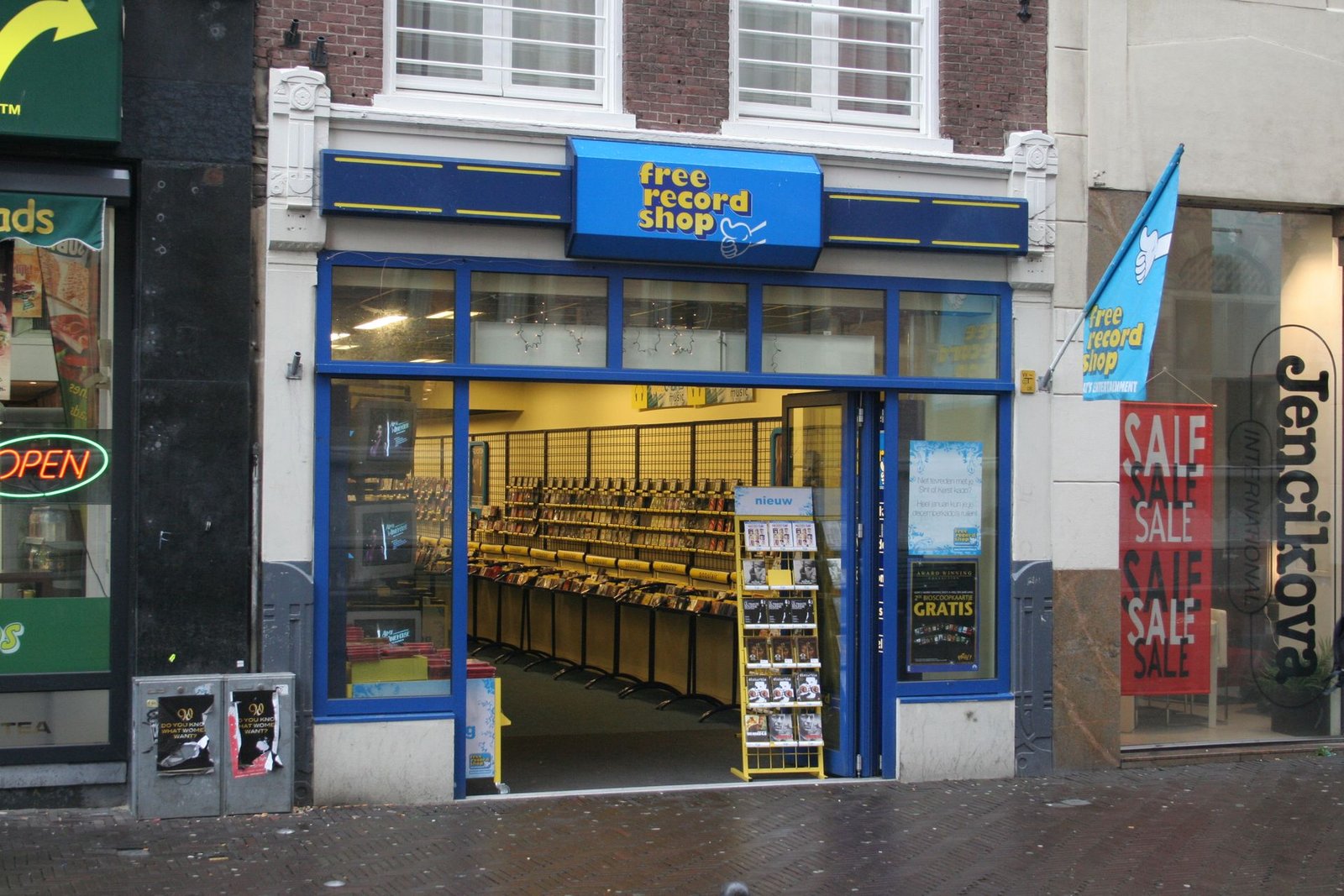
Photo: Willem 90, via Wikimedia Commons (Public domain)
Sources
- https://www.ecoustics.com/news/us-cd-sales-riaa-2026/
- https://newsroom.csun.edu/2026/09/16/nostalgia-is-driving-a-new-generation-back-to-physical-media-csun-prof-says/
- https://www.engadget.com/2298767/cds-are-back-modern-listening-complicated/
- https://www.statista.com/chart/36636/record-music-revenue-growth-in-the-us/
Leave a comment
Comment as a guest and verify your email, or sign in or create a reader account. Guest comments reach our review queue after email verification; account holders can submit directly for review.