Listen to this article
Take the story with you. Choose a voice and a pace that suits you.
Or listen in another language / choose a voice
Getting your device voices ready…
The voice follows the displayed language and your browser’s regional preference when available. You can choose another narration voice.
The Thomas Nagel AI consciousness debate began, oddly, in a stock-market filing. Before going public in November 2026, Anthropic named the possibility that its AI models could be conscious or sentient as a risk factor for investors, writing that, given “the way we approach model sentience and moral status”, it might adopt more rules and restrictions than competitors to make sure its models are treated well (MIT Technology Review). Within days, the philosopher whose work did more than anyone’s to define consciousness pushed back hard.
Thomas Nagel, best known for his 1974 essay “What Is It Like to Be a Bat?”, told Wired the disposition to take AI consciousness seriously was “just ridiculous”, in an interview published on 18 November 2026, just after he received the one-million-dollar Berggruen Prize for Philosophy & Culture (Crypto Briefing; MIT Technology Review). “Here are some of the smartest people on the planet being completely idiotic,” he said of those who care about the welfare of AI models (MIT Technology Review).
The Anthropic AI consciousness risk factor, explained
The Anthropic AI consciousness risk factor rests on a chain of maybes. The company’s reasoning, as summarised by MIT Technology Review, runs like this: today’s AI might not be conscious, though there is no reliable way to know for sure; the chances of sentience rise as systems grow more capable; so society should prepare for a near future in which AI systems have “moral significance” and need protection from harm (MIT Technology Review). Dataist gives the same account, noting the view draws on several prominent philosophers and that Anthropic leaves the question more open than its competitors do (Dataist).
The stance is not fringe among the public. One recent poll found 33% of US residents believe AI systems will definitely or probably become conscious someday, and 7% believe they already are; a 2020 survey of 1,092 philosophers found 39% allowed that some future AI systems could be conscious (MIT Technology Review).
Anthropic has acted on the precaution in smaller ways too. EuropeSays reports that the company announced Usage Policy changes in October 2026, effective 12 November, prohibiting sustained, unnecessary abusive or cruel behaviour toward its Claude models, and introduced a function letting Claude end persistently abusive conversations, while stressing these steps do not establish that Claude is conscious (EuropeSays).
What Is It Like to Be a Bat AI: why Nagel says the substrate matters
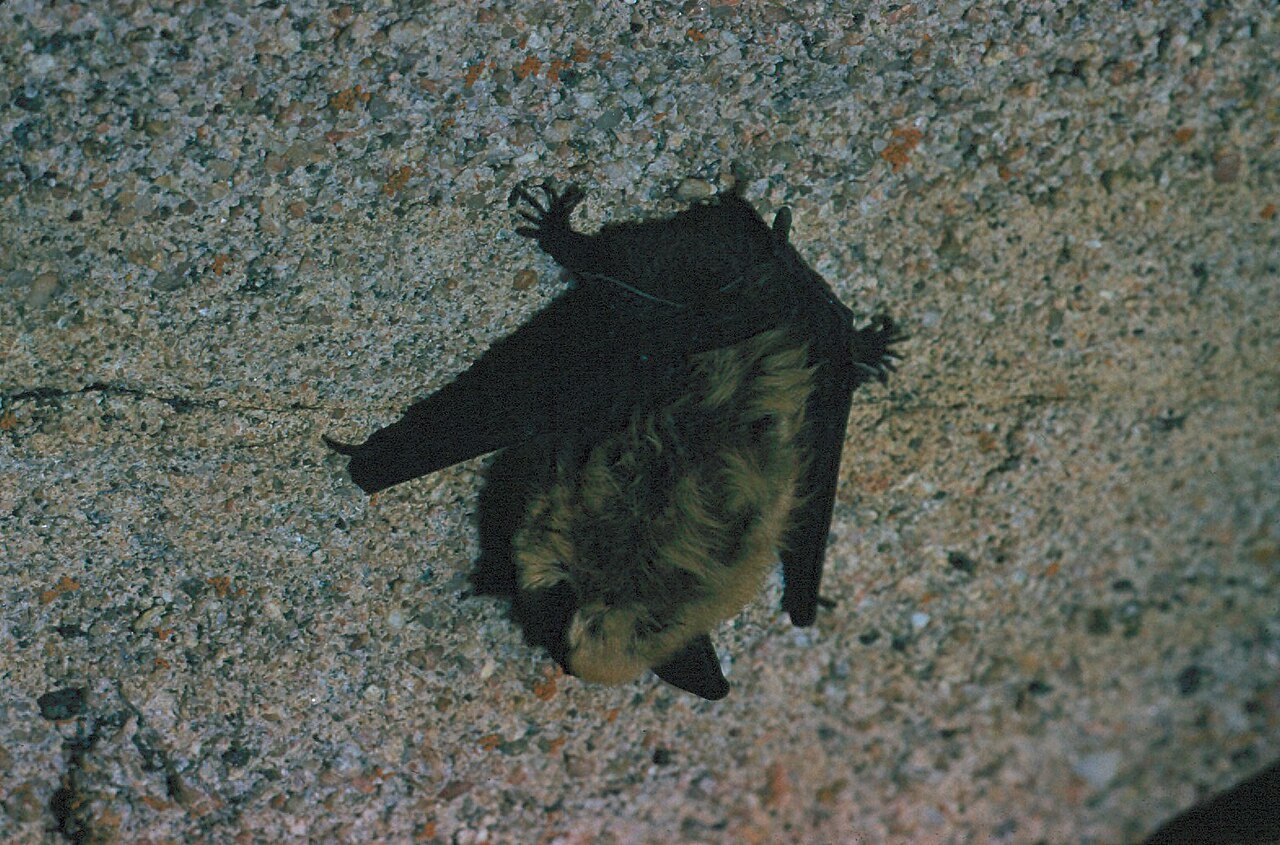
The What Is It Like to Be a Bat AI argument turns on Nagel’s oldest point. His 1974 essay argued that a conscious creature is one there is “something that it is like” to be, an inner, subjective perspective that no amount of outside description captures; we can study a bat’s sonar and brain without knowing what echolocation feels like from inside (MIT Technology Review).
Applied to machines, Nagel’s objection has two parts. First, fluent language is not evidence of experience: a system can describe feelings convincingly without having any (Crypto Briefing). Second, the physical basis cannot be waved away. Brains are neurons and biology; AI models are silicon chips and circuits, and there is no reason to assume reproducing what a brain does is the same as reproducing what a brain experiences (MIT Technology Review). Crypto Briefing reports he also criticised Anthropic’s model-welfare work directly, arguing it could lead the public to grant moral consideration to systems that are not conscious (Crypto Briefing).
Other philosophers answered within days. Some called Nagel’s certainty “terrible” and “bizarre” on social media; others defended him, suggesting he treats being alive as a prerequisite for consciousness that AI models do not meet (MIT Technology Review). Keith Frankish, a philosopher of mind at the University of Sheffield, offered a middle position reported by EuropeSays: “Nagel is right that fluent talk proves nothing. But he sees consciousness as like an inner light that is either on or off. I see it as a complex pattern of cognitive reactivity, which can vary along many dimensions.” Frankish does not regard today’s chatbots as conscious, but resists ruling artificial consciousness out in principle (EuropeSays).
The Thomas Nagel AI consciousness debate at its Berggruen Prize moment
The Berggruen Prize Thomas Nagel 2026 timing gave the remarks their weight: the field’s best-known living philosopher of consciousness, honoured with a $1 million prize in mid-November, chose that week to reject the industry’s most discussed new idea (Crypto Briefing). CUNY doctoral student Ben Gross raised the question several accounts treated as the sharpest of the week: why do we suspect models that chat with us of consciousness, but not models that recognise faces, produce images or drive cars? (MIT Technology Review). Language, the suggestion runs, feels closer to inner experience than perception or steering, and that feeling may be doing the argumentative work.
Dmitry Volkov, co-founder of the International Center for Consciousness Studies, argued in comments reported by EuropeSays that the practical rules need not wait for the philosophy to settle, because people treat machines socially even when they know they are machines, and that reaction does not switch off with knowledge (EuropeSays).
Analysis: nobody in this exchange has a test. Anthropic’s filing converts uncertainty into a business risk, Nagel converts biology into a boundary, and Frankish converts the boundary into a spectrum. The honest common ground is the one MIT Technology Review ends on: the debate says less about how remarkable AI has become than about how poorly consciousness itself is understood (MIT Technology Review). Until someone can say what would count as evidence either way, “moral significance” for machines will be set by precaution, temperament and prize-week interviews, not by proof.
Information verified through 28 November 2026.
Photo: Warren Garst, via Wikimedia Commons (CC BY-SA 4.0)
Sources
- MIT Technology Review — A legendary philosopher isn’t buying Anthropic’s consciousness argument: https://www.technologyreview.com/2026/11/23/1149569/a-legendary-philosopher-isnt-buying-anthropics-consciousness-argument/
- Dataist — Anthropic allows for AI consciousness, but Nagel disagrees: https://www.dataist.ai/news/anthropic-allows-for-ai-consciousness-but-nagel-disagrees/
- EuropeSays — Is artificial intelligence conscious? Why the debate over AI rights can no longer be ignored: https://www.europesays.com/ai/254822/
- Crypto Briefing — Philosopher Thomas Nagel calls Anthropic’s AI consciousness concerns ‘just ridiculous’: https://cryptobriefing.com/thomas-nagel-anthropic-ai-consciousness/
Leave a comment
Comment as a guest and verify your email, or sign in or create a reader account. Guest comments reach our review queue after email verification; account holders can submit directly for review.