Listen to this article
Take the story with you. Choose a voice and a pace that suits you.
Or listen in another language / choose a voice
Getting your device voices ready…
The voice follows the displayed language and your browser’s regional preference when available. You can choose another narration voice.
Forests store carbon. Wetlands store carbon. Oceans store carbon. The animals living in them, climate policy has mostly treated as scenery. The wildlife for climate declaration, launched at COP31 in Antalya, Türkiye on 17 November 2026, tries to end that separation: 25 countries committed to protect, conserve and restore wild animal populations and their habitats “as a cornerstone of science-based climate action.”
Information verified through 19 November 2026.
According to the International Fund for Animal Welfare (IFAW), this is the first time a group of governments has jointly promoted, at a UN climate conference, the protection of wild animals as part of climate action. The endorsers span five regions — Africa, Europe, Latin America, the Caribbean and the Pacific — and include Brazil, Belize, the Democratic Republic of the Congo, Fiji, Guatemala, Kenya and Zimbabwe, among others listed in full by the World Federation for Animals.
The wildlife for climate declaration: what it actually asks for
The text is a direction of travel, not a treaty. Endorsing governments encourage parties to the UN Framework Convention on Climate Change to recognise the role of wild animals in maintaining natural carbon sinks; to tackle overexploitation of animals; to protect and connect habitats; to advance food systems that ease pressure on ecosystems; and to build all of that into national climate and biodiversity plans, per IFAW’s launch release.
That last point is the operational one. Wildlife has been recognised in the Convention on Biological Diversity and the Convention on Migratory Species, the World Federation for Animals notes, but not yet inside the UNFCCC itself. A government that signs up is therefore promising to write animals into documents — nationally determined contributions, adaptation plans, biodiversity strategies — where they have largely been absent.
Zimbabwe, which championed the declaration, framed it in process terms. “When we lose wildlife, it is not only a loss of species. It is a loss of the living processes that keep natural systems working as they should,” said Evelyn Ndlovu, Zimbabwe’s Minister of Environment, Climate and Wildlife, at a COP31 side event, quoted by IFAW. “That is why protecting and restoring wildlife is climate action.”
Wild animals carbon sinks climate action: the science underneath
The claim rests on ecology, not sentiment. Wild animals shape how much carbon an ecosystem can absorb and hold through grazing, predation, seed dispersal, nutrient cycling and the disturbance of soils and sediments, according to the declaration’s supporting material via IFAW. Remove the animals and the sink weakens, even if the trees are still standing on a map.
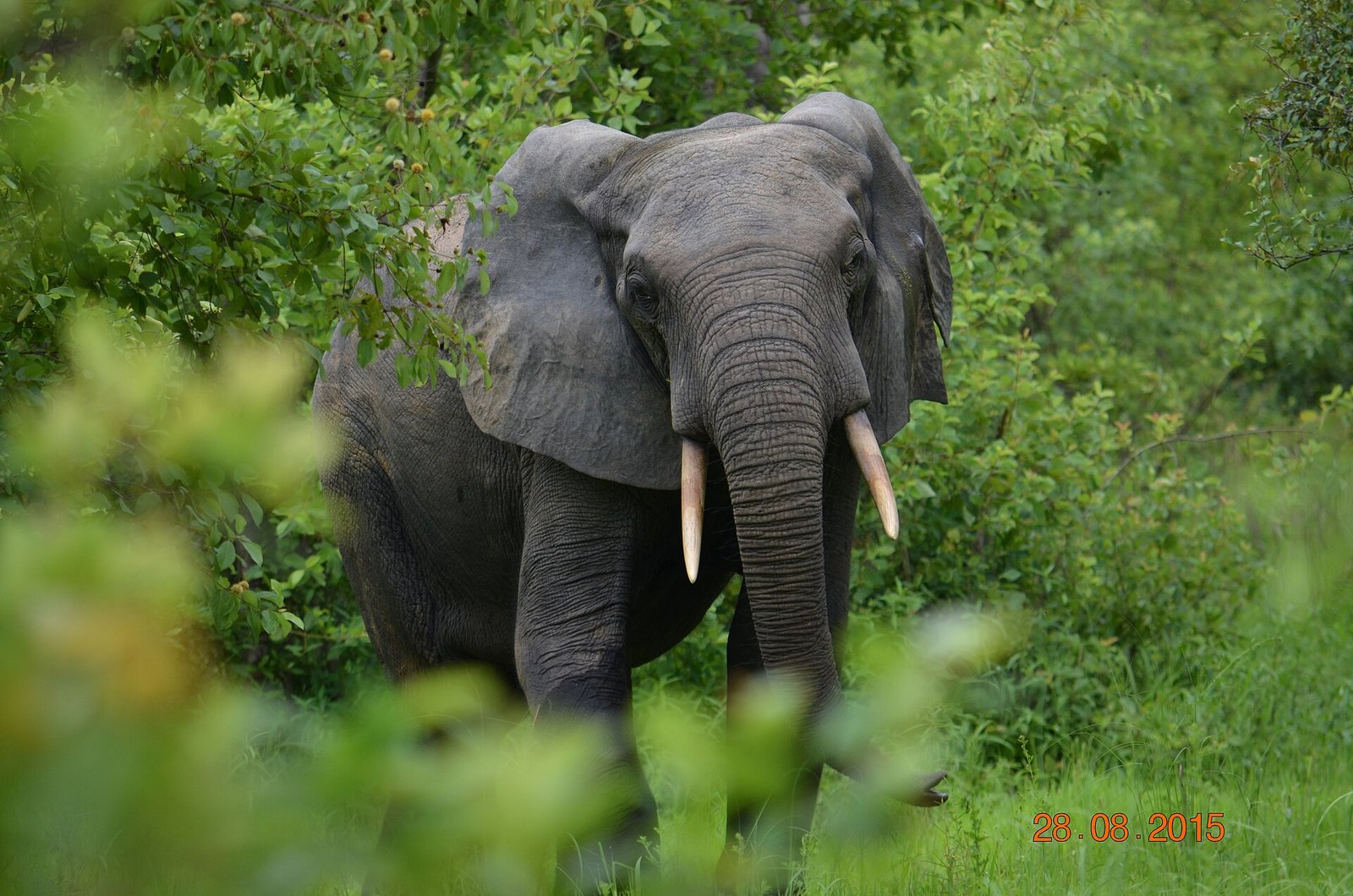
Two examples do much of the explaining. African forest elephants trample small trees, which lets larger, slower-growing and more carbon-rich trees thrive; forests with elephants in the Congo Basin store around 7% more carbon than those without them, IFAW reports. At sea, sea otters prey on sea urchins that would otherwise strip kelp forests bare — and one study cited in the launch material found kelp forests guarded by otters can absorb 12 times more carbon dioxide than those without.
Scale those mechanisms up and the numbers get large. A 2023 paper in Nature Climate Change, led by Yale University, found that protecting and restoring functional populations of just nine terrestrial and marine wildlife groups could help capture an additional 6.4 gigatonnes of carbon dioxide a year — roughly one-sixth of the carbon dioxide emitted globally from fossil fuels in 2024, according to the World Federation for Animals. Behind the declaration sits a Scientific Consensus on Wildlife and Climate backed by more than 350 scientists from 47 countries, calling on governments to account explicitly for wild animals and their functional roles in climate policy.
Why the COP31 wildlife declaration countries lean African
Twelve of the 25 endorsers are African states, including Kenya, the Democratic Republic of the Congo, Zimbabwe, Zambia, Somalia and Madagascar, African Sustainability Matters reports. That is not a coincidence of conference geography. Forests shape rainfall and water flows on the continent; wetlands blunt floods; grasslands underpin livestock economies; marine ecosystems support fisheries and coastal livelihoods. If animal populations hold those systems together, then wildlife loss is an economic exposure, not only a conservation grief.
The same report is clear-eyed about delivery. Implementation means ministries that usually work apart — environment, agriculture, forestry, fisheries, water, finance — sharing data and aligning budgets. It means money reaching communities that live alongside wildlife and bear its costs in lost crops and livestock. And it means measurement good enough to separate a genuine carbon benefit from a biodiversity claim pasted onto a project. The declaration itself is not binding, as African Sustainability Matters notes; its force will depend on funded programmes and measurable responsibilities after COP31.
Analysis: Read the declaration as a correction to how carbon accounting sees nature. Standard planning counts vegetation cover and stored carbon. It rarely asks whether the animals that maintain the vegetation are still there. Forest elephants carbon storage makes the flaw concrete: a forest can look intact in a satellite image while the process that made it carbon-dense is already gone. The declaration’s supporters are candid about the next test. “For too long, wildlife has been the missing piece in global climate policy,” said Matt Collis, Senior Director of Policy at IFAW, in the launch release. “The real test now is whether this recognition translates into national climate plans, meaningful investment, and action on the ground.”
That test starts at home, in the 25 signatories’ own plans. If their next climate submissions name species, habitats and budgets, Antalya will have changed something real. If they do not, the declaration joins a long shelf of conference language that the elephants never got to read.
Photo: Sheihu Salawatia, via Wikimedia Commons (CC BY-SA 4.0)
Sources
- IFAW — 25 countries back Wildlife for Climate Declaration at COP31 https://www.ifaw.org/press-releases/wildlife-climate-declaration-cop31
- World Federation for Animals — Governments commit to protecting wildlife as part of climate action at COP31 https://wfa.org/governments-commit-to-protecting-wildlife-as-part-of-climate-action-at-cop31/
- African Sustainability Matters — African Countries Back COP31 Wildlife Declaration to put nature at centre of climate action https://africasustainabilitymatters.com/28387-2/
Leave a comment
Comment as a guest and verify your email, or sign in or create a reader account. Guest comments reach our review queue after email verification; account holders can submit directly for review.