Listen to this article
Take the story with you. Choose a voice and a pace that suits you.
Or listen in another language / choose a voice
Getting your device voices ready…
The voice follows the displayed language and your browser’s regional preference when available. You can choose another narration voice.
The Harvard Peabody Museum repatriation to Brazil ended, on paper, with two ceremonies on 11 November 2026. In Rio de Janeiro and in Salvador, officials received two skulls that had been outside Brazil since the 19th century — one taken about 190 years ago, the other about 160 years ago (The Guardian via VidiaNews). Brazilian diplomats carried each skull home in a padded box inside a reinforced suitcase, after a campaign of about four years (The Guardian via VidiaNews).
Information verified through 19 November 2026.
Harvard Peabody Museum repatriation to Brazil: what was returned, and to whom
The National Museum of the Federal University of Rio de Janeiro received the skull of an adult woman, held at the Peabody Museum since 1870 after a transfer from Harvard’s Museum of Comparative Zoology (The Art Newspaper). The Federal University of Bahia in Salvador received the remains of a man of Nagô origin (The Art Newspaper).
The return sits inside a wider Harvard initiative, launched in 2019, to review records for people of African descent from Brazil and the Caribbean; that review recorded one person as enslaved and found strong evidence the other was enslaved too (The Art Newspaper). A 2022 report on Harvard’s collections documented thousands of human remains and sharpened scrutiny of how they were gathered and studied (The Art Newspaper).
Enslaved people skulls returned to Brazil 2026: the Rio woman
Harvard’s record for the Rio skull is stark, and thin. It describes her, in the language of the period, as the “skull of a negro”, “exhumed in the streets of Rio de Janeiro” — a note, not an account of who she was or who took her (The Art Newspaper). Records link its acquisition to Walter Hunnewell, a Harvard graduate who served as photographer on Louis Agassiz’s 1865–66 expedition to Brazil (The Art Newspaper). Agassiz was in Brazil documenting physical types to support racist theories, the Guardian reports (The Guardian via VidiaNews).
Historian Bruno Veras, who followed the case, cross-checked diaries, letters and maps and believes the skull may come from a cemetery for newly arrived Africans who died during or soon after the Atlantic crossing (The Guardian via VidiaNews). That possibility points to the Cemitério dos Pretos Novos Harvard remains question, taken up below. For now, the museum in Rio holds her in temporary custody. She will not be displayed, nor used for research or reproduction, while work continues on her origins (The Art Newspaper).
“This return represents a historical responsibility for the museum,” Juliana Sayão, the Museu Nacional’s deputy director, said at the Rio ceremony on 11 November (The Art Newspaper).
Malê Revolt skull repatriation Salvador: the man named Arakunrin
The Salvador skull carries a more specific, still unproven, story. It is believed to belong to a man who took part in the Malê Revolt of January 1835, described as the most significant urban slave revolt in Brazilian history, when about 600 African Muslims tried to seize Salvador, then the country’s second city (The Guardian via VidiaNews). Police defeated the rising and killed 70 rebels; this man reportedly was wounded, died in hospital, and a US diplomat, Gideon T. Snow, is believed to have sent the skull to Boston (The Guardian via VidiaNews).
The Bahia Islamic Cultural Centre, a leading campaigner for the return, has named him Arakunrin, meaning brother in Yoruba (The Guardian via VidiaNews). That name is an act of restoration by campaigners, not a recovered birth name — reports are clear that neither person’s identity is precisely known (The Guardian via VidiaNews).
Cemitério dos Pretos Novos Harvard remains and what happens next
The Cemitério dos Pretos Novos Harvard remains hypothesis matters because it would place the Rio woman among enslaved Africans who died after arrival in Rio; the burial ground operated in the 18th and early 19th centuries and was rediscovered in 1996 during construction in the port district (The Art Newspaper). It remains a hypothesis. Forensic anthropologists will measure the skulls — the Salvador skull is complete, the Rio skull missing its jaw — and may seek permission for genetic or dating tests (The Guardian via VidiaNews).
Brazil’s government has pledged no display, no released images, and burial with funeral rites once identification work is complete (The Guardian via VidiaNews). At the Rio ceremony, Ivanir dos Santos, a history professor and Candomblé cleric, poured water on the ground as the suitcase arrived: “This is not a research object … for us, that person is still alive in memory and as our ancestor,” he said (The Guardian via VidiaNews).
Analysis: two skulls is a small number against more than four million enslaved Africans who disembarked in Brazil, the largest destination in the transatlantic trade, in a country that abolished slavery last in the Americas, in 1888 (The Art Newspaper). The weight here is procedural as much as symbolic. Researchers asked first, in 2022; the process moved only after Brazil’s government joined in late 2024 (The Guardian via VidiaNews). “It’s very important to restore the dignity of these people, which was taken from them in life and in death,” said Carolina Dias dos Reis, the official who travelled to Boston to sign the agreement (The Guardian via VidiaNews). Whether Harvard’s wider holdings yield more returns is a question this handover poses, not one it answers.
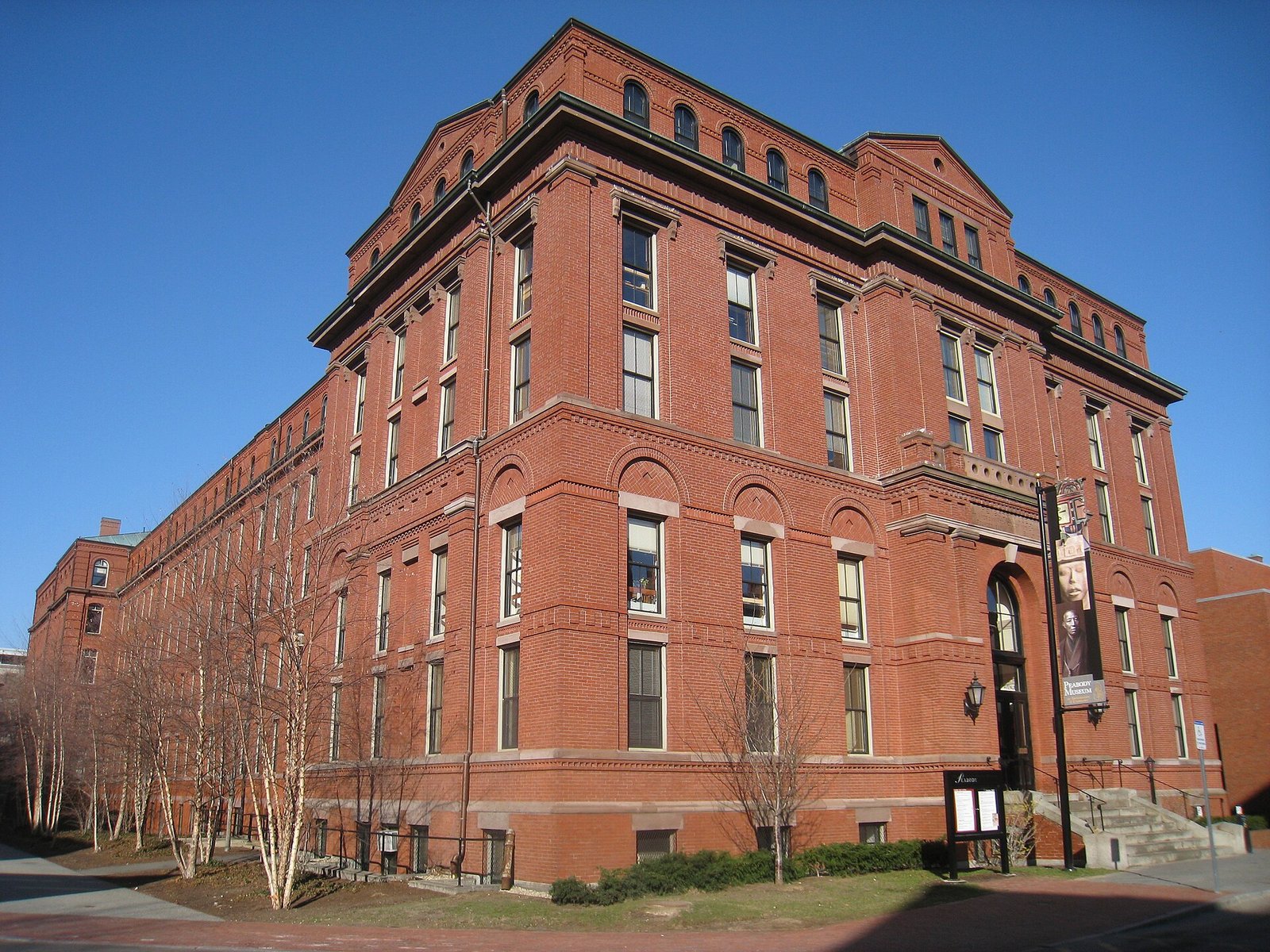
Photo: Daderot, via Wikimedia Commons (Public domain)
Sources
- The Art Newspaper — Harvard museum returns human remains to Brazil: https://www.theartnewspaper.com/2026/11/17/harvard-museum-returns-human-remains-brazil
- The Guardian via VidiaNews — Two skulls likely belonging to enslaved people returned to Brazil after Harvard used them in eugenics studies: https://vidianews.com/news/28882-two-skulls-likely-belonging-to-enslaved-people-returned-to-brazil-after-harvard
- USA Art News — Harvard Museum Returns 19th-Century Human Remains to Brazil: https://usaartnews.com/news/harvard-museum-repatriates-19th-century-human-remains-to-brazil/
- The Insight International — Brazil brings home two skulls of likely enslaved people that Harvard used in racist studies: https://theinsightinternational.com/brazil-brings-home-two-skulls-of-likely-enslaved-people-held-by-harvard/
Leave a comment
Comment as a guest and verify your email, or sign in or create a reader account. Guest comments reach our review queue after email verification; account holders can submit directly for review.