Listen to this article
Take the story with you. Choose a voice and a pace that suits you.
Or listen in another language / choose a voice
Getting your device voices ready…
The voice follows the displayed language and your browser’s regional preference when available. You can choose another narration voice.
Bala Hissar Kabul fortress excavation finds reported this month read like a city arguing with itself across centuries. In five trenches inside Kabul’s crumbling citadel, workers have unearthed ancient coins, fragments of Buddhist statues, glazed Islamic ceramics, oil lamps, pottery and the remains of palaces, monasteries and dwellings, according to an Associated Press feature by Elena Becatoros published on 9 November 2026 (source).
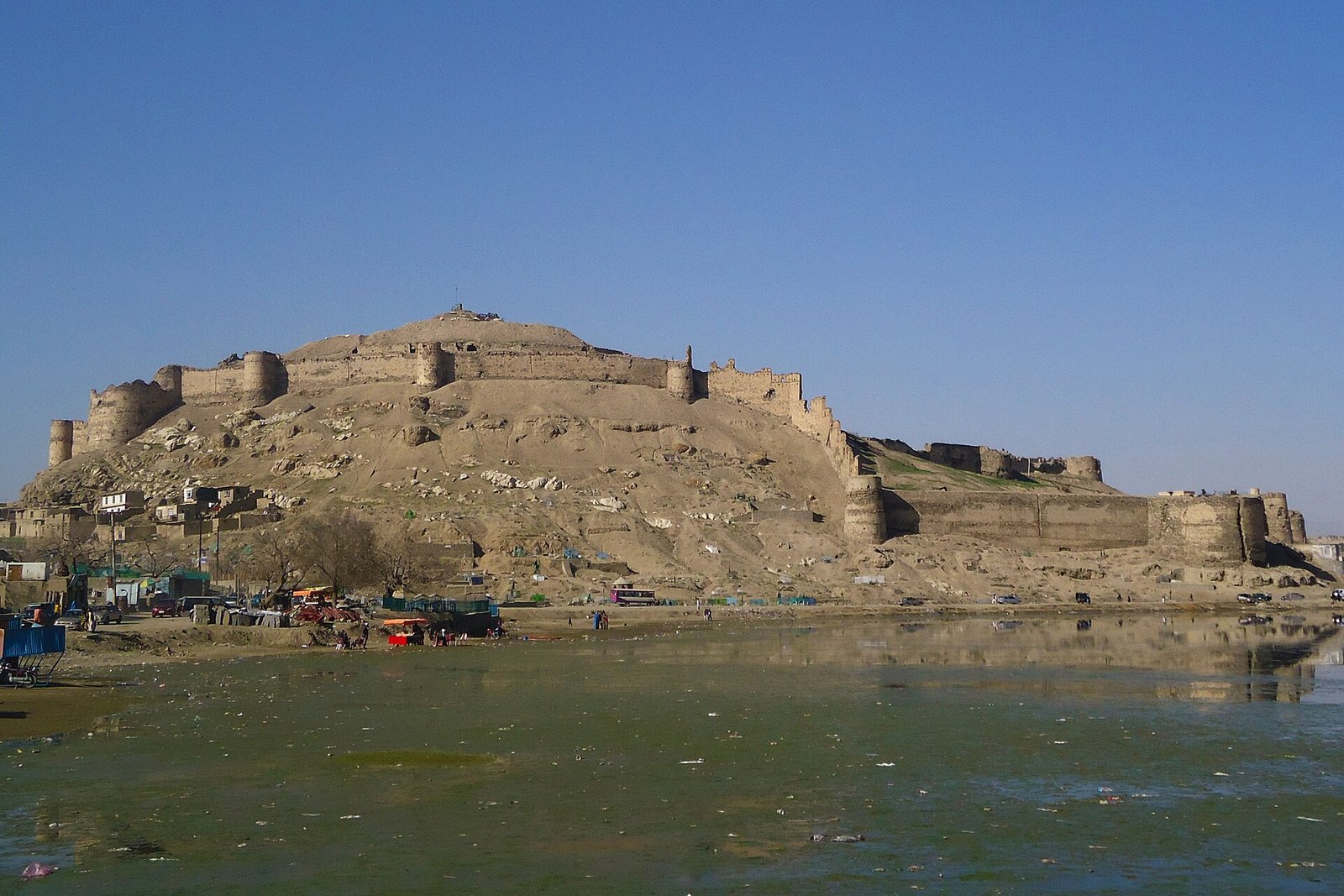
Bala Hissar means High Fort in Dari. Its walls run down a rocky spur of the Kuh-e-Sher Darwaza ridge above the southern edge of Kabul’s old city, in a position that guarded the routes into the capital (source). A years-long conservation project by the Aga Khan Trust for Culture, or AKTC, is stabilising the fortress while the digging continues (source).
Information verified through 18 November 2026.
What was found at Bala Hissar Kabul
Archaeologist Babak Rafiei-Alavi, speaking at an excavation site as workers sifted soil with trowels, told AP the team had not expected the scale of it. “We never thought we would find so much,” he said. “It’s like a submarine coming out of the ocean” (source).
One trench is already 11 metres deep, with more still to be uncovered, and that depth represents accumulated deposits at that location rather than the whole fortress sitting under 11 metres of earth (source). Rafiei-Alavi put the reason plainly: everywhere in Bala Hissar, when you dig you find something, because it has been inhabited for more than 2,000 years (source).
The excavations have also used ground-penetrating radar and 3D laser scanning alongside conventional digging to document what survives (source).
A Bala Hissar Buddhist monastery Mughal palace pairing — in different layers
Two finds have drawn the most attention, and they belong to different worlds. The first is the remains of a Buddhist monastery, with fragments of Buddhist sculpture, evidence of the site’s religious importance before its later Islamic phases (source). AP gives no century for the monastery, and researchers have not yet established a definitive chronology for the Buddhist structures identified at the site (source).
Context exists around the ridge, though. Encyclopaedia Iranica notes an arc of Buddhist monastic complexes along the Sher Darwaza mountain, including a monastery with seven stupas at Maranjan dated to the Kushan period of the first to third centuries AD (source). How the newly reported monastery fits that wider Buddhist landscape is a question the excavators have yet to answer in print (source).
The second find is a Mughal palace: murals, a thronelike structure, luxurious baths and a star-shaped pool carved into the rock at the top of the hill (source). “In some parts we were expecting something. But not this,” Rafiei-Alavi said of the palace remnants (source). The pool’s precise date and original function remain uncertain; HeritageDaily notes it may have served an ornamental, bathing or ceremonial purpose, with no definitive interpretation established (source).
That pairing — monastery and palace — should not be read as one scene. They are successive layers in a place that served, at different times, as fortress, palace complex, arsenal, administrative centre, prison and military garrison (source).
The Bala Hissar archaeological park Aga Khan plan
Location explains the layering. Bala Hissar sat on a trade route connecting the Indian subcontinent to Central Asia and beyond, and Aga Khan Cultural Services project manager Mustafa Nouri described it to AP as part of a “string of pearls” of cultural and human settlements, adding that whoever controlled Bala Hissar controlled Kabul and the region (source).
The fortress also carries heavy damage. British forces destroyed much of the complex after the 1879 killing of the British envoy Sir Louis Cavagnari and his escort inside Bala Hissar, a reprisal AP describes as the heaviest blow the site suffered (source). Part of the site was levelled in 2008 by US forces, which Rafiei-Alavi told AP destroyed many archaeological layers (source).
AKTC began emergency stabilisation in 2017, with planning that year and work starting in 2018; the French Archaeological Delegation in Afghanistan was involved at first, work paused in 2021, and AKTC has carried out its most extensive work since 2022 (source). Rebuilt wall sections use locally sourced rock and are deliberately set slightly apart from the original masonry so new work can be told from old (source). The stated aim is a public archaeological park with landscaped gardens, restaurants and a museum — described in 2020 as the country’s first public archaeological park — alongside a training programme for Afghan archaeology students (source). No opening date has been announced.
Afghan authorities, for their part, say they want to preserve the country’s ancient sites. Ministry of Information and Culture spokesperson Khubaib Ghufran told AP the government recognises the importance of preserving them and views remnants of past civilisations as valuable sources of insight (source).
Analysis: Bala Hissar’s value is not a single treasure. It is the stack — Buddhist, Mughal, Durrani, British-era and modern military traces in one fortified hill, now being recorded before more of it falls down. The open questions are chronological: dates for the monastery, the pool and the earliest occupation are still unproven. Until the excavators publish those, the honest headline is abundance, not a finished timeline.
Photo: AhmadElhan, via Wikimedia Commons (CC BY-SA 4.0)
Sources
- https://www.ancient-origins.net/news-history-archaeology/bala-hissar-kabul-buddhist-monastery-mughal-baths-00128403
- https://ismailimail.blog/2026/11/09/the-washington-post-work-to-save-the-afghan-capitals-crumbling-ancient-fortress-uncovers-archaeological-treasures/
- https://www.heritagedaily.com/2026/11/ancient-palaces-and-buddhist-monasteries-uncovered-at-kabul-fortress/159978
- https://wisconsinmuslimjournal.org/https-www-dailysabah-com-life-history-afghanistans-weathered-fortress-reveals-2000-years-of-history/
Leave a comment
Comment as a guest and verify your email, or sign in or create a reader account. Guest comments reach our review queue after email verification; account holders can submit directly for review.