Listen to this article
Take the story with you. Choose a voice and a pace that suits you.
Or listen in another language / choose a voice
Getting your device voices ready…
The voice follows the displayed language and your browser’s regional preference when available. You can choose another narration voice.
The Allianz Sense of Community study starts with a finding that cuts against the usual story about divided societies. Communities are not mainly breaking apart through open conflict. People are stepping back before any conflict starts, because they have lost the confidence to take part at all (Allianz).
The study, run for Allianz by the research agency STURMundDRANG, followed 119 participants in the United States, Germany, Italy, Indonesia and Brazil as they kept daily video diaries of their ordinary social lives for seven days in 2026 (STURMundDRANG). It is qualitative work, not a giant poll. Its value is in the texture: missed greetings, avoided clubs, conversations never started. Information verified through 10 November 2026.
One participant in the U.S., identified by a pseudonym, describes the pattern in a single sentence: “I just slowly stopped interacting and eventually just kind of gave up on it” (Allianz). Nothing dramatic happened. That is the point.
What the Allianz Sense of Community study calls social confidence
The researchers give the missing capacity a name: social confidence, meaning the confidence in yourself, in other people and in the surrounding system to enter, navigate, nurture and repair social life (Allianz). They compare it to a muscle. It grows when trained. Right now, they say, it is increasingly in atrophy.
That image explains why people withdraw from community life even when they miss it. The study describes a vicious circle: guarded interactions produce less warmth, the coolness confirms the original caution, and people withdraw a little further (Allianz). Withdrawal often ends in a retreat into customised bubbles, digital or physical, where everyone already agrees — and where the practice of handling disagreement quietly rusts away.
Europa Bendig, founder and managing director of STURMundDRANG, puts the finding bluntly: “We do not fail to connect because we do not care. We fail because everyday human interaction has started to feel like a psychological risk” (Allianz).
Three kinds of confidence, all of them thinning
The study splits social confidence into three dimensions, and reports people losing ground in each one (Allianz).
Confidence in self is the capacity to take part — the energy, skills and emotional room to join in and contribute. Confidence in others is interpersonal safety: the expectation of goodwill, recognition and fairness. Confidence in systems is whether the setting itself works — the rules, institutions and structures that make participation feel safe, worthwhile and accessible.
Each failure asks for a different fix, the study argues: a lower barrier to entry, visible recognition, or a setting that demonstrably works (Allianz). A poster campaign fixes none of them.
Behind the three dimensions sit five beliefs the researchers found recurring in every market. Digital contact leaves people feeling more alone. Other people are expected to judge and gossip. Care has become a risky calculation, weighed for what it returns. Small signs of humanity — being greeted, remembered, listened to — have grown rare and therefore precious. And the only safe community, many now assume, is one where everybody thinks alike (Allianz).
A sense of belonging in five countries, wearing five different faces
The guardedness is shared. Its emotional logic is not.
In Germany, opinions are quickly moralised, so people watch what they say and withdraw from charged topics — the inner sentence is “I might say it wrong.” In the U.S., guardedness ties itself to identity, politics and media, even though local life feels less polarised than national discourse. Indonesian participants described harmony norms that bury conflict rather than air it: “I stay polite, but I withdraw” (Allianz).
Each country also keeps a cultural hook that still works. Germany has its club culture and the barbecue. Indonesia has dirangkul, being embraced into the group. Brazil has mutirão, coming together to solve a practical problem (Allianz). The study’s wider program, Power of Unity, was launched in November 2024 to counter the erosion of trust in societal institutions, and it frames Sense of Community as the phase that asks how people actually experience belonging day to day (Allianz).
The barriers shift by group, too. Younger participants pointed to confidence in self — many described having unlearned how to start a conversation in person. Older participants doubted systems instead. Men tended to withdraw into isolation and resist formats built around talking; a shared task worked better. Rural participants found existing structures gatekept by established circles (Allianz).
What brings people back is embarrassingly small
The study’s list of what makes a community thrive is almost aggressively ordinary. Contact that is easy, local and repeatable. People feeling recognised, not just included. Difference that does not threaten belonging because someone actively moderates it. Contribution that is mutual, so taking part means everyone gains (Allianz).
Its advice for neighbourhoods runs the same way: one recurring, low-effort meeting point beats one large event; choose a setting where nobody has to buy anything to stay; greet people by name; give people a task, not only a conversation; support the host who keeps showing up (Allianz).
On institutions, the study is direct about the limit: enable the conditions, do not own the community. Support is credible, participants said, when it shows up before anything is being sold and stays local, tangible and respectful of autonomy (STURMundDRANG).
Analysis: the study reframes a familiar lament. The standard account says community is dying of disagreement. This one says it is dying of hesitation — of practice lost, one skipped conversation at a time. If that diagnosis is right, the remedy is not a grand national conversation. It is repetition at walking distance: the same faces, the same bench, the same Tuesday, until starting a conversation feels ordinary again.
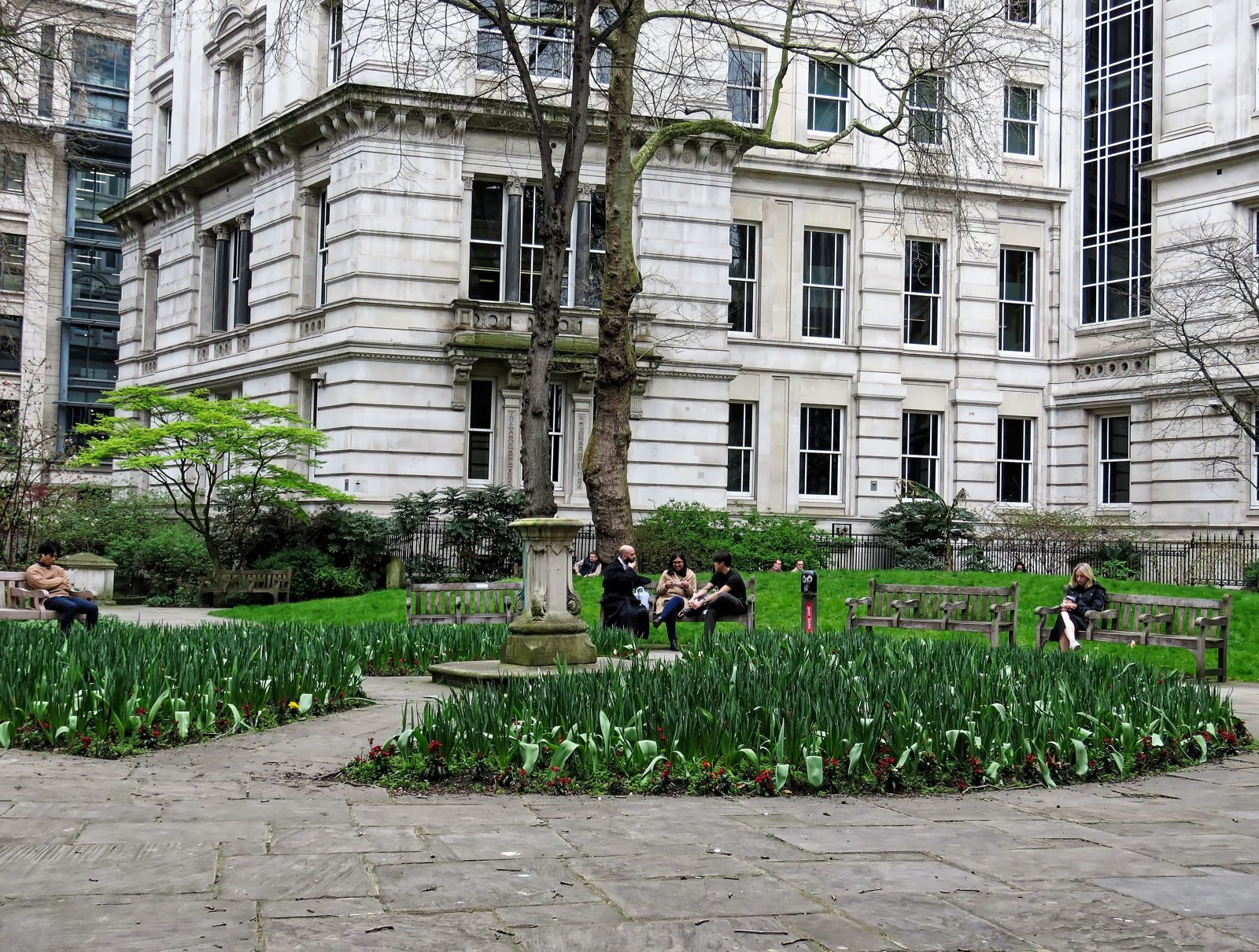
Photo: Acabashi, via Wikimedia Commons (CC BY-SA 4.0)
Leave a comment
Comment as a guest and verify your email, or sign in or create a reader account. Guest comments reach our review queue after email verification; account holders can submit directly for review.