Listen to this article
Take the story with you. Choose a voice and a pace that suits you.
Or listen in another language / choose a voice
Getting your device voices ready…
The voice follows the displayed language and your browser’s regional preference when available. You can choose another narration voice.
The Abu Dhabi Ukraine peace talks open on Tuesday 10 November 2026, bringing Russian, Ukrainian and American negotiators together for two days of US-brokered talks — their first trilateral session since February (Reuters). Nobody arriving in the Emirati capital expects a signed peace by Wednesday night. What they might get is a clearer answer to a narrower question: what would protect Ukraine, and Europe, once the guns stop? Information verified through 10 November 2026.
The delegations are senior enough to do real work. Russia’s 11-person team is led by presidential aide Vladimir Medinsky and includes two deputy foreign ministers plus senior military and intelligence officials (Reuters). Ukraine’s side is led by Rustem Umerov, its foreign intelligence chief and top negotiator, and Washington’s by Steve Witkoff and Jared Kushner (CNN).
Abu Dhabi Ukraine peace talks turn on security guarantees
Ask each capital what these two days are for and you get three different meetings.
A source in the Russian delegation told Reuters the main thrust would be hammering out “the key elements of a new post-war security framework for Europe,” describing a Ukrainian settlement as “subordinate to the main objective — the creation of a comprehensive and indivisible security architecture for the entire continent” (Reuters). US officials framed it from the other end: a new starting point for defining an end to the war, including security guarantees and a “post-war security architecture,” with any American guarantee itself a decision for President Donald Trump (CNN).
Kyiv’s version is the most concrete. Umerov has said Ukraine’s goals are a lasting peace, security guarantees and a chance to rebuild, and Kyiv wants binding commitments that spell out who would respond, how, and under what circumstances if Russia attacked again (Bulletin Observer; AnewZ).
The Ukraine security guarantees talks, in other words, are not one negotiation. They are three, sharing a building.
The Europe role in Abu Dhabi talks is disputed before the first session
The strangest argument of the week is about chairs.
European representatives from the United Kingdom, France, Germany and Italy, plus NATO and the European Commission, are expected in Abu Dhabi (Reuters). Whether they sit in the negotiating session is another matter. Kremlin spokesman Dmitry Peskov insisted the format is trilateral — Russia and Ukraine, with the United States mediating — and that Europe has its own channels to Kyiv and Washington (CNN). Russia has not said it will hold any direct talks with the Europeans this week (Reuters).
Ukraine is working around that refusal. “We will hold separate coordination meetings with our European partners,” Umerov said (CNN). Kushner, for his part, posted that a lasting settlement “will also require direct engagement between Russia and our European partners on the broader security arrangements that affect them” — later, not now (CNN).
Europe isn’t hiding its doubts. EU foreign policy chief Kaja Kallas said Monday she saw little sign Russia was willing to negotiate in good faith, and French Foreign Minister Jean-Noël Barrot said France “will be there” to ensure Europe’s voice is heard (CNN; AnewZ). Zelenskyy has warned against any deal affecting Ukraine and Europe being settled without them, drawing a comparison with Yalta in 1945 (AnewZ).
The first trilateral talks since February meet an unchanged map
Underneath the seating plan, the old blockages sit exactly where February left them.
This is the fourth round of the US-brokered process, and the previous three ended without a significant breakthrough (CNN; AnewZ). Moscow still demands Ukrainian withdrawal from the parts of Donbas Kyiv controls, limits on Ukraine’s military and abandonment of its NATO ambition; Kyiv still rejects ceding territory Russia has not captured (AnewZ). US officials have reported some private flexibility on territorial demands, but neither capital has confirmed any compromise publicly, and the reported plan is to take territory up later, after security arrangements are clearer (Bulletin Observer).
The war, meanwhile, isn’t pausing for the diplomats. Russian attacks on the power grid left more than 600,000 people in the Dnipropetrovsk region without electricity overnight into Sunday, Zelenskyy said, and civilian deaths in Ukraine this year are at their highest point of the war, according to the conflict monitor ACLED (CNN). Saturday night’s barrage on Kyiv — 36 ballistic missiles, four intercepted, by Zelenskyy’s account — was still being cleared up as the delegations flew in (AnewZ).
Expectations are being managed down in every language. John Herbst, a former US ambassador to Ukraine, said expectations for Abu Dhabi should be “very modest” (CNN). The realistic menu looks smaller than a settlement: a prisoner exchange, a limited pause on energy strikes, a monitored ceasefire sketch, an agreement to meet again (AnewZ; Bulletin Observer).
Analysis: the test of these two days isn’t whether peace breaks out. It’s whether the three delegations can agree on what a guarantee even is — a promise, a tripwire, a force — because every previous round has foundered on vaguer language than that. Abu Dhabi has already produced one honest result before the doors close: all sides now admit the argument is about Europe’s security order, not only Ukraine’s borders. That’s a bigger table than the one Moscow says it agreed to sit at.
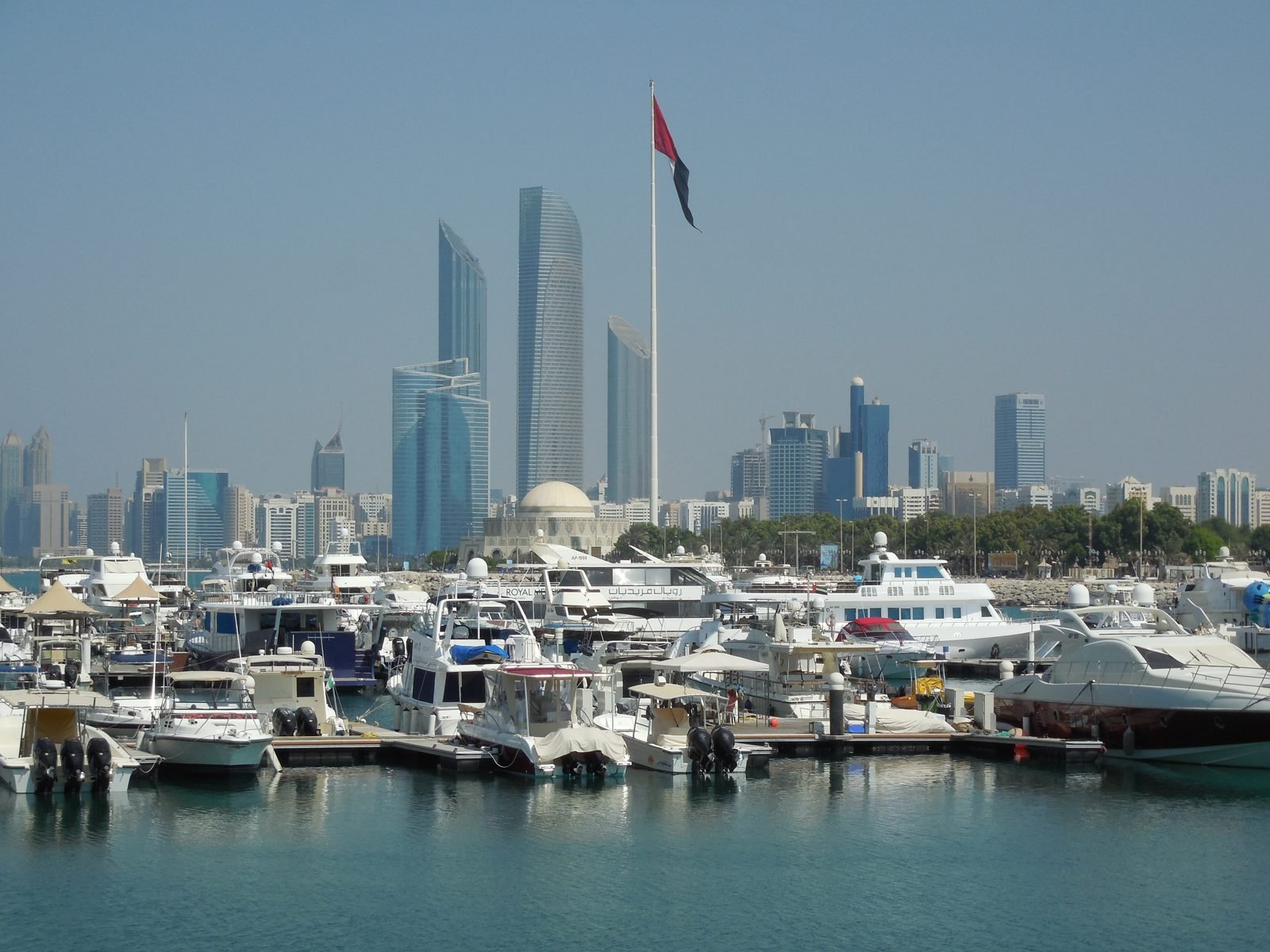
Photo: Aravind Sivaraj, via Wikimedia Commons (CC BY-SA 3.0)
Sources
- https://www.reuters.com/world/europe/russia-sees-new-security-framework-europe-main-thrust-ukraine-talks-delegation-2026-11-10/
- https://www.cnn.com/2026/11/09/europe/russia-ukraine-us-peace-talks-preview-intl?cid=external-feeds_iluminar_meta
- https://bulletin.observer/news/eu-and-nato-expected-at-abu-dhabi-talks-as-russia-objects
- https://anewz.tv/world/world-news/26479/russia-ukraine-peace-talks-return-to-abu-dhabi/news
Leave a comment
Comment as a guest and verify your email, or sign in or create a reader account. Guest comments reach our review queue after email verification; account holders can submit directly for review.