Listen to this article
Take the story with you. Choose a voice and a pace that suits you.
Or listen in another language / choose a voice
Getting your device voices ready…
The voice follows the displayed language and your browser’s regional preference when available. You can choose another narration voice.
Russia fires 36 ballistic missiles at Kyiv and the surrounding region overnight on 6–7 November 2026, in one of the heaviest barrages of the war, and Ukrainian air defences stop only four of them (NationWire). Another 172 drones cross Ukraine the same night. Nine people are wounded, including a child, President Volodymyr Zelenskyy says, and no deaths in Kyiv had been confirmed by Saturday morning (NationWire). Information verified through 9 November 2026.
The timing is hard to miss. Negotiators from Russia, Ukraine and the United States are due in Abu Dhabi on 10–11 November for a fourth round of US-brokered talks, the first trilateral session since February (NationWire).
Zelenskyy does not treat the timing as coincidence. “Russia is preparing for trilateral talks by launching ballistic missiles at Ukraine’s critical infrastructure,” he says in a statement on Saturday (NationWire). Russia’s Defence Ministry gives a different account: its forces struck military-industrial, energy and transport sites in and around Kyiv (NationWire). Those accounts are not the same claim, and neither side’s version settles what the other disputes.
Russia fires 36 ballistic missiles at Kyiv, and four are stopped
Four out of thirty-six. That ratio is the story inside the story.
Ballistic missiles climb high and fall fast, which makes them far harder to intercept than drones, and Zelenskyy links the result directly to a shortage of interceptors for the US-made Patriot systems Ukraine relies on against them (Zark News). The drone count tells a contrasting story: Ukraine’s air force says 149 of the 172 drones were brought down (NationWire). The defence held where the weapons were slower. It thinned where they were fastest.
The attack arrives in three waves, the first missiles reported shortly before 11 p.m. on Friday and further strikes around 1 a.m. and 3 a.m. (NationWire). Kyiv’s mayor, Vitali Klitschko, writes on Telegram as the first wave lands: “Explosions in the Kyiv suburbs. The enemy is hitting infrastructure with ballistic missiles” (NationWire).
None of this comes unannounced. In his nightly address on Friday, Zelenskyy warns that Ukrainian intelligence shows Russia preparing strikes on energy facilities, bridges across the Dnipro and civilian infrastructure (NationWire). Days earlier, on 3 November, Russia launches 289 drones, 17 ballistic missiles and 59 cruise missiles across nine regions (NationWire). Kyiv is warned, and still largely unshielded. That gap — between knowing and stopping — is where the night is decided.
The Patriot interceptor shortage Ukraine keeps naming
Zelenskyy has raised the interceptor shortage for months, and he raises it again on Saturday, saying the United States, above all, can help address it (Zark News). Washington has approved a possible sale of 500 PAC-3 interceptors, valued at about $2.1 billion according to reporting on the approval, but deliveries could take years (Zark News). The US State Department approved that potential sale on 30 October, with Lockheed Martin as the principal contractor (Interesting Engineering).
An approval is not an arrival. No delivery date that would cover the next large barrage has been confirmed in the reporting reviewed (Zark News), and Germany’s defence minister, Boris Pistorius, says Germany has no more Patriot systems to spare (Transform Ukraine). Poland’s foreign minister, Radoslaw Sikorski, pledges money for generators instead — a different kind of help, aimed at the damage rather than the sky (Transform Ukraine).
The Kyiv Northern Bridge hit November 2026, and a grid built around two nuclear plants
The targets explain the blackouts. Strikes hit substations that connect the Rivne and Khmelnytskyi nuclear power plants to Kyiv and central Ukraine, and Ukraine’s Energy Ministry says power lines carrying that electricity are damaged, causing blackouts in five regions: Kyiv, Zhytomyr, Kharkiv, Donetsk and Dnipropetrovsk (NationWire). Chernihiv, to the north, is left completely without power, and Kyiv faces disruptions to heating and water (NationWire).
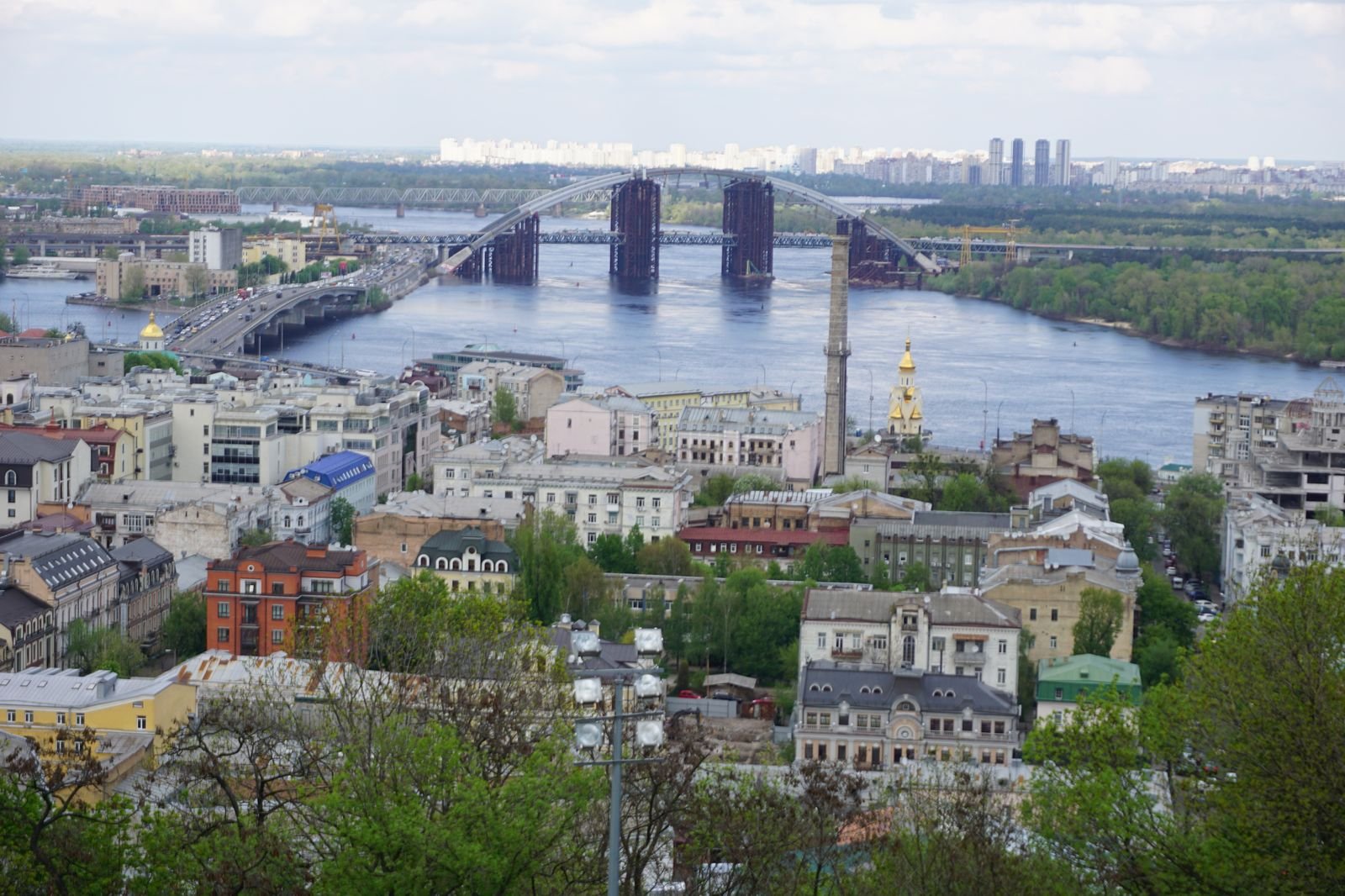
Then the bridge. Six ballistic missiles are fired at the Northern Bridge over the Dnipro and four strike it, Zelenskyy says; its road surface, trolleybus wires and a power line are damaged, and it closes to traffic in both directions (NationWire). Moscow claims the bridge was used to transport weapons and military equipment (NationWire). Ukraine has not accepted that account (Zark News).
On the ground, the damage is smaller and closer. A two-storey building on the grounds of a kindergarten in the Solomianskyi district is partly destroyed, apartment buildings are damaged, and five people are wounded in the capital, including a 14-year-old, according to city officials (NationWire). At an emergency meeting, Zelenskyy orders the interior minister to draw up backup transport routes for Kyiv, noting the city has none (Transform Ukraine).
One more claim needs care. Zelenskyy says preliminary findings at one damaged energy facility point to North Korean-made KN-23 missiles, manufactured and supplied by North Korea, with technical assessments still under way (NationWire). The KN-23, known in North Korea as the Hwasong-11A, is a solid-fuel, short-range ballistic missile with a top range of about 690 kilometres, according to the Center for Strategic and International Studies (NationWire). No final forensic report has been published, and Moscow has not commented on the claim (Zark News; NationWire).
Abu Dhabi Ukraine talks November 2026 meet a capital repairing itself
Ukraine strikes back the same night, with fires reported at the Saratov oil refinery and at a military electronics plant in Oryol (NationWire). Its General Staff says its forces also hit two Iskander missile launchers and a Pantsir-S1 air-defence system in Russia’s Bryansk region (Transform Ukraine).
Analysis: the first test in Abu Dhabi is narrow and practical — whether negotiators can produce even a limited pause in strikes on energy infrastructure before winter deepens (NationWire). Kyiv heads into that room with substations damaged, a main bridge shut, and a casualty and damage count that officials themselves say is not yet settled (Zark News). Repair crews are working on power, heat and water. The interceptors that would change the arithmetic of the next night like this one are, on the public record, still years from arriving.
Photo: Andrew Milligan sumo, via Wikimedia Commons (CC BY 2.0)
Sources
- https://nationwire.us/russia-36-ballistic-missiles-kyiv-region-abu-dhabi-talks/
- https://zarknews.com/russia-fires-36-ballistic-missiles-kyiv-abu-dhabi-talks-explained/
- https://transformukraine.org/war-updates/36-ballistic-missiles-hit-kyivs-grid-as-ukraine-names-the-komyshuvakha-pilots/
- https://interestingengineering.com/military/north-korean-ballistic-missiles-fired-us-ally
Leave a comment
Comment as a guest and verify your email, or sign in or create a reader account. Guest comments reach our review queue after email verification; account holders can submit directly for review.