Listen to this article
Take the story with you. Choose a voice and a pace that suits you.
Or listen in another language / choose a voice
Getting your device voices ready…
The voice follows the displayed language and your browser’s regional preference when available. You can choose another narration voice.
Brazil closed out its year running the United Nations climate process on Tuesday 3 November 2026 by publishing the two documents its COP30 summit in Belém could not agree on: a Brazil COP30 fossil fuel roadmap, and a companion roadmap for halting and reversing deforestation by 2030. Neither binds anyone. That is both their design and their problem.
Information verified through 4 November 2026.
COP30 President André Corrêa do Lago, who led last November’s summit in Belém, was blunt about the intent. “We don’t need more negotiations. What we need is for governments to start taking action,” he told Reuters, arguing that finance, infrastructure and transport ministers — not only climate negotiators — need to sit at the table, Reuters reported. “They are documents of implementation,” he said in a separate interview, the Guardian reported via Vale 50+.
How the Brazil COP30 fossil fuel roadmap is meant to work
The fossil fuel document runs to 182 pages. Instead of ordering every country down the same track, it offers “archetypes” so each state can plan an exit shaped to its own dependence on coal, oil and gas, names no country, and aims at net-zero emissions by 2050, Pollar reported. Brazil’s government says countries can start now, without waiting for new technology or economic change.
Reuters, reading the same roadmap, found a staged calendar inside it. Countries would spend the period to 2028 assessing their energy systems, strengthening regulation and drafting national transition plans, ahead of the second Global Stocktake. By 2030, infrastructure upgrades and renewable investment should be under way. A final phase from 2031 to 2033 would concentrate on accelerating renewable deployment, replacing fossil fuels and consolidating cleaner systems, Reuters reported. Suggested early moves are concrete enough: cut the flaring and venting of gas at extraction sites, reduce fossil fuel subsidies and tax incentives, and review demand across transport, industry and construction, the Guardian reported and Pollar reported. Cutting oil and gas production only gains priority from 2031.
The backdrop shows why replacement, not growth, is the hard part. Global renewable capacity hit a record 5,149 gigawatts at the end of 2025, up 692 gigawatts in a year, according to the International Renewable Energy Agency — yet Brazil’s roadmap notes that most of that growth has gone to meeting new demand rather than displacing fossil fuel use, Reuters reported.
Forests, and a funding gap with too many zeroes
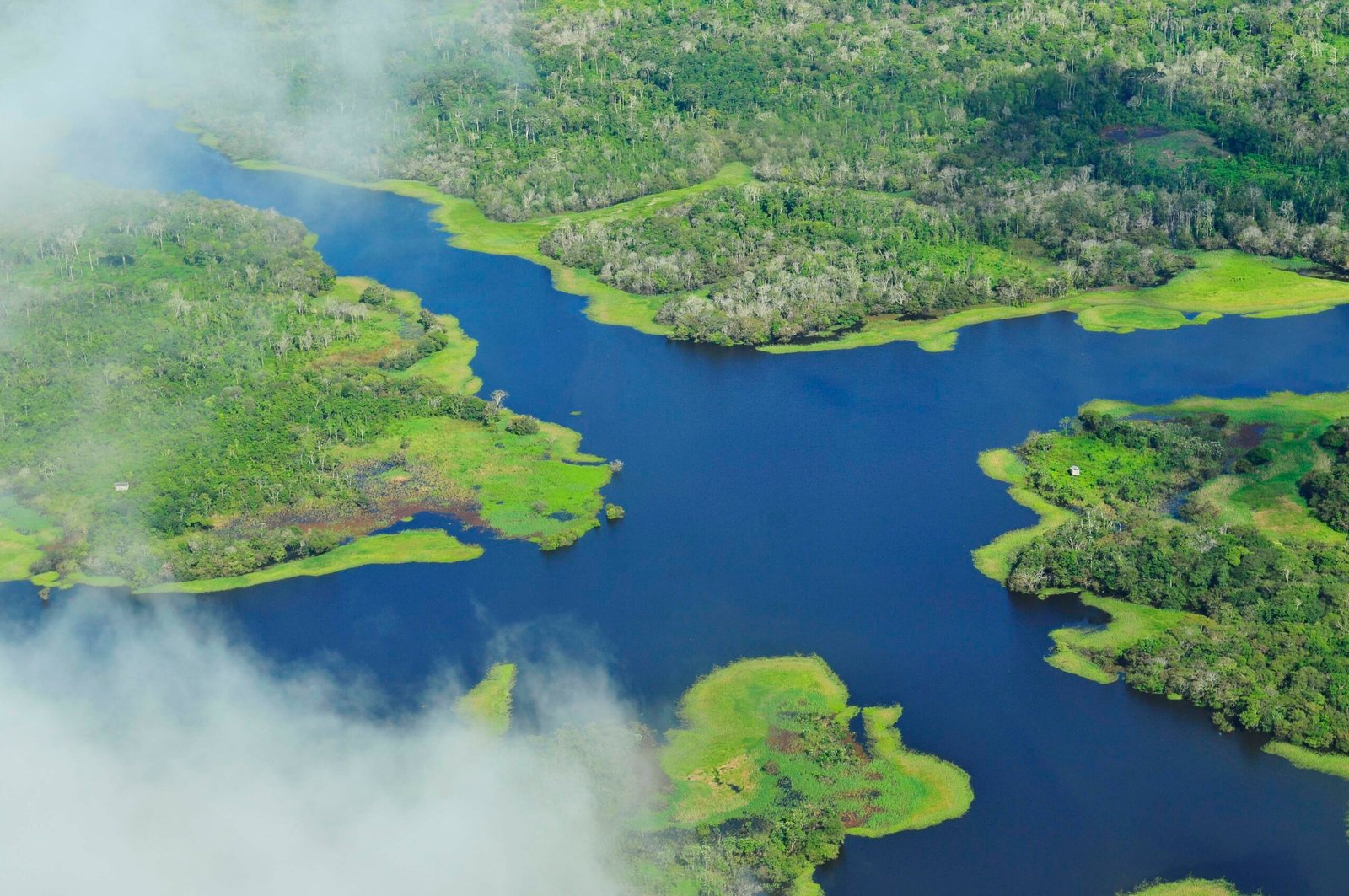
The deforestation roadmap rests on three pillars — national forest action, international cooperation and finance — with measures aimed at the 2030 horizon, Pollar reported. Its central fact is a shortfall. Annual funding for forests must rise from $84.5 billion in 2023 to more than $300 billion by 2030, according to the United Nations Environment Programme, and the roadmap, citing UN figures, puts the need at about $500 billion a year by 2050 against roughly $85 billion available now, Reuters reported and the Guardian reported.
Most forest money today comes from national governments — 88.3 percent of it — while international public funding supplies only 3.4 percent, leaving the heaviest burden on the developing countries where most tropical forest stands, Reuters reported. Brazil’s answer is the Tropical Forests Forever Facility, which would pay forest-keeping countries from the returns of a sovereign fund. It had secured $7.6 billion by the end of COP30 against a $10 billion target, according to Corrêa do Lago, Reuters reported. The roadmap also calls for stronger carbon markets, direct finance access for Indigenous peoples and local communities, and debt-relief instruments.
Why critics say a map without milestones is not enough
These documents exist because Belém deadlocked. In the summit’s final agreement, neither roadmap survived: more than 80 countries backed a fossil fuel roadmap, oil-producing states resisted measures that threaten a core revenue source, and a group of roughly 80 countries rejected the roadmap idea in the negotiations, so the presidency wrote the texts on its own responsibility, Reuters reported and Pollar reported. Both are voluntary, with no mandate from countries.
That softness is the main line of criticism. Joeri Rogelj, professor of climate science and policy at Imperial College London, called the roadmaps “valuable but fall short of clearly indicating the pace of change needed by including no timeline or key benchmarks,” warning that they leave too much to be imagined about reaching the Paris goal of limiting warming to well below 2°C, and preferably 1.5°C, the Guardian reported. The Guardian’s own reading agreed the documents contain no binding deadlines and leave each country to diagnose its own fossil dependence. There is also a sharper contrast available: governments in the separate Santa Marta process formed a coalition of nearly 60 countries in April and have begun producing national phase-out plans that are more specific and prescriptive than Brazil’s global text, the Guardian reported.
Analysis: A presidency roadmap is a strange instrument — too official to ignore, too voluntary to enforce. Its real test starts on 9 November, when COP31 opens in Antalya, Türkiye, under President Murat Kurum with an agenda that also claims to prize implementation over new pledges, Reuters reported. If finance and energy ministries pick Brazil’s documents up and turn the archetypes into national plans before the 2028 stocktake, the roadmaps will have done quiet, useful work. If they are praised in Antalya and shelved by Christmas, Rogelj’s verdict stands: a map that refuses to say how fast anyone must travel is mostly a picture of a road.
Photo: CIAT, via Wikimedia Commons (CC BY-SA 2.0)
Leave a comment
Comment as a guest and verify your email, or sign in or create a reader account. Guest comments reach our review queue after email verification; account holders can submit directly for review.