Listen to this article
Take the story with you. Choose a voice and a pace that suits you.
Or listen in another language / choose a voice
Getting your device voices ready…
The voice follows the displayed language and your browser’s regional preference when available. You can choose another narration voice.
Exercise volunteering reduces loneliness. That is the plain version of a finding that now has numbers behind it. People who run, walk or cycle to help isolated older people and local projects through the UK charity GoodGym reported less mental ill-health and less loneliness than people who had signed up but had not yet volunteered, in a study announced by King’s College London on 14 October 2026 and published in Social Science & Medicine (Hooray News). The authors are Maria Cotofan of King’s College London and Christian Krekel and Ekaterina Oparina of the London School of Economics.
Information verified through 4 November 2026.
How exercise volunteering reduces loneliness in practice
GoodGym does not look like a clinic intervention. It looks like a Tuesday evening.
Founded in 2009, the charity sends members out on foot or by bike to a job: keeping an isolated older person company, sorting cans at a food bank, clearing a community garden, shifting earth for a planting project (GoodGym). Its own count says members have helped more than 58,000 people with more than 383,000 tasks (Hooray News). Weekly group sessions follow a set pattern — meet, run or walk to a local organisation, work hard digging, lifting, scraping and clearing, then run or walk back (GoodGym).
The Associated Press watched one such session in south London, where volunteers jogged a mile to a rooftop community garden on a former parking lot, put on headlamps and got to work shovelling compost and clearing weeds on a cold, damp evening (Associated Press via WYSL). Nobody described it as therapy. They described it as fun, social and hard to skip. One regular called it his mandatory once-a-week run, the session that forces him out on a Monday night in the middle of winter.
That ordinariness is the mechanism worth noticing. The help goes one way. The contact does not.
What the GoodGym mental health study measured
The research team analysed survey data from 2,856 respondents collected between February 2023 and March 2024 (Hooray News). The comparison matters: the control group was not the general public, but people who had signed up for GoodGym and had not yet volunteered — people with the same stated intention, who had not yet done the thing.
Regular participation was linked to a significant reduction in mental ill-health. Volunteers also reported less loneliness and a stronger sense of trust, connection and belonging where they live, with participation associated with an average 0.43-point improvement in life satisfaction (Hooray News). The gains were not narrow. They held for men and women, across income and age groups, and even infrequent participation was linked to measurable improvements. The mental health gains were still present more than six months after a participant’s last volunteering task.
Krekel, who spent two years leading an earlier evaluation, put the combined effect directly: because of the unique combination of volunteering and physical activity, the team found stronger wellbeing impacts than the literature suggests for volunteering or for physical activity alone (Associated Press via WYSL). In that earlier work, based on survey results from 3,600 people, the team recorded improvements in all six aspects of mental wellbeing it measured.
Hold the caveat alongside the headline. This was an observational study. It found associations; it cannot prove that the volunteering itself caused the improvements, and people chose for themselves whether to show up, which could shape the results (Hooray News). It also studied one organised programme. A solo walk plus a good deed, done once, is not the same exposure.
Volunteering and exercise benefits, and the social prescribing community exercise argument
The authors point beyond the charity itself. King’s release puts the cost of mental ill-health to the UK at almost £120 billion a year, and the researchers suggest programmes of this kind could be a cost-effective way to support people with milder mental health conditions (Hooray News). By the researchers’ own calculation, the programme’s wellbeing benefits outweighed its operating costs by at least 40 to 1.
That is where social prescribing enters. In that model, a doctor refers a patient to a community activity alongside, or instead of, a pill or a waiting list. A GoodGym session fits the referral awkwardly and well at once: awkwardly, because it is a run in the rain ending at a stranger’s garden; well, because it is free to take part in, needs no prior commitment, and welcomes people at any fitness level, with a walking option and a rule that no one gets left behind (GoodGym).
The origin story explains the low bar. Founder Ivo Gormley began in 2007 by running to deliver a newspaper to an older person in his neighbourhood, after deciding he did not want to lift things in a sweaty basement that did not need lifting (Associated Press via WYSL). The first group ripped down outdated posters in east London. The charity now reports more than 26,600 members in 67 locations across England and Wales, and during the pandemic, when group runs stopped, requests surged to help older adults isolated at home with prescriptions and food deliveries.
Analysis: the study’s real contribution is not proving that kindness feels good. It is showing that a structure can deliver three things at once — movement, usefulness and repeated contact with the same neighbours — without asking anyone to attend a programme labelled for loneliness. People rarely join a loneliness intervention. They join a run that ends somewhere useful. The six-month persistence of the gains hints that what carries over is not the workout. It is the belonging that was built while doing it.
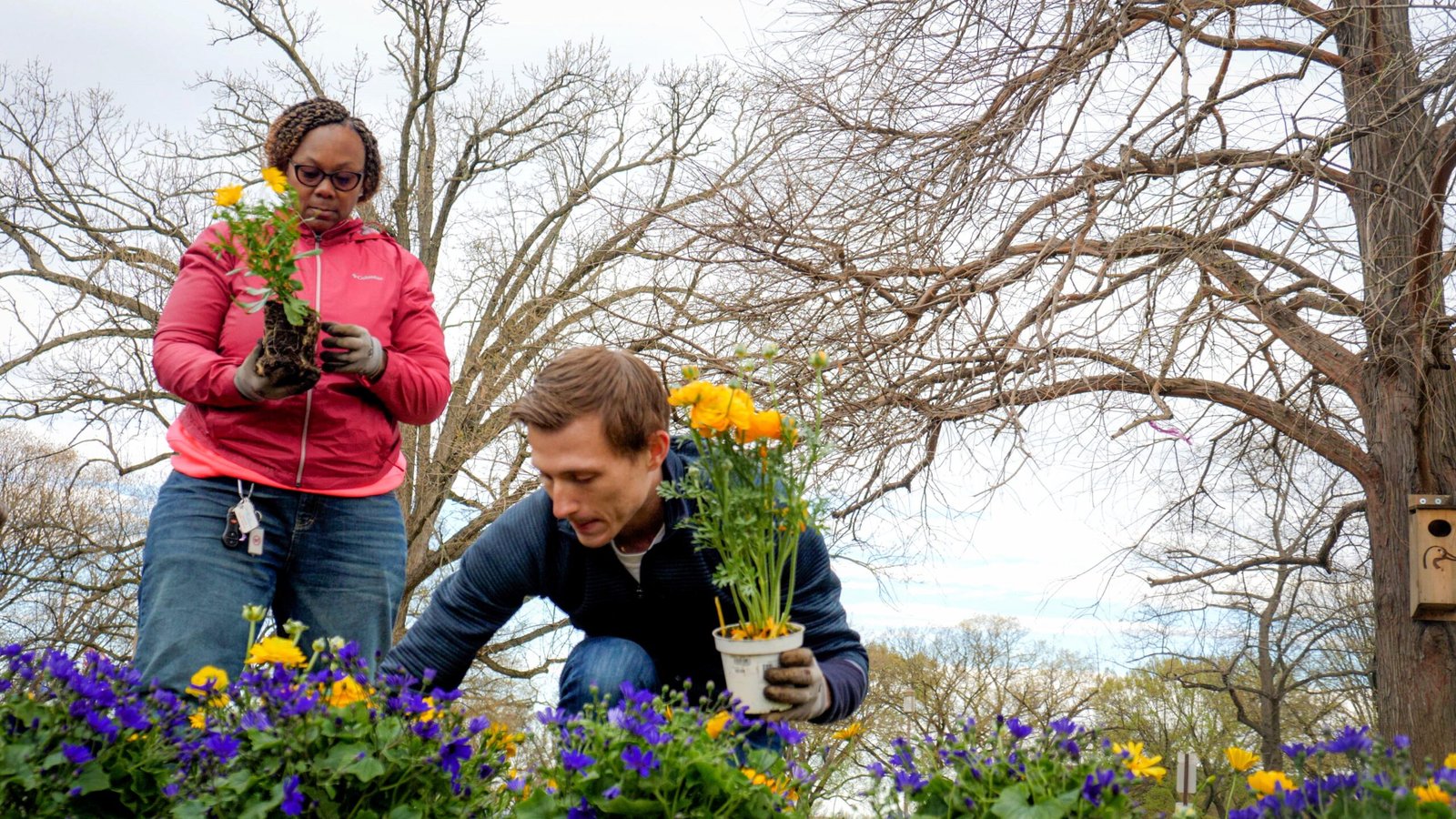
Photo: Preston Keres, USDA, via Wikimedia Commons (Public domain)
Leave a comment
Comment as a guest and verify your email, or sign in or create a reader account. Guest comments reach our review queue after email verification; account holders can submit directly for review.