Listen to this article
Take the story with you. Choose a voice and a pace that suits you.
Or listen in another language / choose a voice
Getting your device voices ready…
The voice follows the displayed language and your browser’s regional preference when available. You can choose another narration voice.
The Sudan drone attacks on civilian infrastructure have stopped being a front-line story. Over the past two weeks they have become a story about light, water and hospital wards. Denise Brown, the UN Resident and Humanitarian Coordinator in Sudan, told UN News on Tuesday that energy and fuel sources appear to be systematically targeted and destroyed, in what she described as an apparent violation of international humanitarian law (UN News). Her summary was blunt: “This is not about politics. This is about people.”
Information verified through 4 November 2026.
Sudan drone attacks on civilian infrastructure: a week of strikes, substation by substation
The documented sequence runs from late October into this week. Between 26 October and 2 November 2026, a succession of drone attacks targeted electricity installations and fuel facilities across Sudan, forcing stations out of service and triggering widespread outages, according to a chronology compiled by the United Network for Humanity Observatory from local sources (UNHO). Local sources monitored by the Observatory attributed a first wave, between 26 and 29 October, to the Rapid Support Forces (RSF), hitting ten electricity facilities across several states.
Some sites were hit again and again. Workers at the Al-Markhiyat central substation in Khartoum State reported eight consecutive drone attacks on the facility. At the Umm Dabaker power station in White Nile State, four main transformers were damaged in an attack on 29 October and the plant was taken out of service, disrupting supplies in parts of White Nile and North Kordofan (UNHO).
The map kept widening. Shendi substation in River Nile State was struck on 30 October, Haya substation in Red Sea State on 31 October, and on 1 November the attacks reached Al-Dabba and Abu Hamad, alongside a fuel storage facility at Al-Multaqa. On 2 November, Aroma and New Halfa substations in Kassala State were hit simultaneously, with fires reported (UNHO). Independent tallies differ slightly: AP, citing the Emergency Lawyers monitoring group, counted 15 substations targeted since early October, while Sudan Tribune counted 14 power stations over roughly two weeks across nine states (The American Quorum).
What happens when the Sudan power grid drone attacks reach a hospital
Brown gave UN News one scene that explains the rest. World Health Organization colleagues were at a hospital just outside Khartoum when the electricity went out because of the strikes. The hospital has no generator and no solar panels. Treatment stopped, point blank, for 25 people who needed dialysis. “Women are giving birth with no lights in the hospital. Operations can’t take place,” she said (UN News).
Fuel is the second wound. Queues in Khartoum stretch for kilometres, and tuk-tuk drivers who live on a daily wage wait days without earning. Hundreds of UN aid trucks are stranded for lack of fuel — “if we don’t have fuel, we can’t move,” Brown said — while the World Food Programme, which moves thousands of trucks across the country, has had seven hits on its convoys this year and 20 over the past two years (UN News). The Sudan Doctors Network has warned that outages threaten dialysis, blood storage and the cold chain for medicines and vaccines, in a health system the ICRC says was already 70 to 80 percent non-operational or critically under-resourced in conflict areas (The American Quorum).
The El Obeid drone warfare UN report describes a second front
The grid campaign sits inside a wider shift. The UN Fact-Finding Mission for the Sudan, in a report titled “Sudan’s Unrelenting War,” found that El Obeid, a city of 600,000 people, remains partially encircled by the RSF, with drone strikes attributed to the RSF killing and injuring civilians and damaging schools, displacement sites and infrastructure — attacks the Mission said may amount to war crimes (OHCHR). The same report documents the other side of the trap: security forces affiliated with the Sudanese Armed Forces have stepped up surveillance and arbitrary arrests in the city, with credible accounts of torture and deaths in custody.
“The conflict is becoming more geographically extensive, more technologically sophisticated and increasingly dangerous for civilians,” said Mohamed Chande Othman, the Mission’s chair (OHCHR). The Mission also found that external actors have supplied both parties, including through drone-related technology and foreign personnel.
Attribution for the power campaign itself remains contested, and the reporting is careful about it. Sudanese authorities and local monitoring groups blame the RSF, but that attribution has not been independently verified, and the RSF did not respond to AP (The American Quorum). Khartoum has gone further, filing complaints that accuse Ethiopia of allowing launches from its territory and the United Arab Emirates of supplying drones; Ethiopia and the UAE deny the accusations, and Brown herself told UN News she does not know where the strikes originate (Silent Dossier; UN News).
Analysis: a power grid is a strange kind of target. It is military-useful and civilian-essential at the same time, which is exactly why the law protects it and why striking it spreads pain so efficiently. One burned transformer does not stay a military fact. It becomes a dialysis session that stops mid-treatment, a water pump that falls silent, a convoy that never leaves the depot. The UN’s 31 October statement condemned the escalating attacks and called for a cessation of hostilities (UNHO). Until someone with leverage makes that call cost something, the substations will keep burning — and the people queuing for fuel in Khartoum will keep paying for a war fought, increasingly, through their electricity supply.
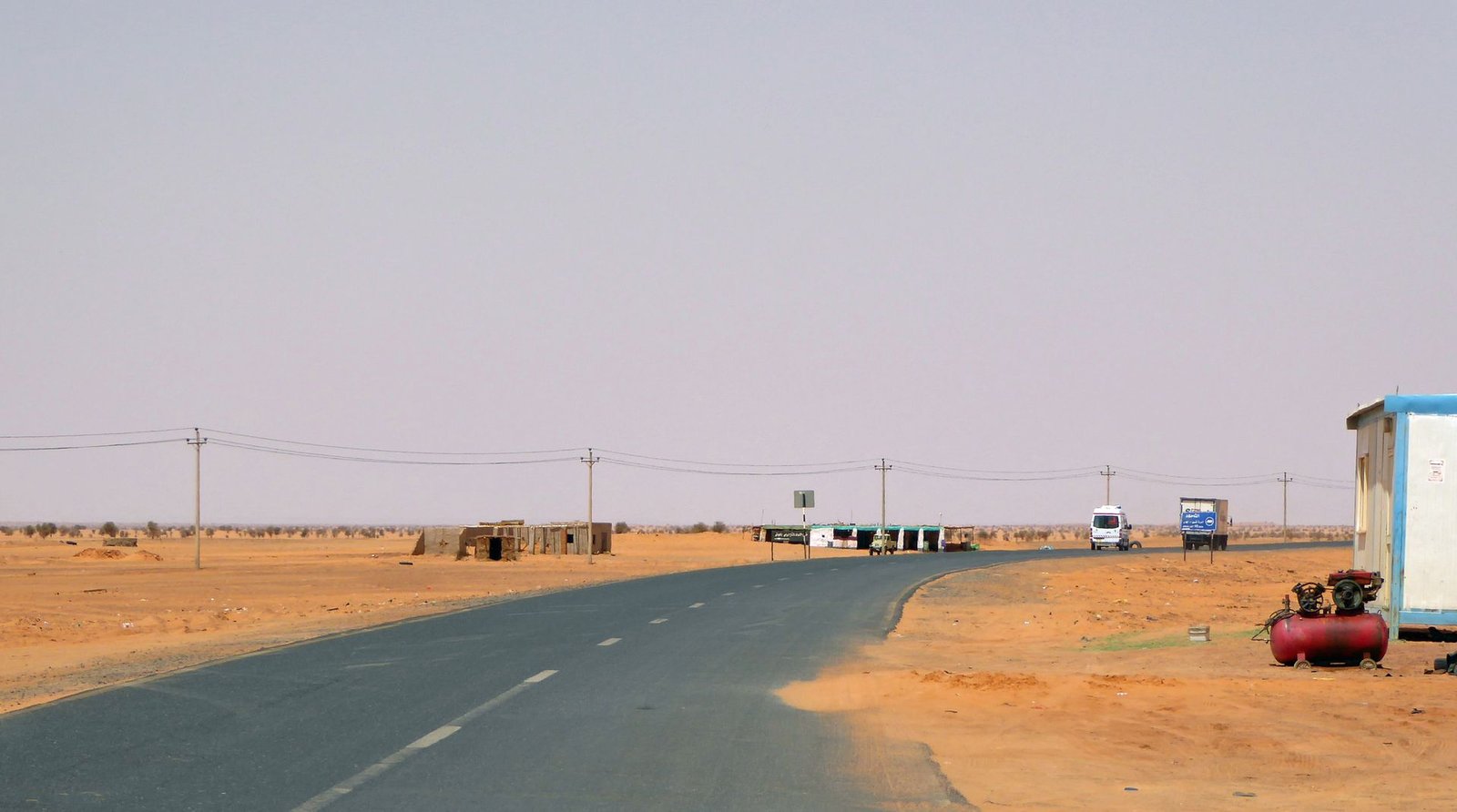
Photo: Hans Birger Nilsen, via Wikimedia Commons (CC BY-SA 2.0)
Sources
- https://news.un.org/en/story/2026/11/1168731
- https://unho.org/sudan-attacks-on-power-infrastructure-threaten-civilians/
- https://www.ohchr.org/en/press-releases/2026/10/sudan-expanding-drone-warfare-and-severe-repression-el-obeid-put-civilians?sub-site=HRC
- https://www.theamericanquorum.com/drone-strikes-deepen-sudans-power-grid-crisis/
- https://silentdossier.com/articles/sudan-drone-strikes-power-stations-um-dabakir-merowe-grid
Leave a comment
Comment as a guest and verify your email, or sign in or create a reader account. Guest comments reach our review queue after email verification; account holders can submit directly for review.