Listen to this article
Take the story with you. Choose a voice and a pace that suits you.
Or listen in another language / choose a voice
Getting your device voices ready…
The voice follows the displayed language and your browser’s regional preference when available. You can choose another narration voice.
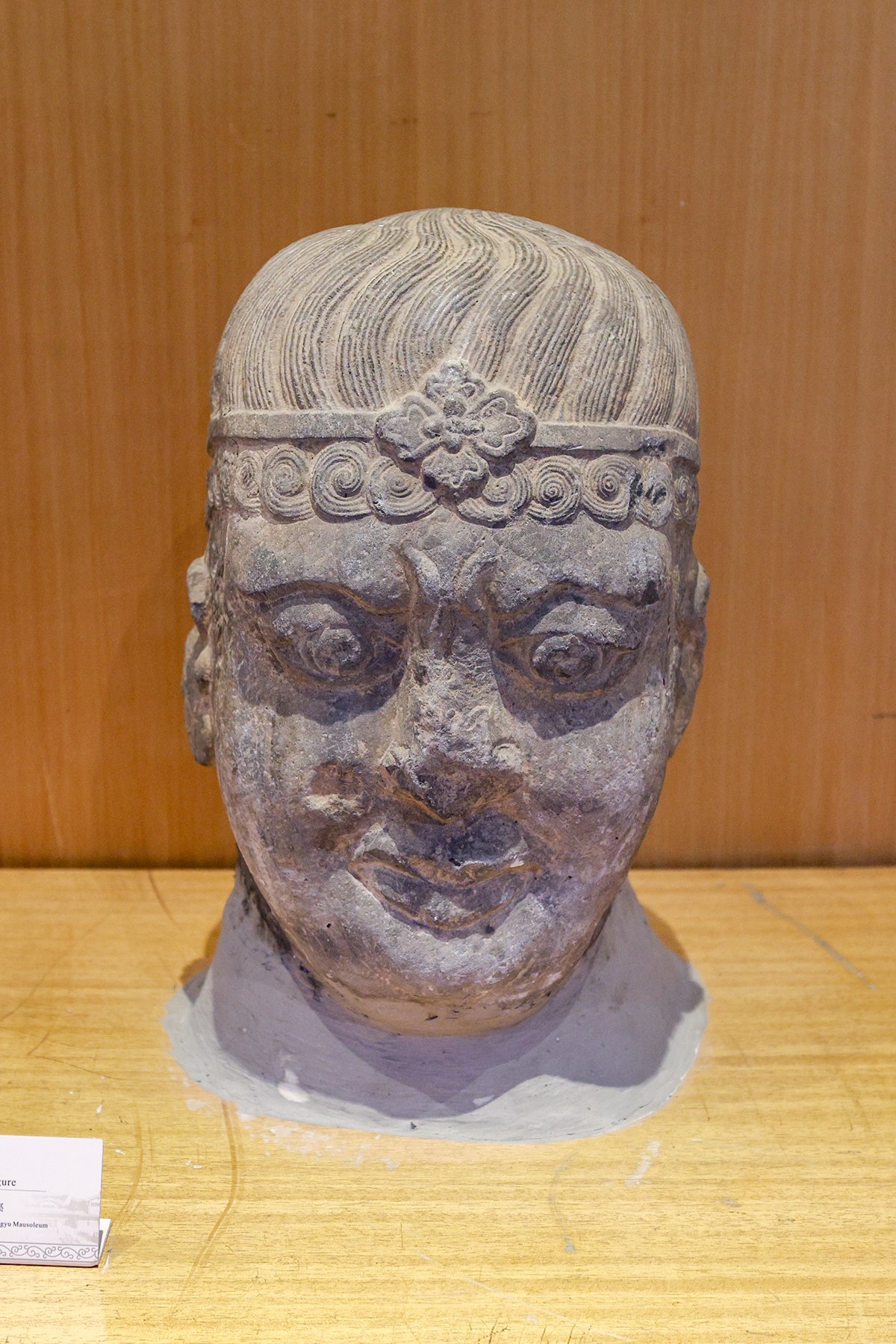
Two limestone heads that once stood on tomb avenues in Henan are going home. The story of the Northern Song statue heads returned to China began, in public at least, on 28 October 2026 in Canberra, when the National Gallery of Australia handed both pieces to China’s National Cultural Heritage Administration. One head belonged to a civil official at Yongchang Mausoleum. The other came from a military official at Yongyu Mausoleum. Both date to the Northern Song dynasty, which ruled from 960 to 1127.
Information verified through 1 November 2026.
Northern Song statue heads returned to China: what was handed over
These are not small carvings you can tuck under an arm. The civil official’s head is 70 centimetres tall and weighs 223 kilograms, while the military official’s head measures 68 centimetres and weighs 132 kilograms, according to the gallery’s collection records reported in the handover coverage. Archaeology Magazine, reporting China Daily, says the gallery acquired the sculptures in 1995 and that China requested their return in 2025.
AnewZ reports the heads are believed to have been stolen from the mausoleums in the 1990s before being donated to the gallery by a private collector. That word “believed” matters. Ancient Origins, working through the day’s reports in detail, notes that none of them says how or when the heads left China, who removed them, or what evidence investigators assembled. The return is documented. Parts of the journey out are not, at least not in public.
Two tombs, two emperors, one crowded cemetery
Yongchang is the tomb of Taizu, the dynasty’s founder, who died in 976. Yongyu belongs to Shenzong, who died in 1085, a little over a century later. Ancient Origins sets the pair at the early and late stages of the same cemetery, where seven Northern Song emperors are buried at Gongyi alongside Zhao Hongyin, the founder’s father, honoured as an emperor after his death — a group known as “seven emperors, eight tombs.”
The scale is hard to picture from a desk. The Henan provincial government counts more than 1,000 surviving stone carvings above ground across a protected area of about 189 square kilometres, and AnewZ gives the same 189 square kilometres for the Gongyi burial grounds. The statues line a ceremonial avenue, the spirit way, outside each tomb’s south gate: pillars, elephants, horses, tigers, rams, foreign envoys, and then the civil and military officials, in that order, as the heritage guide cited by Ancient Origins describes it.
Why take a head and leave the body? AnewZ offers a blunt practical answer: the full figures weigh several tonnes each, security at the grounds was limited in the 1990s, and China faced widespread trafficking of antiquities in the 1980s and 1990s, with imperial burial sites especially exposed. A head could be carried away. A guardian could not.
How the claim was built
The case did not rest on a hunch. China’s heritage administration worked with the Ministry of Public Security and with heritage and police officials in Henan to investigate, then submitted a formal memorandum to the gallery in 2025 asking for the two heads back. Three frameworks sat behind the request: the 1970 UNESCO Convention on cultural property, a 2009 China–Australia memorandum on heritage protection, and the gallery’s own 2021 policy on due diligence and provenance research.
At the Canberra ceremony, Tang Wei, deputy director of the heritage administration, presented gallery director Nick Mitzevich with a certificate of appreciation. Ambassador Liu Jinsong said the statues had stood guard over the tombs for centuries, and Archaeology Magazine records his line that the return “is not the end of their story” but “a new beginning for research, conservation, and cultural heritage”. Australia has form here, too: in 2005 it handed back 10,000 fossils that had been illegally exported from China.
Analysis: Returns like this one turn on paperwork as much as sentiment. A documented request, a convention both countries accept, and a gallery policy that already commits the holder to provenance research gave everyone a route that did not end in court. That is a template other holders can follow — and other claimants can point to.
What happens next is still open
Nobody in the published reports says where the heads will be kept, whether they will go on display, or whether they will be set back on the statues they came from. Ancient Origins is explicit that this remains unclear, and it is not even established in the coverage whether the two officials’ bodies still stand on their spirit ways.
What is clear is that Gongyi is guarded very differently now. A 2025 Henan report quoted in the same coverage describes hourly patrols at Yongyu and round-the-clock guarding of the mausoleum area, in a landscape where the tombs have long merged with villages and farmland, with wheat and corn growing among the stone figures. Two heads are on their way back to that landscape. Whether they rejoin it outdoors, or watch it from a museum room, is the next decision — and the reports, so far, leave it unmade.
Photo: Windmemories, via Wikimedia Commons (CC BY-SA 4.0)
Sources
- https://archaeology.org/news/2026/10/30/australia-repatriates-ancient-sculptures-to-china/
- https://anewz.tv/culture/culture-news/26119/australia-returns-ancient-chinese-statues-after-30-years/news
- https://www.ancient-origins.net/news-history-archaeology/song-tomb-statue-heads-returned-australia-china-00128329
- https://news.cemsg.com/news/788.html
Leave a comment
Comment as a guest and verify your email, or sign in or create a reader account. Guest comments reach our review queue after email verification; account holders can submit directly for review.