Listen to this article
Take the story with you. Choose a voice and a pace that suits you.
Or listen in another language / choose a voice
Getting your device voices ready…
The voice follows the displayed language and your browser’s regional preference when available. You can choose another narration voice.
The Lacaton and Vassal Charlotte Perriand Award, announced on 3 November 2026, rewards something the architecture world spent decades treating as a consolation prize: keeping a building. Anne Lacaton and Jean-Philippe Vassal will receive Le Prix Charlotte Perriand 2027 at a ceremony on 16 January 2027 at the Shangri-La Paris, the Créateurs Design Awards (CDA) has confirmed (ArchDaily). Information verified through 13 November 2026.
The prize, now in its eighth edition, is chosen by peer-led voting and goes to practitioners whose work has advanced architecture and design (Arch2O). Lacaton and Vassal join a recipients’ list that includes Xu Tiantian, Kazuyo Sejima and Ryue Nishizawa, Frida Escobedo and Jeanne Gang (Dezeen). Kengo Kuma will be honoured at the same ceremony with the Andrée Putman Lifetime Achievement Award 2027 (ArchDaily).
What the Lacaton and Vassal Charlotte Perriand Award recognised
Read the citation and you notice what is missing from it. No landmark object. No signature silhouette. The CDA singled out the French studio as a demonstration of “how the adaptation of existing structures can improve living conditions while preserving resources and architectural heritage” (ArchDaily).
The award also recognised the pair’s “commitment to improving the quality of everyday life through the transformation and preservation of existing buildings” (Arch2O). CDA co-founder Meredith Xavier put the point in domestic terms: the members recognised “the care and imagination with which they approach the places people call home. Their work shows how much can be gained by understanding what is already there” (Dezeen).
That is a strange citation for a major prize, until you look at the record it describes. The practice, founded in 1989 after both architects studied at the École Nationale Supérieure d’Architecture de Bordeaux, has spent more than three decades on exactly this work (ArchDaily). The honours have followed the buildings, not the other way round: the Pritzker Architecture Prize in 2021, the Soane Medal in 2023, and the 2025 Jane Drew Prize for Lacaton (Dezeen).
The Grand Parc Bordeaux housing transformation, not a wrecking ball
The project the citation rests on is a housing estate that was a candidate for demolition. At the Cité du Grand Parc in Bordeaux, Lacaton and Vassal worked with Frédéric Druot and Christophe Hutin on transforming existing buildings rather than replacing them, and the project won the European Union’s Mies van der Rohe Award in 2019 (Dezeen). ArchDaily’s account notes how “small, singular operations can have a significant infrastructural impact” at Grand Parc — additions and adjustments applied across a whole estate of homes (ArchDaily).
Grand Parc was not a one-off. The renovation of the 1960s Tour Bois-le-Prêtre tower block in Paris, also with Druot, was completed in 2011 (Dezeen). In Dunkirk, the practice converted and extended a former shipbuilding workshop into the FRAC Nord-Pas de Calais contemporary art gallery (Dezeen). In Paris it transformed the Palais de Tokyo in two phases, in 2002 and 2012, and it completed the Nantes School of Architecture in 2009 (Arch2O).
Different building types. Same refusal to start from a cleared site.
Adaptive reuse architecture before it had a fashion cycle
Reuse is fashionable now. Developers market retained structures; competitions reward carbon saved by not building. Lacaton and Vassal were doing this work when it read as making do. The CDA describes an approach “grounded in spatial generosity, environmental responsibility and respect for the people who inhabit buildings,” sustained for more than three decades (ArchDaily).
The architects’ own response to the award pointed back at Perriand herself. “Charlotte Perriand’s tireless pursuit of comfort, well-being, and the pleasure of the inhabitant and of everyday life, her modernity, and her political commitment to exposing poor housing conditions and to transmission and education remain profoundly relevant today and are a source of inspiration,” they said. “Her manifest spirit of openness and freedom touches us deeply. We are very happy to receive this distinction” (ArchDaily).
Note the order in that sentence. Comfort first. The inhabitant before the image. It matches the citation almost word for word, which suggests the jury and the recipients agree about what the work is for.
Analysis: awards usually certify novelty — the building nobody had imagined. This one certifies patience. The Perriand prize going to Lacaton and Vassal in 2027 lands at a moment when housing shortages, carbon budgets and demolition bans are pushing European cities toward the existing stock whether architects like it or not. The pair’s advantage is that they never waited for the policy wind to change. Their Grand Parc and Bois-le-Prêtre projects stand as worked examples that transformation can add space, light and dignity without evicting the people a building was built for. The test for the rest of the profession is less glamorous: whether ordinary practices, working to ordinary fees, can treat “what is already there” as the brief rather than the obstacle.
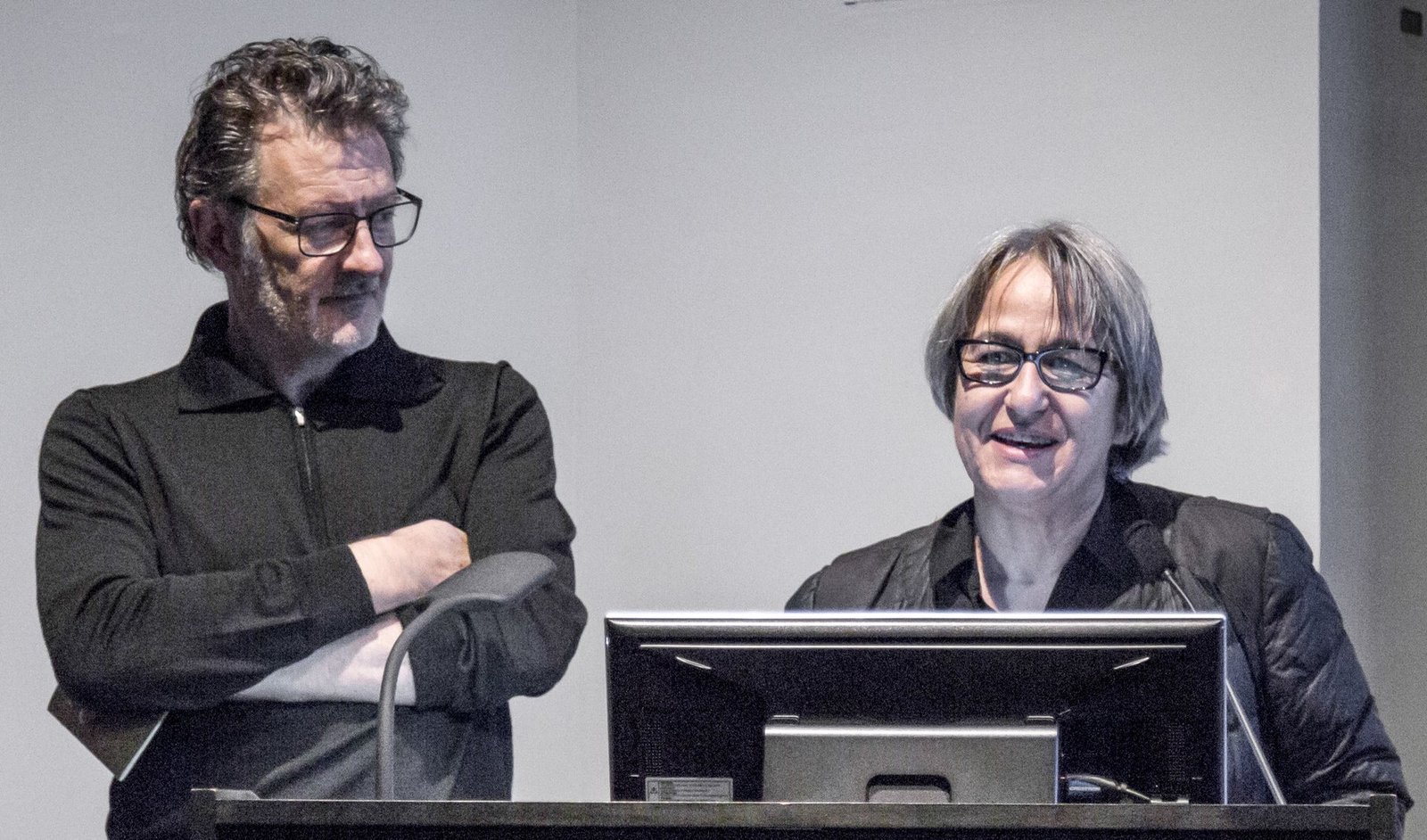
Photo: GSAPPstudent, via Wikimedia Commons (CC BY-SA 4.0)
Leave a comment
Comment as a guest and verify your email, or sign in or create a reader account. Guest comments reach our review queue after email verification; account holders can submit directly for review.