Listen to this article
Take the story with you. Choose a voice and a pace that suits you.
Or listen in another language / choose a voice
Getting your device voices ready…
The voice follows the displayed language and your browser’s regional preference when available. You can choose another narration voice.
The Hugo Häring Award 2026 Stuttgart winners are not a museum or a headquarters. They are a renovated 1950s grammar school and a depot where the city’s bin lorries sleep at night. The two municipal projects were honoured by the Association of German Architects (BDA) on 2 November 2026, at the opening event of Architecture November, with the City of Stuttgart as client on both (City of Stuttgart). Information verified through 12 November 2026.
That pairing is the story. One prize, two unglamorous building types, and a jury arguing — in effect — that care is care, whether the brief is teenagers or refuse trucks.
Hugo Häring Award 2026 Stuttgart winners start with a school that had to stay itself
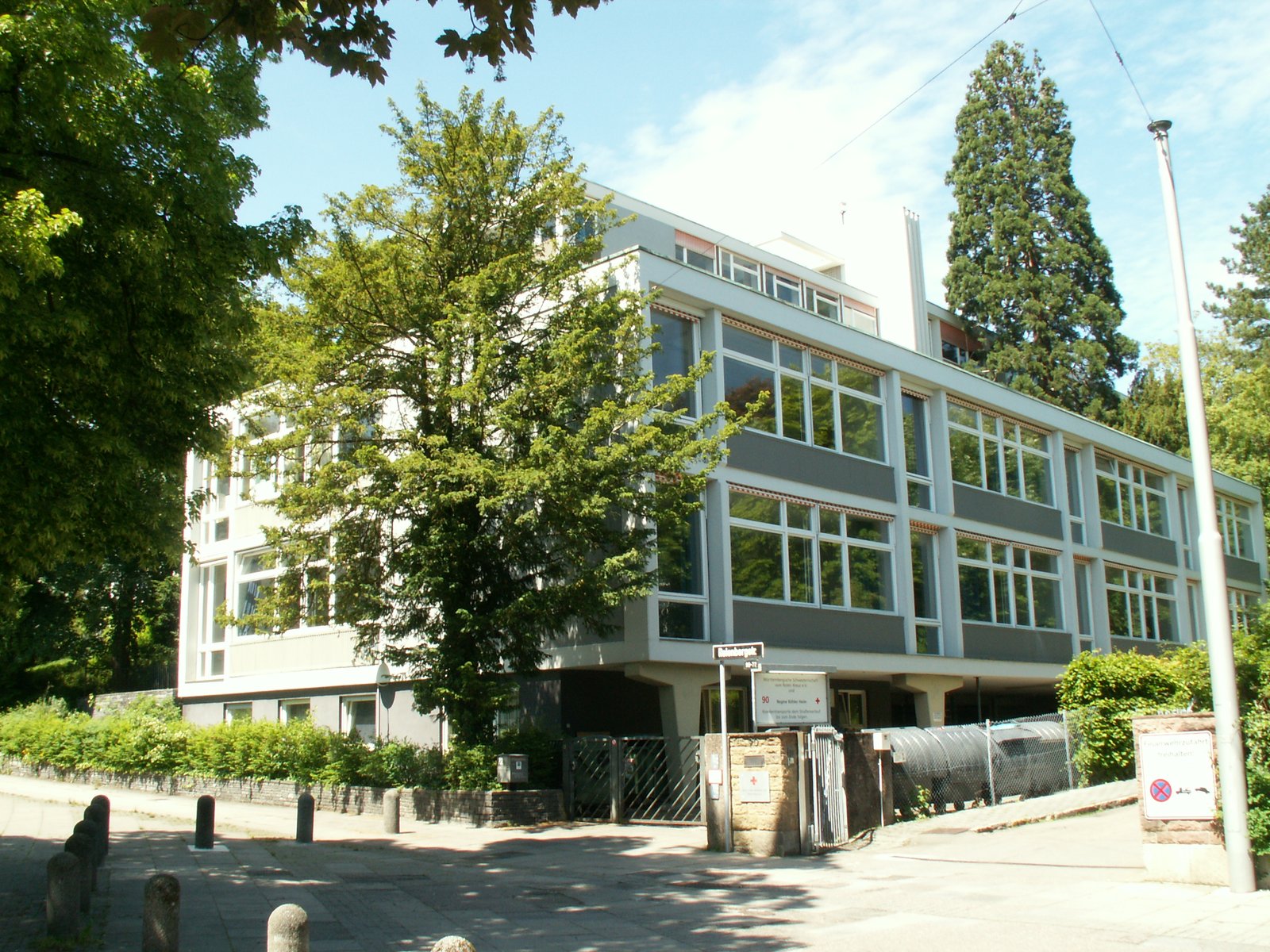
The Eberhard-Ludwigs-Gymnasium renovation took a listed postwar building and made it work as a modern music school without sanding off what made it worth listing. The complex in northern Stuttgart was built between 1955 and 1957 to plans by Adolf and Hans Bregler, and the buildings and grounds are protected as a single historic entity (City of Stuttgart). Stuttgart firm LRO Lederer Ragnarsdóttir Oei led the renovation and expansion, aiming, in the city’s words, to preserve the architectural qualities of the postwar building while creating the conditions a contemporary school needs (City of Stuttgart).
The moves were surgical rather than decorative. The old gymnasium, changing rooms included, became an orchestra hall with music rooms and a student library. A replacement sports hall was sunk into the hillside underground, with an extension above it holding extra classrooms, mainly for science, and further music rooms were added north of the main building (City of Stuttgart). Total floor area reached 12,670 square metres — 9,520 existing, 3,150 new — at a cost of €74.8 million, with construction running from September 2020 to completion in summer 2026 (City of Stuttgart).
The school has history pressing on it from both directions. Founded in 1686, it is Stuttgart’s oldest gymnasium, and its postwar home was itself prize-winning architecture in its day, heritage-protected after receiving the Paul Bonatz Prize in 1959 (Wikipedia). Renovating a building that was an award winner before it was a ruin-risk is a particular kind of pressure. You are not just fixing a school. You are editing someone else’s honoured work, in public, with teenagers waiting to move back in.
A postwar modernist school building, kept in use
Why does this one matter beyond Stuttgart? Because the postwar modernist school building is exactly the stock Europe keeps threatening to demolish and replace. It is too young to feel venerable, too old to meet current energy and access standards without serious work, and awkwardly sized for the schools now occupying it.
Stuttgart’s answer was retention with alteration. Keep the listed fabric. Convert the hall nobody needed in its old form into the orchestra space the music programme actually required. Put the bulky new sports volume underground, where it does not fight the 1950s composition. That sequence — preserve, convert, bury the big new bit — is a template other cities with protected postwar schools could copy without much translation.
The city’s own framing was plainer: the project combines a responsible approach to architectural heritage with the requirements of a modern school (City of Stuttgart). Strip the municipal language and the claim holds up on the facts of the plan alone.
The Stuttgart AWS depot Wangen makes infrastructure hold its head up
The second winner could hardly sit further from a concert hall. The new depot for Abfallwirtschaft Stuttgart (AWS) in Wangen, designed by Birk, Heilmeyer und Frenzel, houses the working end of waste collection: covered parking for 45 refuse trucks, a wash, workshops and storage, plus break rooms, training areas and a staff cafeteria for around 180 employees (City of Stuttgart). The depot entered service on 15 October 2025, serving the city centre and neighbouring districts (City of Stuttgart).
The jury singled out the bit most depots treat as pure shed. In its citation, the vehicle canopy, built as a hybrid timber structure, turns a mere parking area into a striking structure with a surprisingly atmospheric effect, and the break areas, changing rooms and offices give refuse staff a pleasant, orderly workplace (Birk Heilmeyer und Frenzel). Read that again. A jury for one of Baden-Württemberg’s oldest architecture prizes praised the atmosphere of a bin-lorry canopy — and meant it as the headline compliment.
The construction backs the rhetoric. The city describes a high proportion of wood, green roofs and a large photovoltaic array on the vehicle hall, built to support Stuttgart’s climate goals (City of Stuttgart). AWS put the workforce figure slightly higher at the opening, around 190 employees with changing rooms, showers and social areas (City of Stuttgart). Either way, the design brief treated the people who empty the bins as occupants worth designing for, not a cost to warehouse.
What a three-yearly prize is actually rewarding
The Hugo Häring Prize has been awarded every three years since 1969, in a two-stage process, to architects and building owners together for their collaborative work, and it is named for Hugo Häring, a pioneer of the New Building movement (City of Stuttgart). That joint award matters. Both Stuttgart winners had the same owner — the city itself, with project management by its Building Department (City of Stuttgart).
Analysis: juries can only reward what clients commission. A city that asks for a careful renovation instead of a demolition, and for timber and daylight in a truck depot instead of the cheapest shed on the catalogue page, has done half the jury’s work before a single drawing exists. Stuttgart collected two prizes on 2 November. The more useful reading is that it collected them years earlier, at the briefing stage, twice.
Photo: ReqEngineer, via Wikimedia Commons (CC BY-SA 3.0)
Sources
- https://www.stuttgart.de/en/service/aktuelle-meldungen/2026/november/zwei-staedtische-bauprojekte-mit-hugo-haering-auszeichnung-gewuerdigt
- https://www.stuttgart.de/en/leben/bauen/bauprojekte/eberhard-ludwigs-gymnasium-ausbau-zum-musikgymnasium
- https://www.bhundf.com/en/news
- https://www.stuttgart.de/en/service/aktuelle-meldungen/2025/oktober/neuer-betriebshof-der-aws-in-wangen-ist-am-start
- https://en.wikipedia.org/wiki/Eberhard-Ludwigs-Gymnasium
Leave a comment
Comment as a guest and verify your email, or sign in or create a reader account. Guest comments reach our review queue after email verification; account holders can submit directly for review.