Listen to this article
Take the story with you. Choose a voice and a pace that suits you.
Or listen in another language / choose a voice
Getting your device voices ready…
The voice follows the displayed language and your browser’s regional preference when available. You can choose another narration voice.
More applications than ever, from a pool that has already peaked. College applications top 10 million for the first time in the 2024-25 cycle, according to the 2026 State of College Admissions Report from K12 Academics, released on 5 November 2026 (EIN Presswire). Read the headline alone and admissions looks booming. Read the rest of the report and it looks like a system at a turning point.
Information verified through 16 November 2026. The figures below are the report’s, as published in its release; the underlying report is free to download from K12 Academics’ research site, and readers weighing a specific college should check that institution’s own numbers too.
College applications top 10 million: volume is not the same as more students
The distinction matters. About 1.5 million distinct first-year applicants used the Common App, up 5 percent, and each submitted an average of 6.8 applications (EIN Presswire). Ten million applications, then, does not mean ten million hopefuls. It means roughly a million and a half people hedging — applying wider because outcomes feel less predictable.
Where the applications land is shifting as well. Public universities now receive more applications than private ones, while the most selective schools — those admitting under 25 percent — grew just 2 to 4 percent, far slower than the field (EIN Presswire). The frenzy at the very top, in other words, is not where the growth is.
Money explains part of the spread. The report puts the average public-university net price at about $2,300 against an $11,950 sticker price, a tuition discount rate of roughly 57 percent, and total student debt at $1.84 trillion (EIN Presswire). After the Supreme Court’s 2023 admissions decision, it records, Latino applicants rose 15 percent and Black applicants 12 percent, while fee-waiver and low-income applicants grew nearly fourfold (EIN Presswire).
Test scores required again Ivy League 2026: the quiet reversal
For five years, test-optional was the story. The share of Common App member colleges requiring a test score fell from about 55 percent in 2019-20 to roughly 5 percent in 2024-25 (EIN Presswire). Then, in the report’s words, it sharply reversed.
Six of the eight Ivy League schools, along with MIT, Caltech, Stanford and Georgetown, now require scores again for 2026-27 (EIN Presswire). An independent policy tracker names the same six — Harvard, Yale, Brown, Dartmouth, Cornell and Penn — and notes Princeton and Columbia join them in 2027-28, making all eight test-required (Level All). That makes the current cycle the last in which applicants can reach some of these schools without a required score (EIN Presswire). Level All stresses the limit of the trend, though: most U.S. colleges remain test-optional, and the reversal is concentrated at highly selective schools (Level All).
K12 Academics founder Chris Glavin puts it plainly: “The SAT is quietly coming back at the schools everyone watches” (EIN Presswire). Quietly is the right word. Most colleges have not restored a requirement — the 5 percent figure shows how far test-optional spread. But the schools that set the tone for anxious applicants have moved, and counsellors will hear about it in every junior-year meeting this winter.
For students, the effect lands unevenly. A senior may still skip the test at most schools on her list and need it at two. A sophomore has time to prepare; a senior who assumed testing was gone for good does not. Reversals reward families who hear early — rarely those with the fewest resources.
The college demographic cliff 2041 graduates figure behind the record
Now the number that should sober any admissions office celebrating the 10 million mark. The number of U.S. high school graduates peaked near 3.9 million in 2025 and is projected to fall about 13 percent by 2041 — roughly 576,000 fewer graduates a year, with the Northeast and Midwest hit hardest (EIN Presswire). The projection itself comes from the Western Interstate Commission for Higher Education’s Knocking at the College Door, which puts the 2041 total at 3.4 million graduates and attributes the decline primarily to falling U.S. births (WICHE). WICHE adds the state detail: 38 states will see losses through 2041, and five large states — California, Illinois, Michigan, New York and Pennsylvania — account for about three-quarters of the national decline (WICHE).
That is the demographic cliff, and it reframes everything above it. Record application volume in 2024-25 was produced by near-peak graduating classes applying to more schools each. Shrink the classes by an eighth and keep behaviour the same, and total volume falls even if a college does nothing wrong. Colleges in the Northeast and Midwest feel it first and hardest, on the report’s geography.
The report’s response is a new benchmark: a College Admissions Innovation Index scoring institutions on process management, student experience, recruitment, financial transparency and digital presence (EIN Presswire). Read it as marketing if you like. The point underneath stands: recruitment is now a competition for a shrinking pool, fought earlier and online.
“Families are navigating the most volatile admissions market in a generation,” Glavin said. “Students who understand these three forces, and start their research early, have a real advantage” (EIN Presswire).
Analysis: the three forces pull in opposite directions, and that is why this cycle feels so strange from inside a family kitchen. Volume says abundance. The test reversal says the old gatekeeping is returning at the top. The cliff says scarcity is coming for colleges, not for students. A 16-year-old today will likely face stricter test rules at a handful of famous names and warmer recruitment almost everywhere else. Both things can be true at once — and for the next fifteen years, both will be.
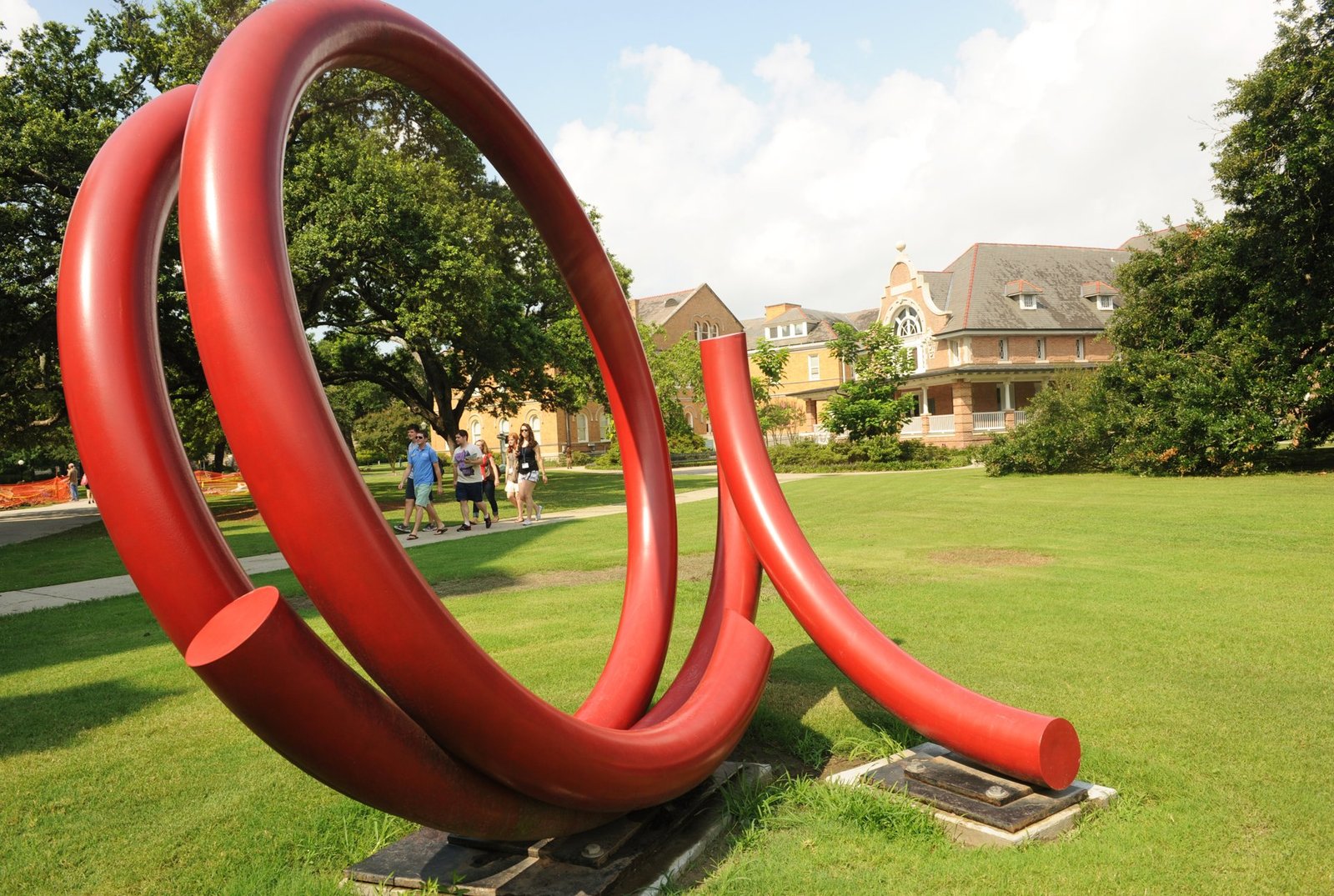
Photo: Tulane Public Relations, via Wikimedia Commons (CC BY 2.0)
Leave a comment
Comment as a guest and verify your email, or sign in or create a reader account. Guest comments reach our review queue after email verification; account holders can submit directly for review.