Listen to this article
Take the story with you. Choose a voice and a pace that suits you.
Or listen in another language / choose a voice
Getting your device voices ready…
The voice follows the displayed language and your browser’s regional preference when available. You can choose another narration voice.
So, are Black Friday deals real 2026? Shoppers have voted, and the answer is a shrug. Only 54% of consumers trust that advertised Black Friday prices are genuinely lower than usual, and one in five actively distrusts them, according to Boston Consulting Group’s sixth annual Black Friday Consumer Study, released on 4 November 2026 and based on 10,220 consumers across ten countries (BCG via PR Newswire).
Information verified through 20 November 2026.
The suspicion is not vague. In Drive Research’s survey of US Black Friday shoppers, fielded 6–9 October 2026, 64% said they believe retailers raise prices beforehand so the discounts aren’t genuine, and 72% said the deals aren’t nearly as good as they used to be. People still show up — 78% of Drive Research’s shoppers say they shop the weekend for the discounts. They just bring a price tracker and a raised eyebrow.
Are Black Friday deals real 2026? A Black Friday promotion fatigue survey, in plain numbers
BCG has a name for the mood: promotion fatigue. Some 22% of consumers plan to spend less or skip year-end sales events entirely because they believe discounts are available all the time, per the BCG study. When everything is 30% off every week, a Black Friday banner stops meaning anything.
Oddly, shoppers have not responded by demanding deeper cuts. The minimum discount consumers count as a good deal eased to about 30%, down from 32% in 2025, BCG found. DealAid’s separate survey of 1,010 US adults lands in the same place: 59% said it would take at least 30% off to tempt them into an unplanned purchase. The bar is not higher prices-off. The bar is proof.
What builds that proof? BCG scored the trust factors directly. Retailer reputation and money-back guarantees topped the list, each with a net trust score of 65%, followed by verified purchase reviews at 59% and clear comparisons between regular and discounted prices at 58%, according to the study. Down at the bottom: real-time scarcity messages at 8% — and influencer recommendations, last of all, at 3%. The “only three left, link in bio” era is not converting anyone.
Holiday shopping budgets 2026 tariffs are quietly rewriting
Trust is one squeeze. Money is the other. In Drive Research’s data, 41% of Black Friday shoppers expect to spend less than last year, up from 31% in 2025, and the share who typically spend $1,000 or more fell from 24% to 18% (Drive Research). Among those cutting back, 76% blamed rising living costs and 68% pointed to grocery costs.
DealAid found the split runs along income lines: 43% of households earning under $50,000 plan to spend less, against 17% of those earning $50,000 or more — while 85% of all respondents said tariffs and higher prices are changing how they shop, and 40% are shopping earlier to beat price rises. Half of DealAid’s respondents feel pressure to spend more than they can afford, 28% expect to take on holiday debt, and 22% are still paying off last year’s. The median Black Friday weekend budget in that survey is $375.
The day itself is getting calmer, too. Drive Research puts online participation at 69%, down from a 75% peak in 2024, with in-store shopping steady at 28%, and later Friday starts gaining ground — 28% of in-person shoppers now plan to start after 10 a.m., up from 21% in 2025 (Drive Research). The 5 a.m. doorbuster scrum is becoming a late-morning errand.
Shoppers use AI to compare prices Black Friday — influencers, less so
The most telling shift is who shoppers ask for help. BCG reports social media as a shopping inspiration source fell nine points to 46%, dropping in every market surveyed, while planned AI usage reached 56% of shoppers, up eight points from 2025 — with price comparison the use consumers trust most, at 39% (BCG). DealAid puts it higher still: 69% plan to use AI tools for holiday shopping, comparing prices the top use at 43%, though only 1% start their gift search with a chatbot — 51% still start on Amazon.
Analysis: None of this kills Black Friday. It demotes it. The event used to run on faith — the faith that this price, this weekend, was the lowest you would see. That faith is down to 54% and falling, replaced by screenshots of last month’s price and an AI asked to check the maths. Retailers who show their working, in BCG’s phrase, win. Retailers still shouting percentages into the void are training their own customers to ignore them.
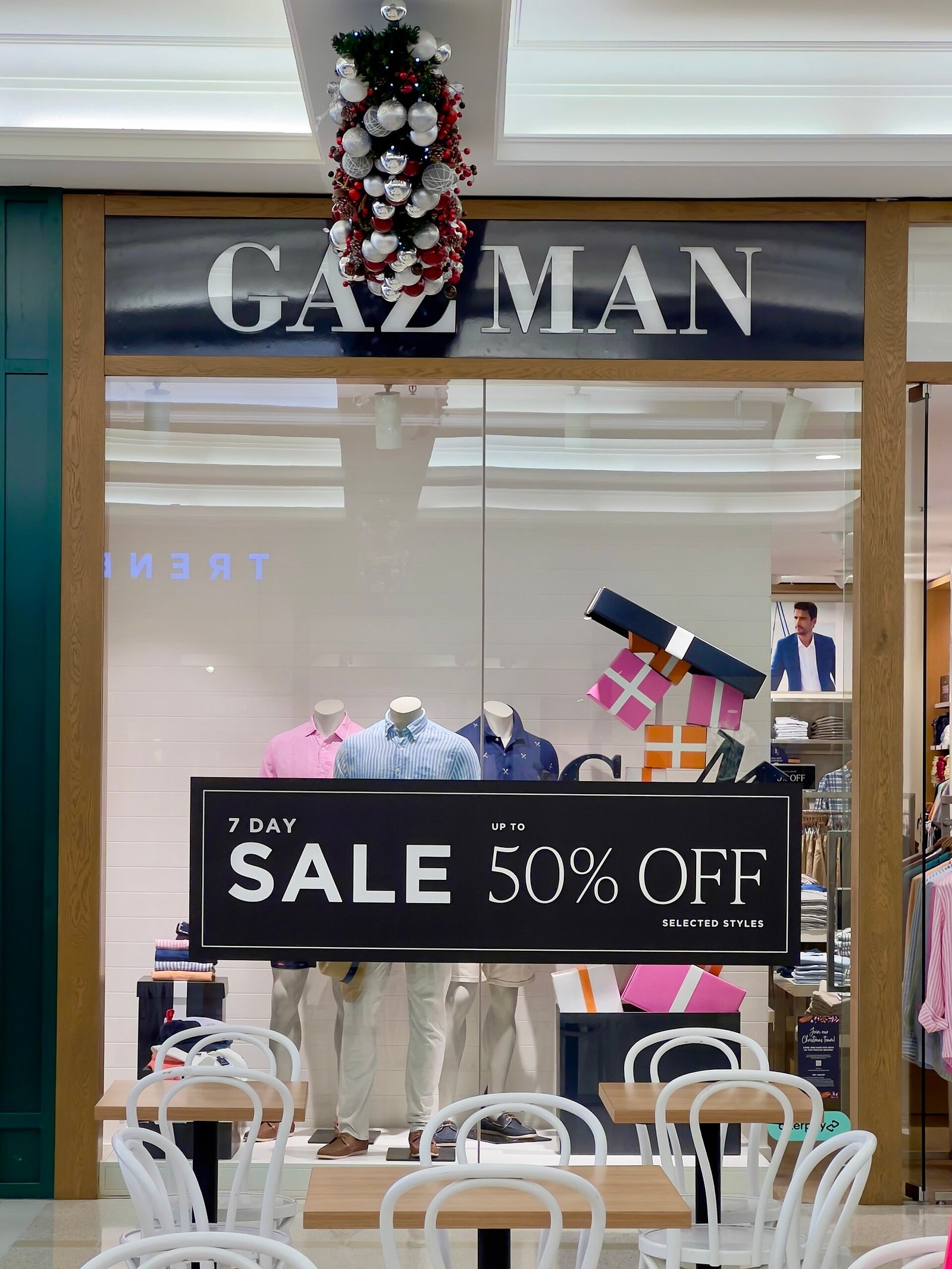
Photo: Kgbo, via Wikimedia Commons (CC BY-SA 4.0)
Sources
- Morningstar / PR Newswire — Only 54% of Consumers Trust That Black Friday Discounts Are Lower Than Normal as Promotion Fatigue Grows (BCG) https://www.morningstar.com/news/pr-newswire/20261104ne88653/only-54-of-consumers-trust-that-black-friday-discounts-are-lower-than-normal-as-promotion-fatigue-grows
- Drive Research — 2026 Black Friday Statistics & Trends: Data from 1,000 Shoppers https://www.driveresearch.com/market-research-company-blog/black-friday-holiday-shopping-statistics/?device=c
- DealAid — Holiday Shopping 2026 Survey: How Americans Plan to Spend https://dealaid.org/research/holiday-shopping-2026/
Leave a comment
Comment as a guest and verify your email, or sign in or create a reader account. Guest comments reach our review queue after email verification; account holders can submit directly for review.