Listen to this article
Take the story with you. Choose a voice and a pace that suits you.
Getting your device voices ready…
The voice follows the displayed language and your browser’s regional preference when available. You can choose another narration voice. Enhanced device voices are preferred; availability varies.
Wake up — it’s 2016. That has been the internet’s running joke all year, except nobody is quite joking. The phrase “2026 is the new 2016” became one of the year’s early viral trends, with users posting old photographs, recreating forgotten challenges and bringing back the visual style of the era. Ten months on, the revival has not faded. It has become the year’s defining pop-cultural mood, running through fashion, music and the way people photograph their own lives. Information verified through 21 October 2026.
Start with the scale. TikTok searches for “2016” rose by 452 percent in the first week of 2026, according to data reported by Weverse Magazine, and the hashtag #2016 has appeared in over 37 million Instagram posts. TikTok’s own figures, reported by BBC Newsbeat, put it at a 452% surge in searches and more than 55 million videos created using the app’s filter named after the year. Spotify recorded a 71% increase in “2016” playlists compared with 2024.
The wardrobe remembers first
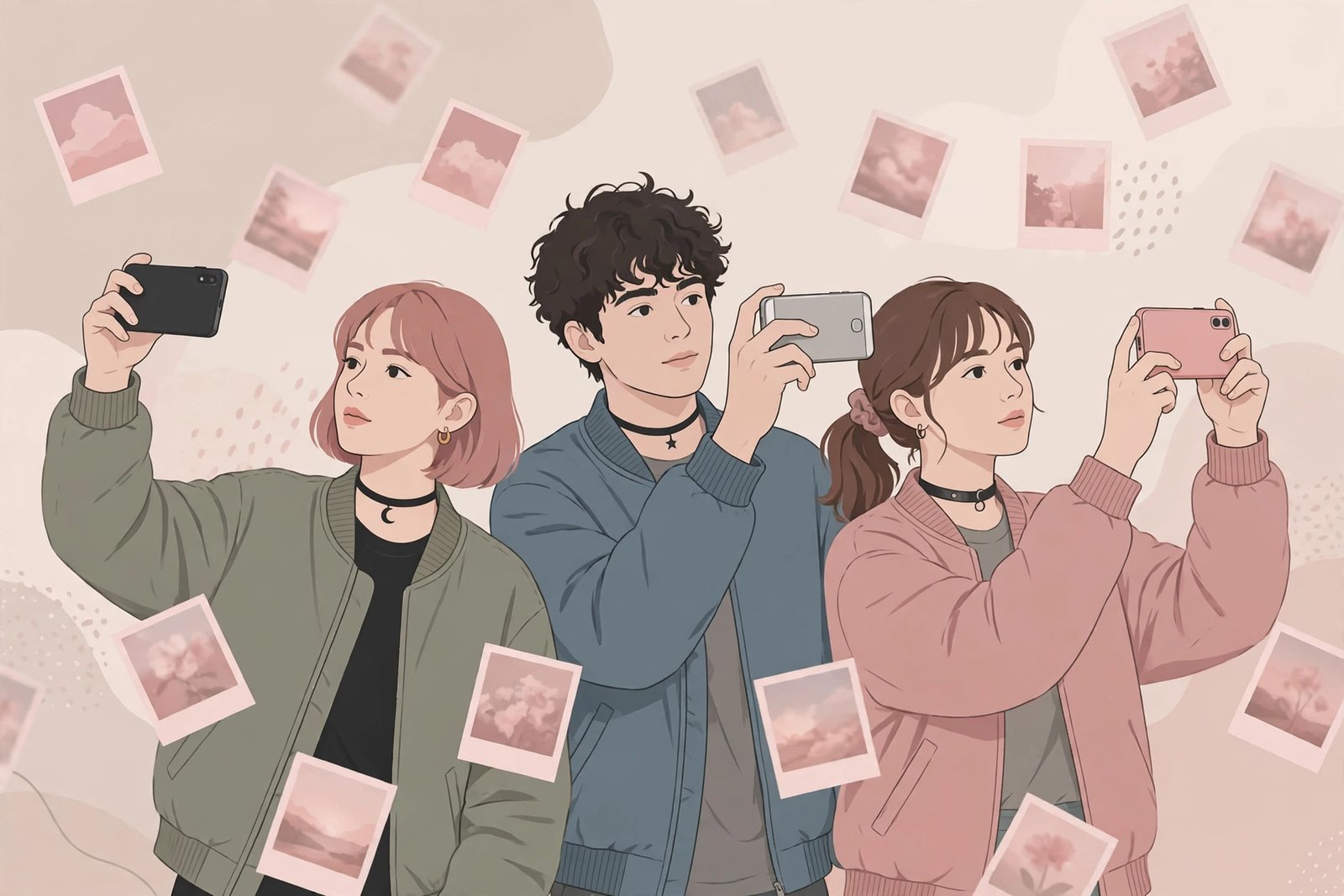
Fashion moved fastest, because fashion always does. Chokers, bomber jackets, ankle boots, ballet flats and lace made their way back into wardrobes, alongside skinny jeans, slip dresses and heavy Instagram-style filters, AzerNews reported. Vogue noted bomber jackets were already seeing renewed interest, with other pieces of the decade reinterpreted rather than simply copied.
Stylist Marina Ingvarsson, quoted in Weverse Magazine, described a nostalgia “sweet spot”: 2016 is distant enough to feel interesting again, but close enough to trigger genuine emotional memories. The trade used to talk about a twenty-year cycle. Ten is the new twenty, and the shortening is not mysterious — phones hold a decade of photographs, searchable, filterable, one scroll away.
The look did not stop at homage. Polka dots returned to the runways of Carolina Herrera, Valentino, Miu Miu and Khaite, and 2000s maximalism came back through bedazzling — rhinestones and crystals on clothing, accessories, phone cases and nails. Pinterest Predicts declared 2026 the close of the clean girl and quiet luxury era, giving way to a maximalist style it calls “Glamoratti.”
A song from 2015 walks back into the charts
Every revival needs an anthem, and this one picked Zara Larsson’s “Lush Life.” The track became the third most popular song on playlists tagged #2016, and a viral dance brought it back to the top of the charts in Germany, Austria, Czechia and Norway for the first time in a decade. Forbes reported it climbed to No. 8 on the UK singles chart and re-entered the US Billboard Hot 100 during the January wave. BBC Newsbeat noted it had re-entered the UK top 40 and climbed back up to number eight.
Radio 1 Anthems host Lauren Redfern told Newsbeat the appeal was simple: “It’s just so so good, that music from that time, and so nostalgic to so many of us.” She pointed to Zayn’s debut solo single “Pillow Talk,” the Chainsmokers, Twenty One Pilots and The 1975 — a wall of sound a generation absorbed as teenagers.
What is actually being missed
Here is the wrinkle. 2016 was not a gentle year, and the revival knows it. The year was marked by major political upheaval, the Zika outbreak, and the deaths of David Bowie, Prince, George Michael and Alan Rickman; it held the Brexit referendum and Donald Trump’s first US election win. The nostalgia circulating online is selective: people are remembering particular cultural experiences, not campaigning to relive the calendar.
What they describe missing is a texture. In 2016, Instagram feeds were still dominated by photographs from friends and family; Snapchat filters, Musical.ly videos and viral challenges could reach huge audiences quickly, and Pokémon Go became a worldwide phenomenon. TikTok creator and brand strategist Joel Marlinarson, whose explainer video passed a million views, told Newsbeat that around 2016 there were no carousel posts and no short-form reels, so there was no algorithmic fatigue. “You posted something, you didn’t think about how many likes there were,” he said.
Psychologist Clay Routledge, who has studied nostalgia since 2001, told Newsbeat that people tend to be especially nostalgic when the world feels like it is going through major change, pointing to anxiety about artificial intelligence and employment. “When generations are going through this kind of upheaval or this kind of challenge, they tend to look back to their youth for comfort and for inspiration,” he said.
Analysis: A ten-year nostalgia cycle is less a fashion story than a measurement. It says the present feels different enough from a decade ago — more fragmented, more performed, more machine-mediated — that 2016 now reads as another country, even to people who were there last Tuesday, culturally speaking. The pink filter is doing honest work: it marks the boundary between the internet as a place you visited with your friends and the internet as a feed that visits you. Whether the feeling survives being merchandised is the open question. September’s data suggested the appetite for archival, niche content was still growing. Nostalgia this organised stops being a mood. It becomes a market with a memory.
Sources
- Lion’s Pride Online — “2026 fashion trends: The return of nostalgia and maximalist style” (9 October 2026): https://lionsprideonline.com/ac/2026-fashion-trends-the-return-of-nostalgia-and-maximalist-style/
- AzerNews — “Music, fashion and social media bring 2016 era back” (2026): https://www.azernews.az/culture/264868.html
- BBC Newsbeat via NewsATW — “Why 2016 nostalgia is taking over social media in 2026” (10 January 2026): https://newsatw.com/why-2016-nostalgia-is-taking-over-social-media-in-2026/
Leave a comment
Comment as a guest and verify your email, or sign in or create a reader account. Guest comments reach our review queue after email verification; account holders can submit directly for review.