Listen to this article
Take the story with you. Choose a voice and a pace that suits you.
Or listen in another language / choose a voice
Getting your device voices ready…
The voice follows the displayed language and your browser’s regional preference when available. You can choose another narration voice.
The UN hunger hotspots report 2026 landed on Friday, 27 November, with a blunt warning. Acute food insecurity is projected to worsen significantly between December 2026 and May 2027 in 16 hotspots around the world, and parts of Sudan and South Sudan face a risk of famine (WFP). The report comes from the Food and Agriculture Organization (FAO) and the World Food Programme (WFP), released twice a year through the Global Network Against Food Crises (WFP).
Sixteen is up from 13 in June. That jump matters more than the headline number suggests, because the new entries aren’t marginal cases. Southern Africa, the Central American Dry Corridor and northeastern Uganda have joined the list largely because of El Niño, while Chad was added due to spillover from the war in neighbouring Sudan (WFP). Lebanon, by contrast, is no longer a hotspot (WFP).
Where the UN hunger hotspots report 2026 puts the gravest danger
Five places sit in the highest-concern tier: Sudan, South Sudan, Somalia, parts of Nigeria and Yemen (WFP). UN News gave the same five, naming northern Nigeria among them (UN News). Four more are classed as very high concern: Afghanistan, the Democratic Republic of the Congo, Haiti and Palestine (WFP). The rest of the list runs to Chad, the Central American Dry Corridor, Madagascar, Mali, Myanmar, Southern Africa and northeastern Uganda (WFP).
Sudan and South Sudan carry the sharpest warnings. Under a reasonable worst-case scenario, there’s a risk of famine in 13 areas of North Darfur and South Kordofan in Sudan through January 2027, and acute malnutrition in two camps for displaced people in South Darfur has already passed famine thresholds (WFP). Reuters reported the same 13 areas at risk, with fighting disrupting food production, markets and aid deliveries (Reuters, via Daily Fox News).
Displacement keeps feeding the crisis. More than 383,000 people have fled Sudan’s Kordofan region in the past year, according to the International Organization for Migration figures reported by UN News, with a further 15,000 forced to flee in November alone (UN News). Nearly nine in 10 of those uprooted came from West Kordofan (UN News).
Conflict first, weather close behind
Conflict and armed violence remain primary drivers in 12 of the 16 hotspots, including all five of highest concern (WFP). In four of those five, recent analyses found or projected people facing Catastrophe, the most severe IPC phase, marked by starvation and death (WFP). Reuters added that soaring food, energy and transport costs were eroding people’s ability to feed themselves on top of the fighting (Reuters, via Daily Fox News).
Somalia shows how uneven the picture is. No population there is currently projected to face Catastrophe, and the risk of famine has receded, yet acute food insecurity stays at Emergency levels among displaced people in Baidoa (WFP). Palestine moved the other way in tone if not in safety: food security in Gaza has started to improve after the October 2025 ceasefire, but the agencies call the gains fragile, and acute food insecurity in the West Bank is expected to worsen (WFP).
El Niño hunger hotspots Southern Africa and the Dry Corridor
El Niño is the report’s second engine. It’s gaining strength and could prove one of the most intense on record, the agencies said (WFP). In Southern Africa, drier and hotter conditions threaten planting and future harvests, with up to 3 million people in Zimbabwe, 2.6 million in Malawi and 1.8 million in Mozambique projected to face high levels of acute food insecurity through March 2027 (WFP).
Central America got hit earlier and harder than many expected. The Dry Corridor’s 2026 Primera season, the first crop season, was the driest in four decades, and crop losses topped 75 percent in many areas (WFP). In Guatemala alone, 3.2 million people are projected to face high levels of acute food insecurity between October 2026 and February 2027 (WFP). A FAO official quoted by Reuters warned of a very strong El Niño effect, with some areas likely to swing from drought to heavy rains (Reuters, via Daily Fox News).
The agencies aren’t only describing damage. Their joint El Niño anticipatory action plan aims to protect 9 million people in 22 countries, acting before the worst effects arrive to limit harm to harvests, livestock and incomes (WFP).
FAO WFP hunger hotspots funding has fallen sharply
Here’s the uncomfortable part. All five highest-concern hotspots have sat at that level repeatedly since 2022, yet funding for food security and nutrition assistance in them fell by 62 percent, from USD 5.1 billion in 2022 to USD 2.0 billion in 2025 (WFP). Reuters put the drop at two-thirds between 2022 and 2025 for the five gravest cases, citing FAO emergencies official Conor Elliott, who warned the cuts were also undermining the data collection needed to assess the crisis (Reuters, via Daily Fox News).
FAO and WFP are calling for urgent action across all 16 hotspots, above all where famine risk has been identified, and for safe, unimpeded access to people in need (WFP). Whether that access arrives is a political question, not a logistical one. The food exists in the world. The routes, the money and the permission to move it are what’s missing, and the next six months will show how much of this warning was heeded while there was still time to act cheaply and early.
Information verified through 28 November 2026.
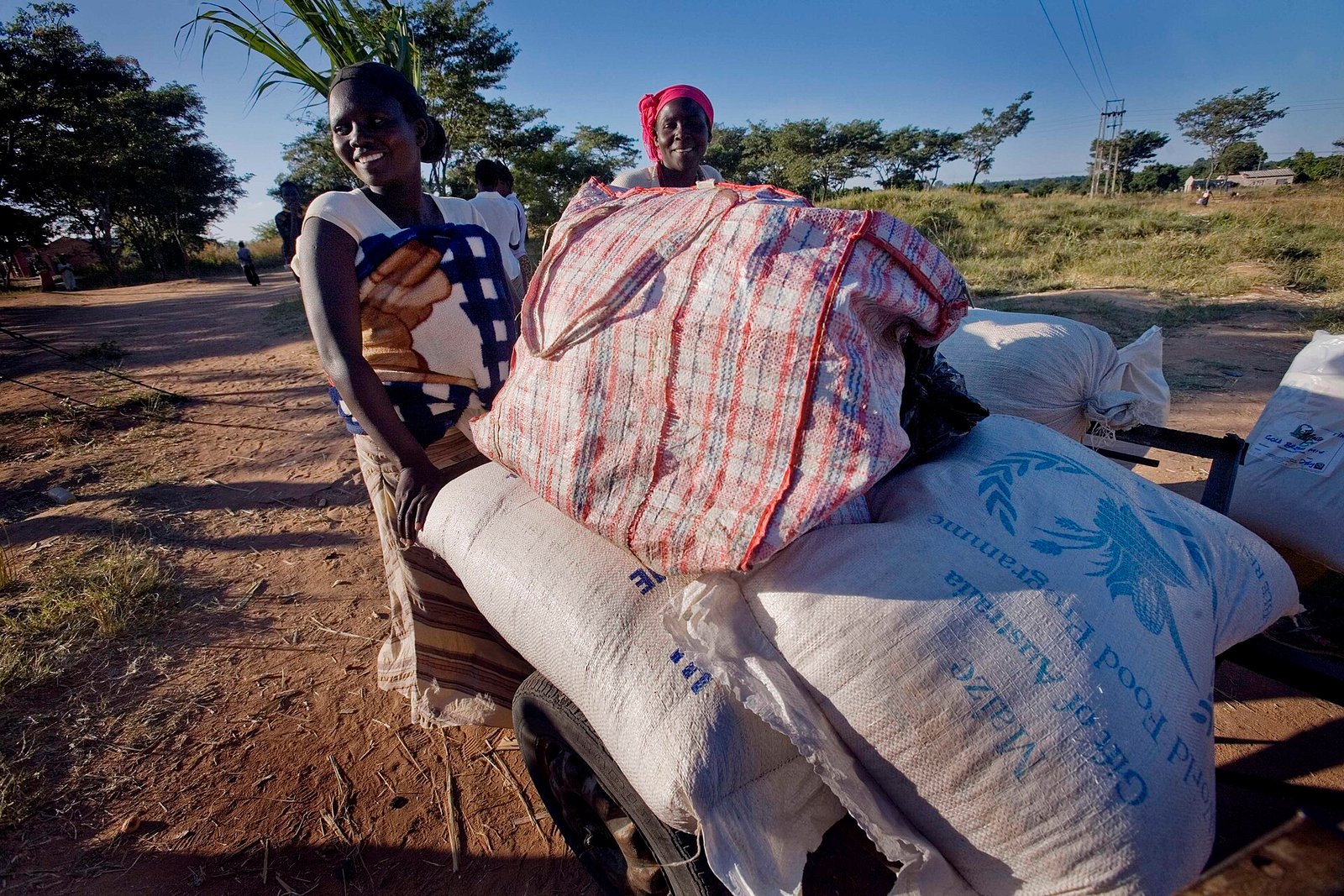
Photo: Kate Holt/AusAID, via Wikimedia Commons (CC BY 2.0)
Sources
- World Food Programme — El Niño adds new hunger hotspots as conflict continues to drive risk of famine, warn FAO and WFP: https://www.wfp.org/news/el-nino-adds-new-hunger-hotspots-conflict-continues-drive-risk-famine-warn-fao-and-wfp
- UN News — World News in Brief: hunger set to worsen in 16 hotspots: https://news.un.org/en/story/2026/11/1168893
- Reuters, via Daily Fox News — UN warns famine risks rising as hunger hotspots increase: https://dailyfoxnews.com/news/45346/un-warns-famine-risks-rising-as-hunger-hotspots-increase
Leave a comment
Comment as a guest and verify your email, or sign in or create a reader account. Guest comments reach our review queue after email verification; account holders can submit directly for review.