Listen to this article
Take the story with you. Choose a voice and a pace that suits you.
Getting your device voices ready…
The voice follows the displayed language and your browser’s regional preference when available. You can choose another narration voice.
The early childhood education funding gap is no longer an abstract worry tucked inside a budget annex. It has a price tag. Giving every child at least one year of preschool by 2030 will take an extra US$35 billion a year in low- and lower-middle-income countries, according to the 2026 Global Report on Early Childhood Care and Education, published jointly by UNESCO, UNICEF and OECD and launched at UNESCO Headquarters in Paris on 20 November 2026, World Children’s Day.
That date matters. Four years remain before the 2030 deadline countries set themselves for quality early childhood development, care and pre-primary education for all. On the current trajectory, the target will be missed — not narrowly, but by a wide margin.
Only 59% of children entering primary school worldwide have had at least one year of pre-primary education, a share that has barely moved since 2015, UNESCO reports (UNESCO). Read that again. Four in ten children start formal schooling having never set foot in a preschool classroom.
The early childhood education funding gap, in one stark figure
Enrolment did climb for a while. Global early childhood education enrolment rose from 64% in 2003 to 75% in 2024, then stalled across the past decade (DevDiscourse). Where a child lives still decides a great deal. Participation one year before primary entry exceeded 90% in Europe and North America and in Latin America and the Caribbean in 2024, while rates stayed close to 50% in North Africa and Western Asia and in sub-Saharan Africa (UNESCO).
Development tells the same uneven story. Globally, 64% of children aged 24–59 months are developing as expected for their age, including in early learning. In sub-Saharan Africa the figure falls to 53% (Education Post).
Why so little movement? Money, in large part. Government spending on pre-primary education accounts for only around 3–4% of education budgets on average in low- and middle-income countries, UNESCO says, and the results show up as crowded classrooms, underqualified staff and thin inclusion services, particularly in low-income and crisis-affected places (UNESCO).
The cost of inaction in early childhood education, in plain numbers
Skimping here does not save money. It defers the bill and inflates it.
The report puts the cost of inaction in early childhood education at an average of 3% of GDP globally, rising to 7% in low-income countries (UNESCO). Set against that, every US$1 invested in closing childcare policy gaps could generate an estimated US$3.76 in additional global GDP by 2035 — a modelled estimate, not a guaranteed return, as coverage of the report notes (HeadlinesXtra).
UNESCO Director-General Khaled El-Enany called for sustainable, fair and coordinated financing that puts the youngest and most disadvantaged children at the centre of public decisions (Education Post). UNESCO Goodwill Ambassador Pharrell Williams backed the call, saying ambition and potential are everywhere, but opportunity is not always equally shared (UNESCO).
Analysis: the economic framing is deliberate, and it cuts both ways. Framing preschool as infrastructure makes finance ministries listen in a way appeals to fairness alone often do not. The risk is that a return-on-investment case quietly sidelines children whose needs cost the most to meet — precisely the disadvantaged children the report says should come first. Both readings sit inside the same numbers; which one guides spending is a political choice, not an arithmetic one.
What pre-primary education investment would actually buy
The US$35 billion figure rests on a larger calculation. Estimates from UNESCO’s Global Education Monitoring Report put the need for 76 low- and lower-middle-income countries at an average of US$69 billion a year between 2027 and 2030 to meet national targets for one preschool year at minimum quality standards. Projected public financing covers only about half, leaving the US$35 billion shortfall (DevDiscourse).
Classrooms alone will not absorb that money well. The world needs about six million additional pre-primary educators by 2030, and only 57% of pre-primary teachers in low-income countries meet minimum training requirements (UNESCO). Pre-primary education investment, in other words, is largely a workforce problem: recruiting people, training them properly, and paying them enough to stay.
What the UNESCO early childhood report 2026 recommends
The UNESCO early childhood report 2026 asks governments to secure predictable, multi-year financing for the early years rather than lurching from one annual budget to the next. It also calls for more investment in children under three, tighter coordination across education, health and social protection, priority for disadvantaged children, a lighter financial burden on families, and serious investment in a qualified workforce (UNESCO).
The report, titled Financing for equity, inclusion and quality, was presented in Paris in the presence of Her Highness Sheikha Jawaher bint Mohammed Al Qasimi, Chairperson of the Sharjah Family and Community Council, and 10 ministers from around the world (UNESCO). UNESCO says it supports countries through shared practice, assessment and policy planning, including work in Côte d’Ivoire, Jamaica, Morocco, the United Republic of Tanzania and Sharjah, alongside a regional initiative covering 25 countries in West and Central Africa (DevDiscourse).
Whether the US$35 billion materialises is, at this point, genuinely uncertain. The report sets out what is needed and what delay costs; it cannot appropriate a single dollar. Watch the 2027 budget rounds in the countries named in the estimates. Those documents, not launch-day statements, will show if this gap starts to close.
Information verified through 23 November 2026.
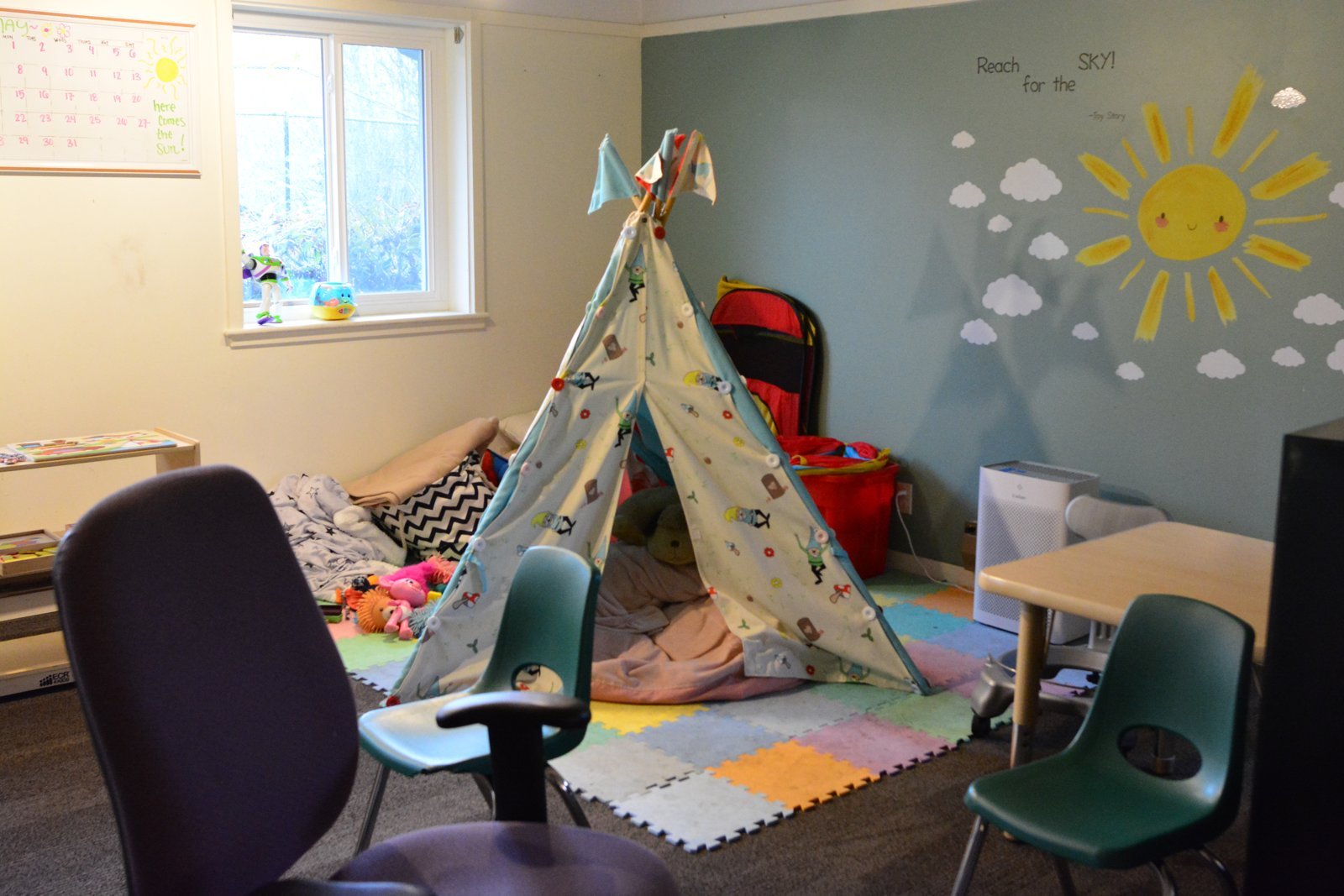
Photo: Joe Mabel, via Wikimedia Commons (CC BY-SA 4.0)
Sources
- UNESCO — UNESCO report calls for greater investment in pre-primary education: https://www.unesco.org/en/articles/unesco-report-calls-greater-investment-pre-primary-education-every-dollar-invested-yielding-nearly
- UNESCO — Launch of the 2026 Global Report on Early Childhood Care and Education: https://www.unesco.org/en/articles/launch-2026-global-report-early-childhood-care-and-education-unesco
- DevDiscourse — Rising costs of failing to invest in children’s preschool education: UNESCO report: https://www.devdiscourse.com/article/education/4010190-rising-costs-of-failing-to-invest-in-childrens-preschool-education-unesco-report?amp
- Education Post — UNESCO flags $35 billion annual funding gap in pre-primary education across 76 countries: https://educationpost.in/news/education/unesco-flags-35-billion-annual-funding-gap-in-pre-primary-education-across-76-countries
- HeadlinesXtra — UNESCO Warns Early Childhood Education Faces $35 Billion Annual Funding Gap: https://headlinesxtra.com/2026/11/23/unesco-early-childhood-education-35-billion-funding-gap-2026/
Leave a comment
Comment as a guest and verify your email, or sign in or create a reader account. Guest comments reach our review queue after email verification; account holders can submit directly for review.