Listen to this article
Take the story with you. Choose a voice and a pace that suits you.
Or listen in another language / choose a voice
Getting your device voices ready…
The voice follows the displayed language and your browser’s regional preference when available. You can choose another narration voice.
South Korea education minister resigns AI cheating headlines wrote themselves on Sunday. Choi Kyo-jin offered his resignation on 22 November, taking responsibility for the confusion caused by last-minute anti-cheating measures before the national college entrance exam, and President Lee Jae Myung accepted it the same day, according to Korea JoongAng Daily.
The resignation took place on 22 November 2026. Information verified through 22 November 2026.
In his statement, released through the Education Ministry, Choi said the exam had concluded without major incident but that he could not escape criticism for failing to prepare in advance. “Now that the CSAT is over, I keenly feel responsible and am offering my resignation,” he said, in remarks reported by Korea JoongAng Daily. TBS News reported President Lee accepted the resignation of the 72-year-old minister the same day.
A confession four days before the Suneung
On 15 November, the top scorer on the certified tax accountant exam admitted he had cheated using a miniature camera and AI, Korea JoongAng Daily reported. The Associated Press account adds the detail that made people stare: the 34-year-old, Han Won-seok, had drawn suspicion after discussing scores that included missing only one of 160 questions in the first round. He said he photographed questions with a hidden microcamera and used a smartphone to get answers from generative AI, according to AP.
That confession landed four days before the College Scholastic Ability Test — the CSAT, known as the Suneung. More than 550,000 people were due to sit it at around 1,300 test sites, AP reported, in a country where the result shapes university places, jobs and social standing. The state delays the start of work and stock trading to clear the roads for candidates and halts flights during the English listening section.
What the South Korea education minister resigns AI cheating row is really about
The ministry’s problem was timing, and everyone could see it.
Officials had initially focused on smart glasses, Korea JoongAng Daily reported. After the confession, they rushed out more measures, and kept changing them until days before the exam. Aju Press listed what arrived at the last minute: emergency text messages sent nationwide three times during the exam, only black pencils allowed among personal writing instruments, stickers over clothing buttons, and inspections of glasses, sleeves and collars. AP reported 8,400 extra supervisors were deployed, and Prime Minister Han Seong-sook said the ban for cheaters would be lengthened from one year to ten.
Teachers were not impressed. Aju Press reported that teachers and educational organisations criticised the measures as desk-bound administration that pushed responsibility onto proctors expected to stop advanced devices with stationery-shop stickers and their own eyes.
Then Choi hurt himself. At a National Assembly Education Committee session on 16 November, a lawmaker asked whether he was confident he could catch 100 percent of AI-assisted cheating. “I don’t think that I can,” he replied. “Because of my age.” Korea JoongAng Daily reported the remark drew criticism for dodging responsibility. Choi, who is 72, was largely absent from ministry events afterwards; Vice Minister Choi Eun-ok fronted them instead.
Suneung AI cheating 2026: what happened on the day
The exam itself, held on Thursday 19 November, ran under the emergency regime. Authorities sent emergency alerts to phones nationwide three times to expose devices candidates had not handed in, and proctors checked glasses and covered buttons with stickers, according to Korea JoongAng Daily.
The counts differ between reports. Korea JoongAng Daily, citing the Education Ministry, said 98 test-takers were caught in smart device-related cases — 49 through the alerts, 93 carrying devices and five using them. Aju Press put the total at 111: 54 through the alerts, 52 for possession and Wi-Fi detection, and five involving actual use. Both agree on the five in-exam use cases; the totals have not been reconciled in the reporting so far.
One darker thread ran alongside the exam. Lee Jin-woo, a perfect scorer on the Legal Education Eligibility Test who had been accused of using AI to cheat, was found dead at a motel in Seoul on exam day, Korea JoongAng Daily reported. He had promised to answer CSAT questions on a livestream that morning and did not appear. Police are investigating, the paper said. The allegation against him remains an allegation.
What happens after the South Korea CSAT AI cheating scandal
President Lee moved quickly to widen the frame beyond one minister. In a post on X, he wrote that concerns over AI-exploiting cheating are spreading beyond the CSAT to essay-based admission exams and school tests, and that exam fairness is a principle that can never be compromised, Korea JoongAng Daily reported. He said he would order a review of plans to add identification marks to question papers so a photographed paper can be traced. On Saturday, Lee had already said the government would pay 100 million won — about $75,000 — for each verified report of cheating on the exam, according to The Insight International.
The machinery keeps running without Choi. The Choi Kyo-jin resignation CSAT fallout now passes to the ministry’s Cheating Review Committee, which Aju Press reported will settle disciplinary measures for the detected cases before CSAT scores are released on 11 December. An emergency team formed with the Korean Council for University Education and 46 universities will oversee essay and interview admissions tests, Aju Press said.
Analysis: a resignation solves the politics, not the problem. The devices that triggered this crisis — cameras in buttons, AI behind a phone screen — will be smaller next year, and a one-day exam taken by half a million people cannot be secured by stickers alone. Whoever replaces Choi inherits the harder question: whether a high-stakes, single-sitting exam can stay fair when the cheating tool is now ordinary consumer technology. South Korea has not answered that yet. Neither has anyone else.
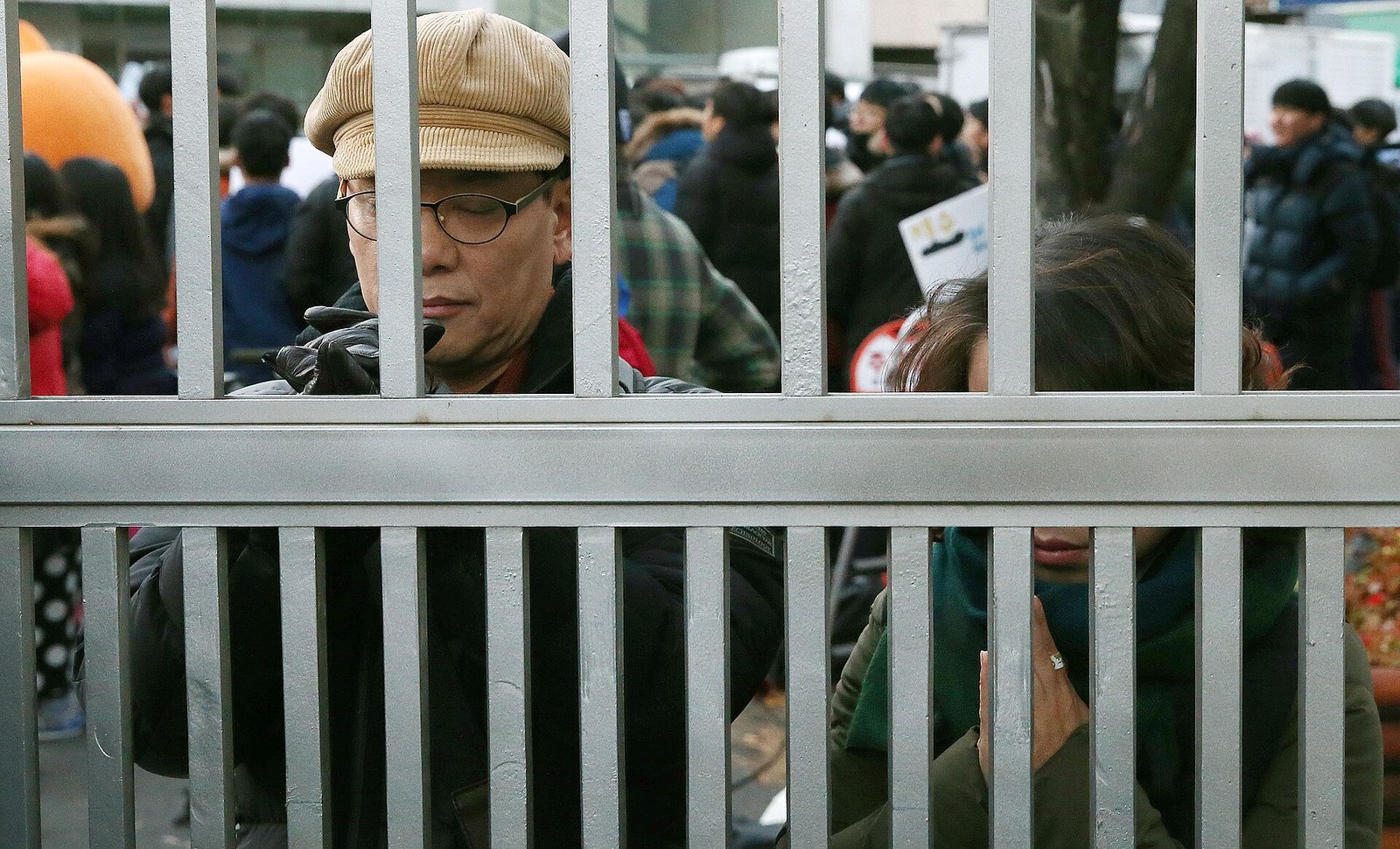
Photo: Republic of Korea, via Wikimedia Commons (CC BY-SA 2.0)
Sources
- https://www.koreajoongangdaily.com/korea/lee-accepts-education-ministers-resignation-after-csat-anticheating-measures-trigger-nationwide-confusion/12984387
- https://www.tbsnews.net/worldbiz/asia/south-korea-education-minister-resigns-after-ai-assisted-exam-cheating-scandal-1610146
- https://www.ajupress.com/view/20261122120470660
- https://techxplore.com/news/2026-11-glasses-shirt-buttons-south-korea.pdf
- https://theinsightinternational.com/south-korea-education-minister-choi-kyo-jin-resigns-ai-cheating-suneung-november-22/
Leave a comment
Comment as a guest and verify your email, or sign in or create a reader account. Guest comments reach our review queue after email verification; account holders can submit directly for review.