Listen to this article
Take the story with you. Choose a voice and a pace that suits you.
Or listen in another language / choose a voice
Getting your device voices ready…
The voice follows the displayed language and your browser’s regional preference when available. You can choose another narration voice.
The Harvard skulls returned to Brazil travelled the way diplomats travel, not the way museum objects usually do. Brazilian diplomats carried them on flights in padded boxes inside reinforced suitcases, and on 11 November 2026 ceremonies in Rio de Janeiro and Salvador welcomed them home (Smithsonian Magazine; The Guardian). More than a century and a half earlier, both people had been taken from Brazil, sent to the United States and used in eugenics studies at Harvard University (Smithsonian Magazine).
Information verified through 21 November 2026.
Harvard skulls returned to Brazil: a four-year campaign ends
The return closed a four-year recovery campaign by Brazilian researchers, community groups and, from late 2024, the Brazilian government itself (Smithsonian Magazine). The skulls had come to public attention in 2022, through a book by historian Christopher D.E. Willoughby and reporting in the student-run Harvard Crimson, which found the university held remains from at least 19 people likely enslaved in the United States, the Caribbean and Brazil (Smithsonian Magazine). A 2022 university report recommended repatriation, but negotiations only gained momentum after Brazil’s Ministry of Foreign Affairs joined the talks in late 2024, historian João José Reis told the Guardian (Smithsonian Magazine).
At the ceremonies, Brazil’s minister of human rights and citizenship, Janine Mello, put the meaning plainly. “The repatriation of human remains represents a fundamental step towards recognizing the memory, history and dignity of the Black population of our country,” she said (Smithsonian Magazine).
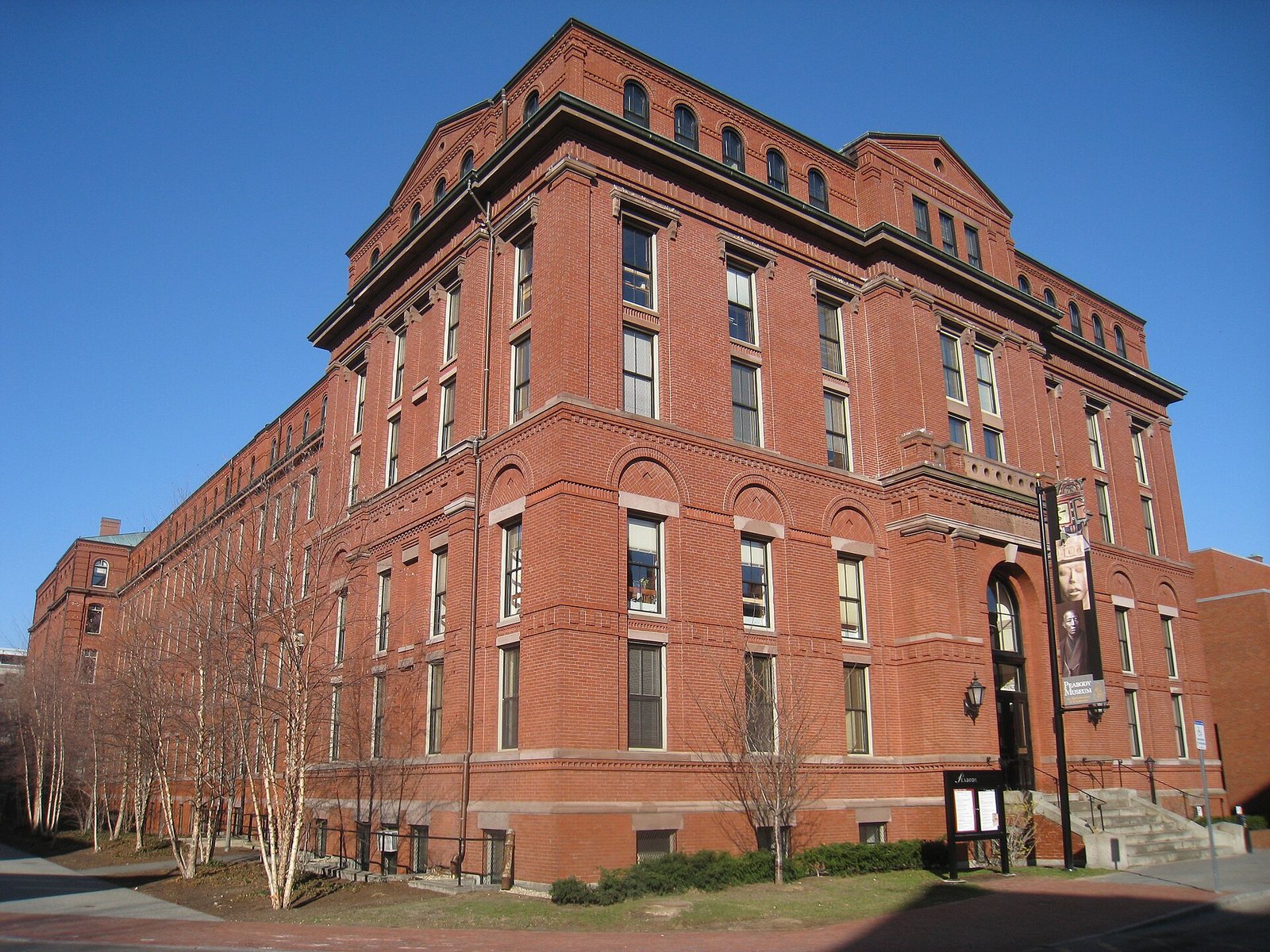
Peabody Museum repatriation to Brazil: where the review began
The Peabody Museum repatriation to Brazil grew out of a university initiative launched in 2019 to review historical records related to individuals of African descent from Brazil and the Caribbean islands (The Art Newspaper). That review identified one person recorded as having been enslaved, with strong evidence that the other was as well (The Art Newspaper). A 2022 report on Harvard’s museum collections documented thousands of human remains, prompting scrutiny of how they had been collected and studied; neither the museum nor the university commented to The Art Newspaper (The Art Newspaper).
Context matters here. More than four million enslaved Africans disembarked in Brazil during the transatlantic slave trade, more than in any other destination in the Americas, and Brazil was the last country in the Western Hemisphere to abolish slavery, in 1888 (The Art Newspaper).
Malê Revolt skull returned to Salvador
The skull received by the Federal University of Bahia in Salvador is believed to belong to an enslaved man of Nagô, or Yoruba, origin who fought and died in the January 1835 Malê Revolt, the largest urban slave rebellion in Brazilian history (Smithsonian Magazine). Roughly 600 enslaved and freed African Muslims attempted to take control of Salvador before police suppressed the revolt, killing 70 participants; after this man died of his wounds at a Salvador hospital, US diplomat and sugar trader Gideon T. Snow allegedly took his head and shipped it to Boston with a note describing him as “one of the chiefs in the affair” (Smithsonian Magazine).
Members of the Bahia Islamic Cultural Center and the advocacy group Arakunrin campaigned for his return so he could receive a proper burial. “He is our brother and deserves to be buried under Islamic rites,” Sheikh Abdul Hameed Ahmad, the centre’s founder, told the Guardian in 2025 (Smithsonian Magazine).
Cemitério dos Pretos Novos skull Rio: the woman with no name in the record
Less is known about the second person. Her skull, entrusted to the National Museum of the Federal University of Rio de Janeiro, had been held at the Peabody since 1870 after a transfer from Harvard’s Museum of Comparative Zoology, and records say Walter Hunnewell, a Harvard graduate serving as photographer on Louis Agassiz’s 1865-66 expedition to Brazil, obtained it with a note stating the remains had been “exhumed in the streets of Rio de Janeiro” (Smithsonian Magazine). Based on its size, Harvard researchers suggested it likely belonged to an adult woman (Smithsonian Magazine).
Historian Bruno Véras, cross-referencing 19th-century diaries, letters and maps, concluded the remains may have been taken from Rio’s Cemitério dos Pretos Novos, a burial ground for newly arrived Africans who died during or shortly after arriving in Brazil (Smithsonian Magazine). “To steal a skull and take it to another country was violent even in the context of racist research,” Véras told the Guardian (Smithsonian Magazine). The museum will hold the skull in temporary custody; it will not be publicly displayed or used for research or reproduction while researchers work to establish her origins (The Art Newspaper).
Neither skull will be publicly exhibited, and no image of either will be released. Forensic anthropologists at the two Brazilian universities will take measurements and make microscopic examinations — and, if authorised, genetic or dating analyses — to confirm sex and origins before both people are laid to rest with religious rites (Smithsonian Magazine).
Analysis: two returns do not close a collection history that a 2022 report measured in thousands of remains. They do show what moved this case when reports alone did not — named communities asking for named obligations, and a government willing to carry the request itself. “This history of slavery cannot be undone,” said Irina Feisthauer Silveira, one of the diplomats who escorted the remains home. “But acknowledging the mistakes of the past with transparency is a first step towards building a more equal, just and less violent future” (Smithsonian Magazine).
Photo: Daderot, via Wikimedia Commons (Public domain)
Sources
- Smithsonian Magazine — Harvard Returns Two Skulls Likely Belonging to Enslaved Individuals, More Than 150 Years After They Were Taken From Brazil for Eugenics Studies: https://www.smithsonianmag.com/smart-news/harvard-returns-two-skulls-likely-belonging-to-enslaved-individuals-more-than-150-years-after-they-were-taken-from-brazil-for-eugenics-studies-180989910/
- The Art Newspaper — Harvard museum returns human remains to Brazil: https://www.theartnewspaper.com/2026/11/17/harvard-museum-returns-human-remains-brazil
- The Guardian, via The Boston Project: https://thebostonproject.net/ward/news/two-skulls-likely-belonging-to-enslaved-people-ret-8d7b2ca7
Leave a comment
Comment as a guest and verify your email, or sign in or create a reader account. Guest comments reach our review queue after email verification; account holders can submit directly for review.