Listen to this article
Take the story with you. Choose a voice and a pace that suits you.
Or listen in another language / choose a voice
Getting your device voices ready…
The voice follows the displayed language and your browser’s regional preference when available. You can choose another narration voice.
The Paris protest ban near schools and universities took effect on Monday 16 November and runs to Friday 20 November. It forbids unauthorised gatherings or marches within 100 metres of 10 secondary schools and five universities named by the Paris police prefecture. Pupils and students can still walk through the gates. What they cannot do, for five days, is gather outside them. Information verified through 17 November 2026.
Paris police chief Patrice Faure announced the order on Sunday. He said it was needed because of “numerous disturbances and blockades around certain secondary schools and higher education institutions in Paris and the surrounding area, as part of an ongoing social movement whose scale and level of violence remain persistent”. The ban covers 10 of the roughly 150 secondary schools in the capital, plus university sites that include faculties of the Sorbonne.
The Paris protest ban near schools and universities, in plain terms
This is a perimeter, not a closure. Schools and universities stay open; the order targets the space around them. Faure said blockades had produced damage to public property, attacks on members of the education community, and confrontations with police. The administrative order cited barricades at school entrances and cases of traffic blocked with bicycles and rubbish bins, and iron bars, bottles and signs thrown at police.
The mayors pushed first. According to local media, mayors from eight Paris districts approached the regional education authority asking for action to secure the entrances and exits of blockaded schools. Faure’s numbers explain the pressure they were under. He said 1,548 people have been arrested in Paris since the protests began, and government data cited in reporting puts the injured at some 360 students and 240 education staff, including 81 school principals and deputy principals.
Faure also framed the blockades as the work of a few. He said they were “largely carried out by a handful of pupils” who were preventing other students from accessing education, and that they anger parents who want the disruption to end.
France school blockade protests September 2026: how a classroom complaint grew
So why are French students blockading schools at all? The movement started small and specific. Pupils began blockading school entrances in mid-September to protest against inadequate classroom conditions. Korean reporting on the order traces the first action to 18 September at Saint-Exupéry High School in Créteil, southeast of Paris. The demands were concrete from the start: better learning conditions, including more teachers and greater funding for education.
University students joined. Then the movement spilled past education altogether, intersecting with demonstrations organised by trade unions over inflation and the cost of living and drawing in yellow-vest activists. Saturday 14 November was the fifth Saturday in a row of street protests across France, with around 106,000 people demonstrating nationwide, including roughly 24,000 in Paris. Turnout that day was lower than in previous weeks, and 219 people were arrested nationwide.
That arc matters. A dispute about classrooms, staffing and funding became, over two months, one strand of a much wider argument about the cost of living. The schools stayed at the centre of it because a blockade is visible in a way a petition is not: a shut gate photographs well, and it inconveniences exactly the families whose support both sides want.
UNEF freedom of assembly Paris protest ban: the union’s objection
The National Union of Students of France, UNEF, answered within hours. It called the ban a “clear attack on… the freedom of assembly” and demanded it be lifted immediately. Its sharpest point was about wording. “The order does not define what a gathering is,” the union said, arguing that the gap leaves decisions to officers on the ground and “paves the way for checks, searches, fines and mass arrests.”
Analysis: both sides are describing the same five days in incompatible languages. For the prefecture, this is a narrow, dated, site-specific measure — 15 sites, 100 metres, one working week — taken after injuries to staff and pupils. For UNEF, a ban that does not define its own key term is not narrow at all, because its real width gets decided kerbside, student by student. The order expires on 20 November either way. What does not expire is the underlying complaint. Nobody in this week’s reporting announced more teachers, more funding or a plan for classroom conditions, and the movement that began in September has already shown it can outlast a single police order. Watch what happens at the school gates on Monday 23 November. That morning, not this one, tells you whether the ban settled anything.
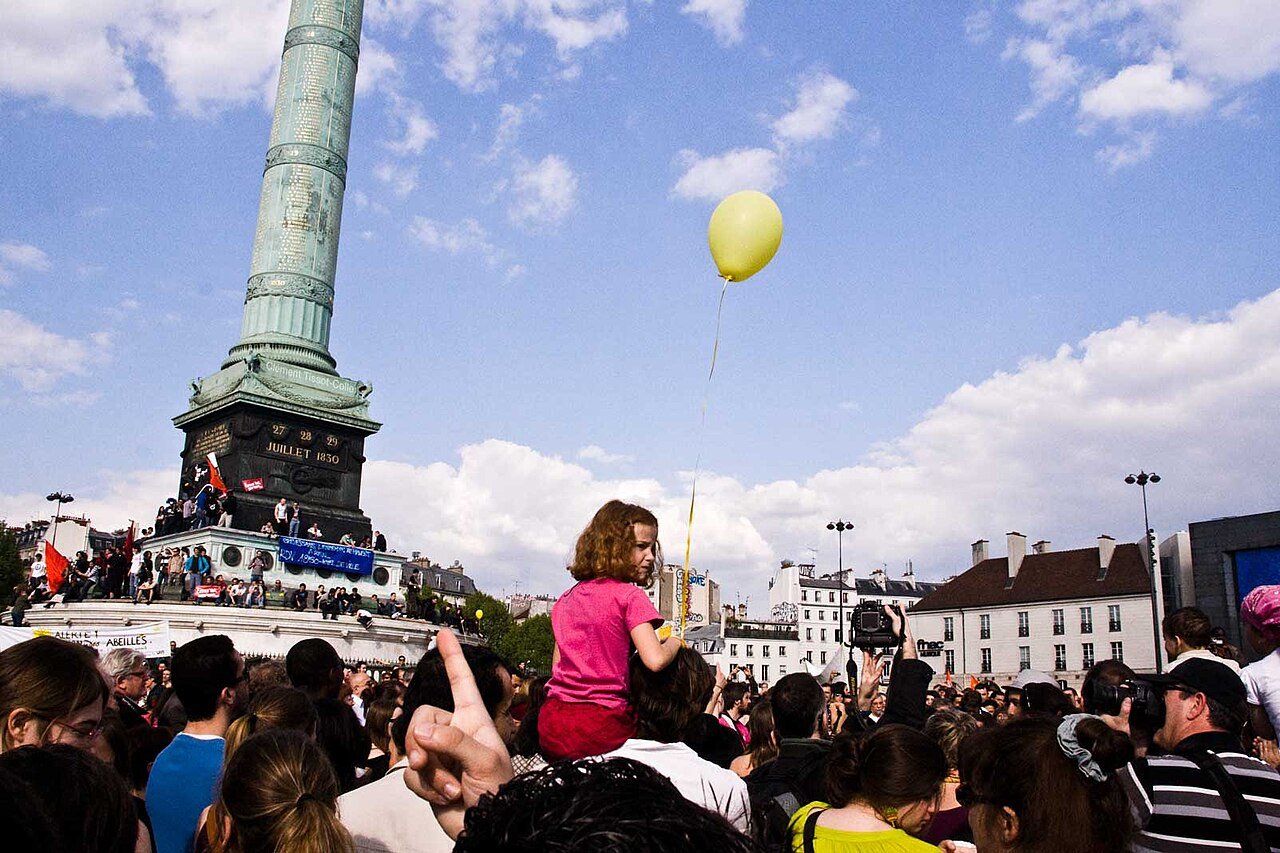
Photo: Clément Tissot, via Wikimedia Commons (CC BY 3.0)
Leave a comment
Comment as a guest and verify your email, or sign in or create a reader account. Guest comments reach our review queue after email verification; account holders can submit directly for review.