Listen to this article
Take the story with you. Choose a voice and a pace that suits you.
Or listen in another language / choose a voice
Getting your device voices ready…
The voice follows the displayed language and your browser’s regional preference when available. You can choose another narration voice.
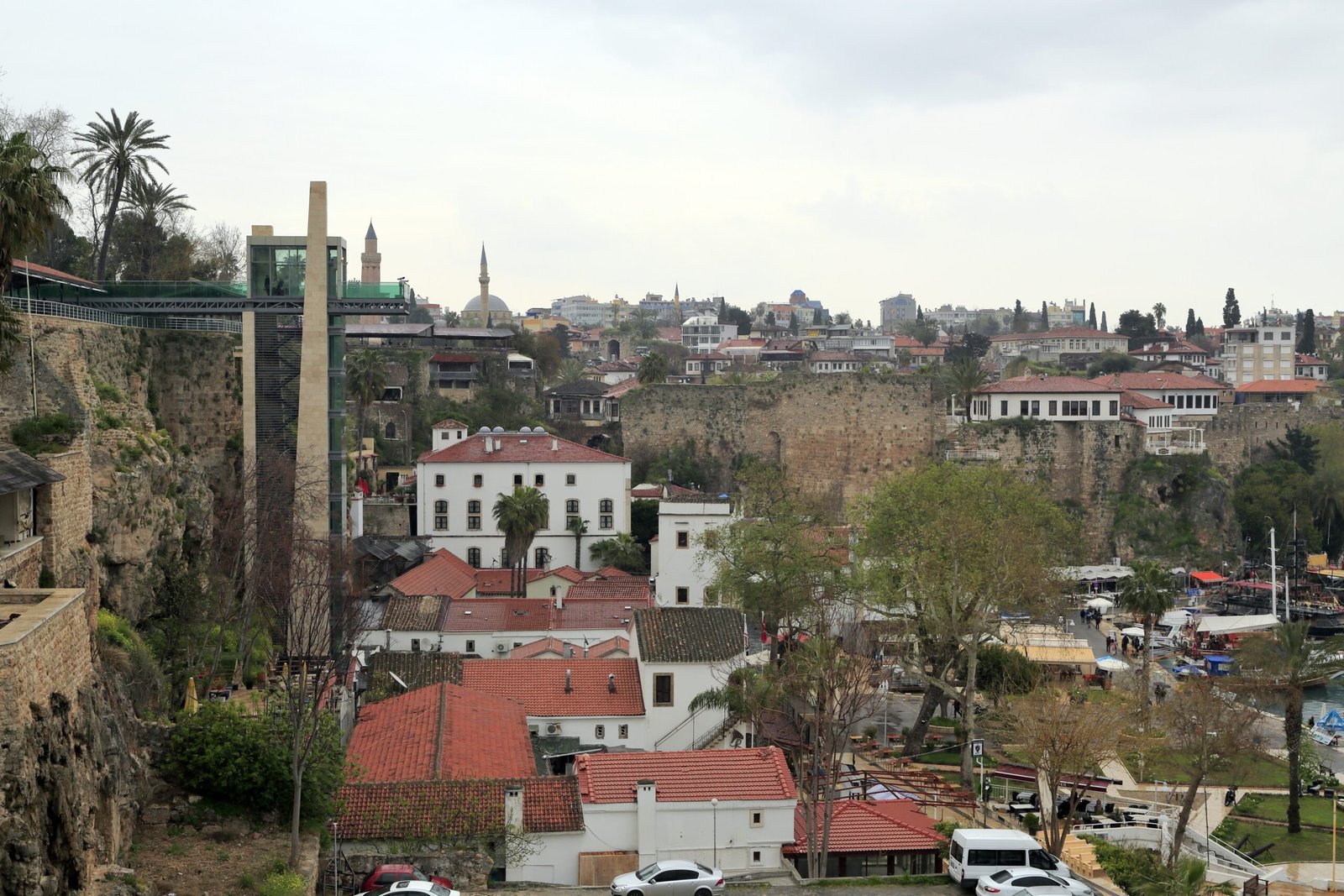
The Turkey AIIB climate deal landed on the fourth day of COP31, and it is the host country’s own homework, funded. On Thursday 12 November 2026 in Antalya, the Asian Infrastructure Investment Bank agreed a record $1.6 billion financing package with Turkey to back policy reforms meant to pull in the investment the country needs for its climate goals (Reuters). Information verified through 12 November 2026.
“This financing represents AIIB’s largest climate policy-based financing package to date,” said the bank’s chief investment officer, Konstantin Limitovskiy (Reuters). The scale of the gap explains the size of the cheque. Turkey, a founding AIIB member, needs an estimated $68 billion in additional climate investment by 2030, around half of it from private sources, according to the bank (Reuters).
COP31 runs from 9 to 20 November at the Antalya EXPO Center, with the leaders’ summit held on 11 and 12 November (Jagran Josh). Nearly 200 countries are represented (BusinessWorld).
What the Turkey AIIB climate deal actually pays for
This is policy money, not a single dam or solar farm. The package covers fiscal policy, financial regulation and sectoral planning, and supports implementation of Turkey’s Climate Law and its emissions plan, which carries an interim target for 2035 (Reuters). The stated aims are to scale sustainable finance, speed up decarbonisation and strengthen climate resilience across a country of 86 million people facing drought, floods and wildfires (Reuters).
The programme has numbers attached, which is rarer than it should be at climate summits. Targets include at least 180 facilities reporting baseline emissions under the trading scheme by April 2027, and production licences for 1,800 megawatts of wind and solar capacity by early 2027 (Reuters). On land and water, the plan aims to help 225,000 farmers in water-stressed basins switch to less water-intensive crops by 2028, and to have 50,000 hectares designated as carbon sinks by 2028 (Reuters).
For context, the AIIB’s total climate financing in 2025 was a record $7.47 billion (Reuters). One deal worth more than a fifth of that annual total, aimed at one country’s rulebook, shows where the bank thinks the bottleneck sits: not in project ideas, but in the fiscal and regulatory plumbing that makes private money show up.
A Turkey emissions trading scheme with an EU edge
Part of the support goes to scaling Turkey’s nascent emissions trading scheme, under which companies in high-emitting sectors receive and trade allowances (Reuters).
There is a hard commercial reason to get this right. A domestic carbon price can help Turkish exporters to the European Union in sectors such as steel and cement, because carbon costs paid at home can be taken into account under the EU’s carbon border levy on emissions embedded in certain imported products (Reuters). In plain terms: price carbon in Turkey, or watch Brussels price it for you and keep the revenue.
That trade logic may do more for the scheme’s survival than any summit speech. Exporters who can see a border charge coming tend to prefer a system they can plan around, in their own currency, at home.
The Turkey net zero 2053 target meets the Antalya talks
The deal supports a plan that aims to achieve net zero by 2053, so the Turkey net zero 2053 target now has a financing instrument sitting directly behind its early steps (Reuters). The reform plan also strengthens planning and risk management for water, ecosystems and health as scarcity, drought, extreme heat, wildfires and urban flooding press harder (Reuters).
The host’s other big pitch in Antalya is electrification. Turkey is pushing negotiators to centre a final deal on raising electricity’s share of total global energy consumption to 35% by 2035, up from a little over a fifth now (BusinessWorld). Critics note the proposal does not require new power to come from clean sources (BusinessWorld). UN Secretary-General António Guterres told the conference on Tuesday that it is “long past time to stop treating the transition away from fossil fuels as taboo or intractable,” and urged countries to produce clear timelines (BusinessWorld).
Brazil’s presidency has published a roadmap asking countries to assess and plan their energy systems by 2028, then work together to reduce fossil fuel supply from 2031 (BusinessWorld). It remains a proposal, not an adopted agreement (HeadlinesXtra).
COP31 climate finance in Antalya, against a hard backdrop
The science framing this summit is not gentle. The UN Environment Programme’s 2026 Emissions Gap Report says warming is expected to exceed the Paris Agreement’s 1.5°C threshold, and its lowest-overshoot pathway requires emissions cuts of 18% by 2030, 45% by 2035 and 69% by 2040 against 2025 levels (HeadlinesXtra). The United States is absent for a second consecutive year after its withdrawal from international climate cooperation (HeadlinesXtra).
COP31 climate finance in Antalya therefore matters less as ceremony than as plumbing. Former French prime minister Laurent Fabius, who presided over the 2015 Paris conference, told Reuters the key word in Antalya is “implementation” (BusinessWorld).
Analysis: the AIIB package fits that word better than most summit announcements. It is tied to named reforms, dated targets and a trading scheme with a trade reason to exist. Its limits are just as clear. $1.6 billion against a $68 billion need by 2030 is a lever, not the load itself — the deal works only if the reforms actually unlock the private half of that bill. Watch April 2027. Either 180 facilities are reporting baseline emissions, or this was another well-phrased week in Antalya.
Photo: Falk2, via Wikimedia Commons (CC BY-SA 4.0)
Sources
- https://www.reuters.com/sustainability/cop/cop31-host-turkey-aiib-strike-record-16-billion-climate-policy-deal-2026-11-12/
- https://headlinesxtra.com/2026/11/11/cop31-leaders-climate-promises-fossil-fuel-transition-november-2026/
- https://bworldonline.com/world/2026/11/11/793032/world-leaders-to-address-cop31-as-turkey-pushes-for-new-climate-deal/
- https://www.jagranjosh.com/general-knowledge/cop31-turkey-2026-dates-venue-theme-key-agendas-important-facts-and-major-climate-issues-explained-1820013762-1
Leave a comment
Comment as a guest and verify your email, or sign in or create a reader account. Guest comments reach our review queue after email verification; account holders can submit directly for review.