Listen to this article
Take the story with you. Choose a voice and a pace that suits you.
Or listen in another language / choose a voice
Getting your device voices ready…
The voice follows the displayed language and your browser’s regional preference when available. You can choose another narration voice.
The EU product repairability consultation opened on 3 November 2026, and its question is disarmingly plain: should the things you buy be designed so they can be fixed? The European Commission is asking citizens, businesses, repair professionals and consumer groups for evidence until 9 February 2027, before it decides whether to set common repair-friendly design rules across the single market (European Commission). Information verified through 11 November 2026.
Nothing is law yet. The consultation creates no new obligations, and the final scope will only be set after an impact assessment, with a possible delegated act planned for adoption in 2027 under the Ecodesign for Sustainable Products Regulation (European Commission; 2EU Brussels).
The EU product repairability consultation covers three everyday product families
The Commission’s starting list comes from a preliminary preparatory study, and it targets objects that die young. Consumer electronics are first: certain audio and video equipment, wearables and peripherals. Light transport follows, including some e-bicycles, self-balancing devices and e-scooters. The third group is small household appliances — kitchen appliances, personal care devices and other small electric appliances (European Commission).
That list is provisional. Products already covered by product-specific rules or voluntary agreements are expected to stay outside this measure to avoid overlapping legislation, and the impact assessment will confirm what is actually in (European Commission; Open Access Government).
The stakes are visible in the waste figures. Eurostat data updated in October put electrical and electronic equipment placed on the EU market in 2024 at approximately 14.6 million tonnes, with 4.5 million tonnes of waste recycled or prepared for reuse — different flows that cannot simply be divided into a recycling rate, as the Brussels briefing notes (2EU Brussels).
Ecodesign repairability requirements would be tested on five pressure points
The consultation is organised around five areas where repairs succeed or fail. First, access to spare parts: a single unavailable component can retire an otherwise working appliance. Second, repair and maintenance information — diagrams, disassembly instructions and diagnostic procedures that determine whether an independent workshop can do the job at all. Third, software and firmware, because a physically compatible replacement part may still need configuration or recalibration before it works (2EU Brussels; European Commission).
Fourth comes disassembly itself. Glued housings and components damaged during opening make repairs slow, risky or uneconomic; the Commission’s Joint Research Centre points to removable fasteners, accessible connectors and quick access to parts as designs that help (2EU Brussels). Nobody is proposing that every product must be repairable by its owner without tools. The question is narrower: whether design choices that block repair should remain free.
Fifth, and most visible to shoppers, are repairability scores at point of sale. A label could let buyers compare how easily products come apart and whether parts and information are available before they pay (European Commission). A version already exists: smartphones and slate tablets covered by EU rules applying since 20 June 2025 carry an energy label with a repairability class from A to E (2EU Brussels).
Repairability scores at point of sale sit beside repair rights that already exist
This consultation is about product design, and it lands on top of a separate repair-services framework that is already in force. Member states had to transpose the directive promoting the repair of goods by 31 July 2026; for covered products, manufacturers can be required to offer repair at a reasonable price within a reasonable time, and where a consumer chooses repair under the legal guarantee, the seller’s liability period is extended once by 12 months (2EU Brussels).
Campaigners want the net cast wider still. The Right to Repair Coalition, which says it represents over 190 organisations, is petitioning for repair and reuse to come first in the EU’s upcoming Circular Economy Act, with binding reuse and repair targets and manufacturer funding for reuse and repair at the same level as recycling; over 3,000 people had signed when the petition was reported (MRW).
The counterweight is cost. The impact assessment must weigh manufacturers’ redesign, documentation and parts-supply costs, plus the effect on small workshops, against longer product lifetimes — and the framework regulation requires that functionality and safety are protected and burdens stay proportionate (2EU Brussels).
Analysis: the honest way to read this consultation is as a design argument, not a ban on anything. Brussels is asking whether repairability should be engineered in — parts you can buy, screws you can undo, software that lets a new component work — the way energy efficiency was engineered in a generation ago. The deadline for answers is midnight Brussels time on 9 February 2027, in any official EU language (Open Access Government). If you have ever binned a working appliance over one dead part, that is exactly the evidence being requested.
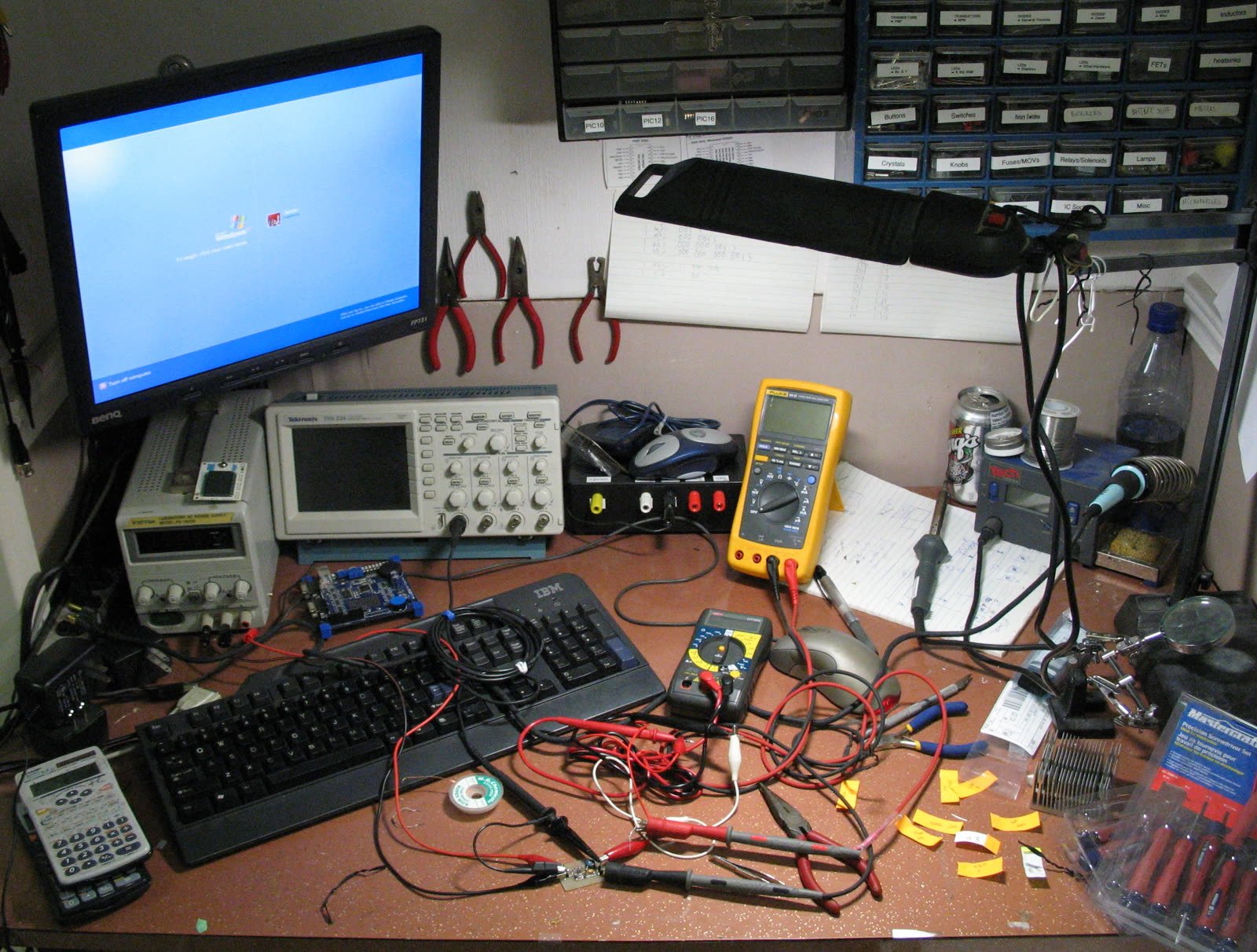
Photo: James Bastow, via Wikimedia Commons (CC BY-SA 2.0)
Sources
- https://environment.ec.europa.eu/news/commission-launches-consultation-easier-product-repairs-2026-11-03_en?prefLang=sv
- https://www.openaccessgovernment.org/eu-commission-launches-consultation-to-make-products-easier-to-repair/216089/
- https://2eu.brussels/index.php/en/news/commission-prepares-new-repairability-rules-for-electronics-small-appliances-and-electric-bicycles
- https://www.mrw.co.uk/news/news-round-up-november-2026-06-11-2026/
Leave a comment
Comment as a guest and verify your email, or sign in or create a reader account. Guest comments reach our review queue after email verification; account holders can submit directly for review.