Listen to this article
Take the story with you. Choose a voice and a pace that suits you.
Or listen in another language / choose a voice
Getting your device voices ready…
The voice follows the displayed language and your browser’s regional preference when available. You can choose another narration voice.
The Vanessa Bell Duncan Grant exhibition opening at Tate Britain on Thursday 12 November 2026 does something British art history kept postponing: it treats a 50-year partnership as a single body of work. Vanessa Bell & Duncan Grant: Inside Bloomsbury is the first major exhibition to chart the duo’s relationship and artistic trajectory together, with over 300 works running from early post-impressionist paintings to late self-portraits, landscapes and still lifes (Tate). It runs until 11 April 2027.
Bell (1879–1961) and Grant (1885–1978) were first introduced in 1906. The relationship, Tate notes, really begins with a letter from Bell in 1909 inviting Grant to tea and proposing they use first names (Tate). They went on to share a home for over 50 years — and a studio, a daughter, and a visual language you can watch passing between them, canvas to canvas.
Inside Bloomsbury at Tate Britain: the Vanessa Bell Duncan Grant exhibition, room by room
The show starts before the pair met. Bell’s Iceland Poppies, painted around 1908–9 after her instruction under John Singer Sargent, hangs near Grant’s After Chardin from around 1906, made after his encounters with historic masters in Paris (Tate). Then the temperature rises. Influenced by Roger Fry’s 1910 exhibition “Manet and the Post-Impressionists,” the two pushed bold colour and simplified form hard enough to produce some of the earliest abstract works in Britain (Tate).
Look for the paired pictures. Bell’s Still Life on Corner of a Mantelpiece and Grant’s The Mantelpiece, both 1914, paint the same corner of a room in a shared language — the exhibition’s argument in miniature (Musa Guide). London on the Inside puts it plainly: the two spent decades painting the same rooms, the same friends, and at least once the same mantelpiece (London on the Inside).
The Bloomsbury circle around them — Virginia Woolf, John Maynard Keynes, E. M. Forster — met at 46 Gordon Square, the home Bell shared with her siblings, and the exhibition sits the paintings inside that world rather than above it (Tate).
The Charleston studio relocated to Millbank
The centrepiece is a room that has never left home before. The studio Bell and Grant shared at Charleston, their East Sussex farmhouse, until 1939 has been relocated to Tate Britain while Charleston undergoes conservation work — a once-in-a-lifetime restaging, in Tate’s words (Tate). Artlyst calls the relocated studio the show’s unmissable highlight (Artlyst).
That studio matters because Charleston was never just where they lived. The rooms there are a complete example of Bloomsbury decorative art — murals, painted furniture, ceramics, textiles — made by people who refused to rank a chair below a canvas. Tate’s exhibition is organised in collaboration with Charleston and curated by Thomas Kennedy and Eliza Spindel (Tate).
Omega Workshops, dinner plates and the work they made together
Bell and Grant were directors of the Omega Workshops, founded in 1913, which blurred the line between fine and decorative art across ceramics, fans, lampstands, chairs, tables and wardrobes (Tate). The exhibition carries that range: furniture, ceramics and textiles sit alongside the paintings, plus Bell’s book cover designs for her sister Virginia Woolf (London on the Inside).
The Famous Women Dinner Service, made together in 1932–34, is the rare fully joint work: 50 hand-painted Wedgwood plates celebrating women from Jane Austen to Cleopatra (Tate). And in a quieter room, the show includes Grant’s rarely seen erotic male nudes, hidden for many years — Tate’s content guidance flags that room for sexually explicit work (Musa Guide). Bell had an open marriage with critic Clive Bell; Grant’s relationships were predominantly with men, in a society that did not accept him. The nudes are not a footnote to that life. They are part of the record.
Practical details: Tate Britain, Millbank, open daily 10.00–18.00; tickets are £20 and free for Tate Members (London on the Inside; Tate).
Analysis: the risk with a show like this is cosiness — Bloomsbury as tasteful interior design, all painted doors and dinner plates. The material resists it. These were artists who exhibited alongside Picasso and Matisse in 1912, ran a design workshop on communal lines, lived outside every convention their class offered, and kept working, in a shared visual language, for five decades. Putting the studio itself in the gallery is the curatorial masterstroke: it forces the argument that the life and the art were one project, and it lets visitors test that argument standing inside the evidence.
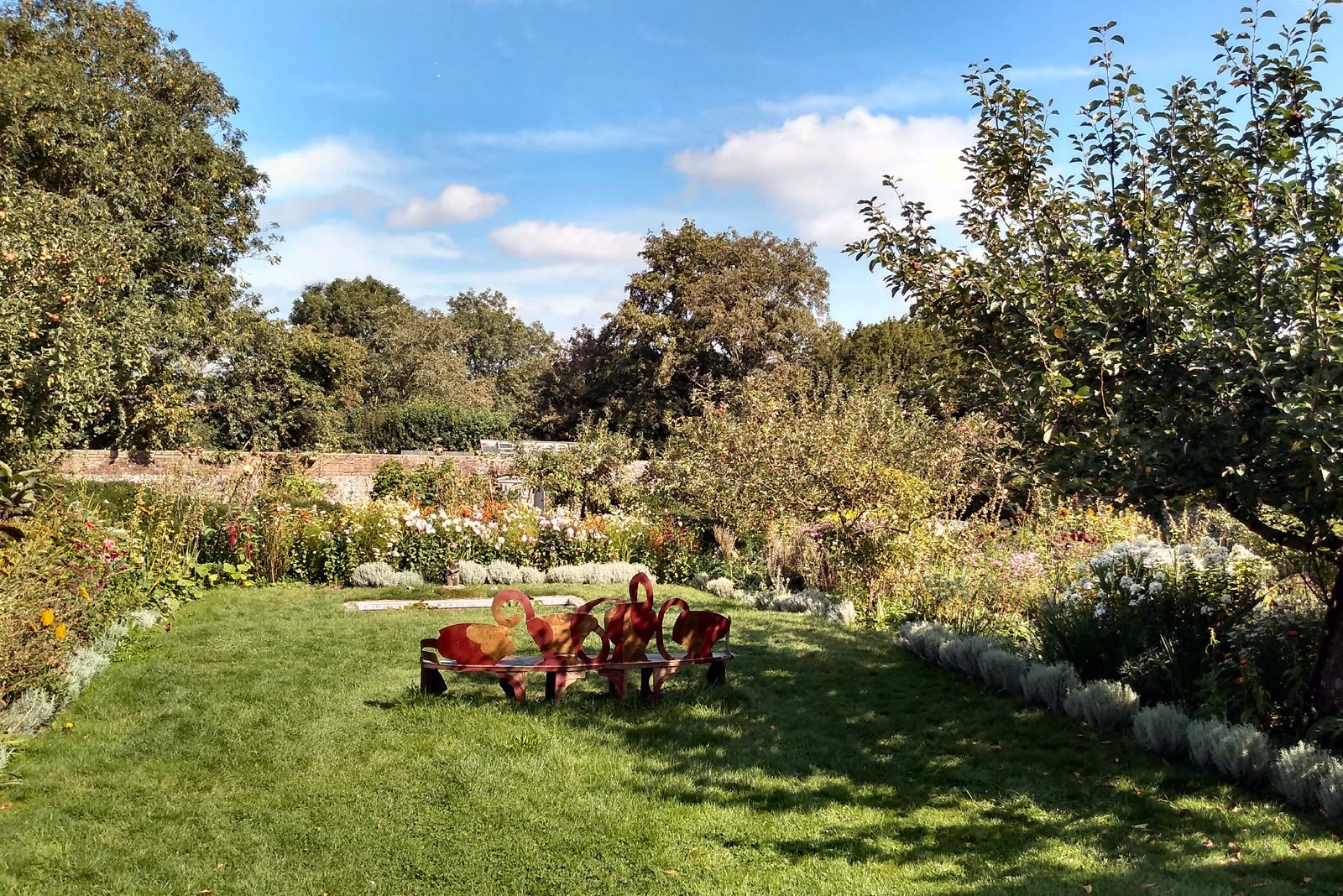
Photo: AndyScott, via Wikimedia Commons (CC BY-SA 4.0)
Sources
- https://www.tate.org.uk/press/press-releases/vanessa-bell–duncan-grant-inside-bloomsbury
- https://londontheinside.com/tate-britain-is-spotlighting-one-of-londons-most-intimate-artistic-partnerships/
- https://artlyst.com/five-london-art-exhibitions-opening-november-2026/
- https://www.musa.guide/en/discover/london/exhibitions/tate-britain/vanessa-bell-and-duncan-grant
Leave a comment
Comment as a guest and verify your email, or sign in or create a reader account. Guest comments reach our review queue after email verification; account holders can submit directly for review.