Listen to this article
Take the story with you. Choose a voice and a pace that suits you.
Or listen in another language / choose a voice
Getting your device voices ready…
The voice follows the displayed language and your browser’s regional preference when available. You can choose another narration voice.
US measles cases exceed 5,000 in 2026 for the first time since 1991. The Centers for Disease Control and Prevention counted 5,182 confirmed cases as of 5 November, reported by 47 jurisdictions, with 18 more among international visitors to the United States (CDC). That is more than double the 2,289 cases recorded across the whole of 2025 (CDC). Information verified through 7 November 2026.
A disease declared eliminated from the country in 2000 is not behaving like a memory. It is behaving like a resident.
US measles cases exceed 5,000 in 2026 across 43 outbreaks
Almost everything about this outbreak is concentrated, not scattered. The CDC says 96% of confirmed cases — 4,993 of 5,182 — are outbreak-associated, split between 3,608 cases from outbreaks that began in 2026 and 1,385 carried over from outbreaks that began in 2025, across 43 outbreaks reported this year (CDC).
Pennsylvania sits at the centre of it. The state passed 1,400 infections by 4 November, according to state health data reported by USA Today, after passing 1,000 in early October — up from 106 cases statewide last year (USA Today). Utah and South Carolina are each dealing with outbreaks of 500 cases or more, and New York declared a state of emergency on 5 October after passing 100 cases (USA Today).
The age pattern has shifted, too. Children and teenagers aged 5 to 19 account for about 41% of cases, which fits past outbreaks. Less typical: people aged 20 and older now tie that group at 41%, up from 29% last year (USA Today). Of the total, 562 people — 11% — were hospitalised (USA Today).
And the confirmed count is a floor, not a ceiling. Cases only enter the CDC tally once a doctor confirms them and a jurisdiction reports them, and the agency updates its figures weekly, so its numbers lag the states (USA Today).
The measles deaths Pennsylvania outbreak 2026 dispute
Counting the dead has become an argument in itself.
The CDC’s national table lists four measles deaths in 2026 (CDC). State health authorities have reported at least eight measles-related deaths, including very young children (Euronews). Pennsylvania alone has reported six measles-associated deaths, and confirmed its sixth on 4 November (USA Today). New York announced its first measles death in 30 years on 2 November, and Wisconsin reported its first since 1990 on 5 November — an infant (USA Today). The country has not seen more than four measles deaths in a year since 1991 (USA Today).
The gap between four and eight is partly method. The CDC says it is working with the Council of State and Territorial Epidemiologists to develop a standardised case definition for deaths due to measles, so jurisdictions classify them the same way (CDC). It is also political. USA Today describes a back-and-forth that began in August between Health Secretary Robert F. Kennedy Jr. and Pennsylvania Governor Josh Shapiro, in which Kennedy accused Shapiro of “fabricating” the deaths and Shapiro said Kennedy was “downplaying the severity of measles” (USA Today).
Paediatric infectious disease specialist Adam Ratner, speaking to AFP, called the fatalities “tragic, and that is completely preventable,” adding: “The burden of these diseases will fall on children, who are not the ones who are making these decisions” (Euronews).
Kindergarten MMR vaccination coverage falls below the line that held
Measles spreads through the air, stays infectious in a room after an infected person leaves, and infects about 90% of unvaccinated people exposed to it (CDC; USA Today). The defence is boring and known. Two doses of the MMR vaccine are 97% effective at preventing measles; one dose is 93% effective (CDC).
Coverage has slipped under the level that defence needs. When more than 95% of a community is vaccinated, most people are protected through community immunity — but kindergarten MMR coverage fell from 95.2% in the 2019–2020 school year to 92.4% in 2025–2026, leaving roughly 280,000 kindergartners at risk this school year (CDC). National averages hide the local picture: pockets of unvaccinated people exist inside states with high overall coverage, and that is where outbreaks take hold (CDC). Almost all illnesses in the current outbreaks — 96% — were in unvaccinated people or people whose vaccination status was unknown (USA Today).
The history puts the stakes plainly. Before the measles vaccine arrived in 1963, an estimated 48,000 people were hospitalised and 400 to 500 people died from the disease in the United States each year (CDC).
Measles elimination status United States faces its review
Elimination, as declared in 2000, never meant zero cases. It meant no continuous spread inside the country for at least 12 months, with new cases traced to infections picked up abroad (CDC; USA Today).
That definition is now the problem. Outbreaks that began in 2025 are still generating cases in late 2026. The World Health Organization is expected to review the US status on 10 November, following the 2025 Texas outbreak that killed three people, and Canada already lost its measles-free status in November 2025 (USA Today).
Analysis: the review on 10 November will get the headlines, but the label is the least of it. A status can be re-earned. What the 5,182 cases actually record is a threshold crossed in the other direction — coverage falling, year after year, from 95.2% to 92.4%, until a virus this contagious found the gaps. The gaps are local, specific and fixable. So is the trend, if anyone chooses to fix it before the next count.
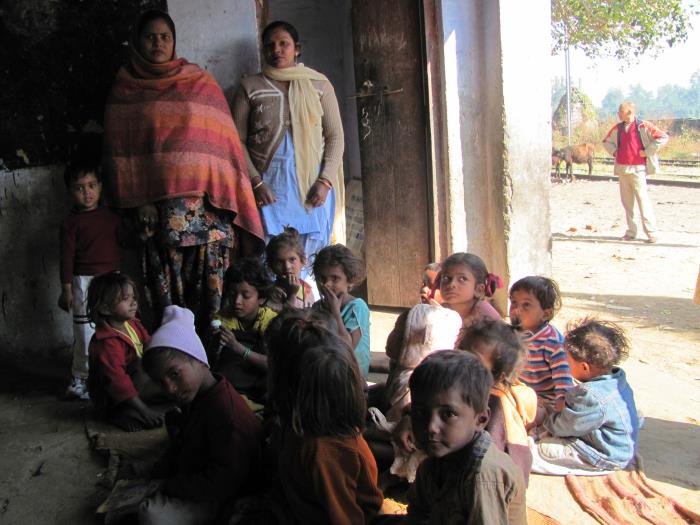
Photo: Alan Janssen, CDC, via CDC Public Health Image Library (Public domain)
Leave a comment
Comment as a guest and verify your email, or sign in or create a reader account. Guest comments reach our review queue after email verification; account holders can submit directly for review.