Listen to this article
Take the story with you. Choose a voice and a pace that suits you.
Or listen in another language / choose a voice
Getting your device voices ready…
The voice follows the displayed language and your browser’s regional preference when available. You can choose another narration voice.
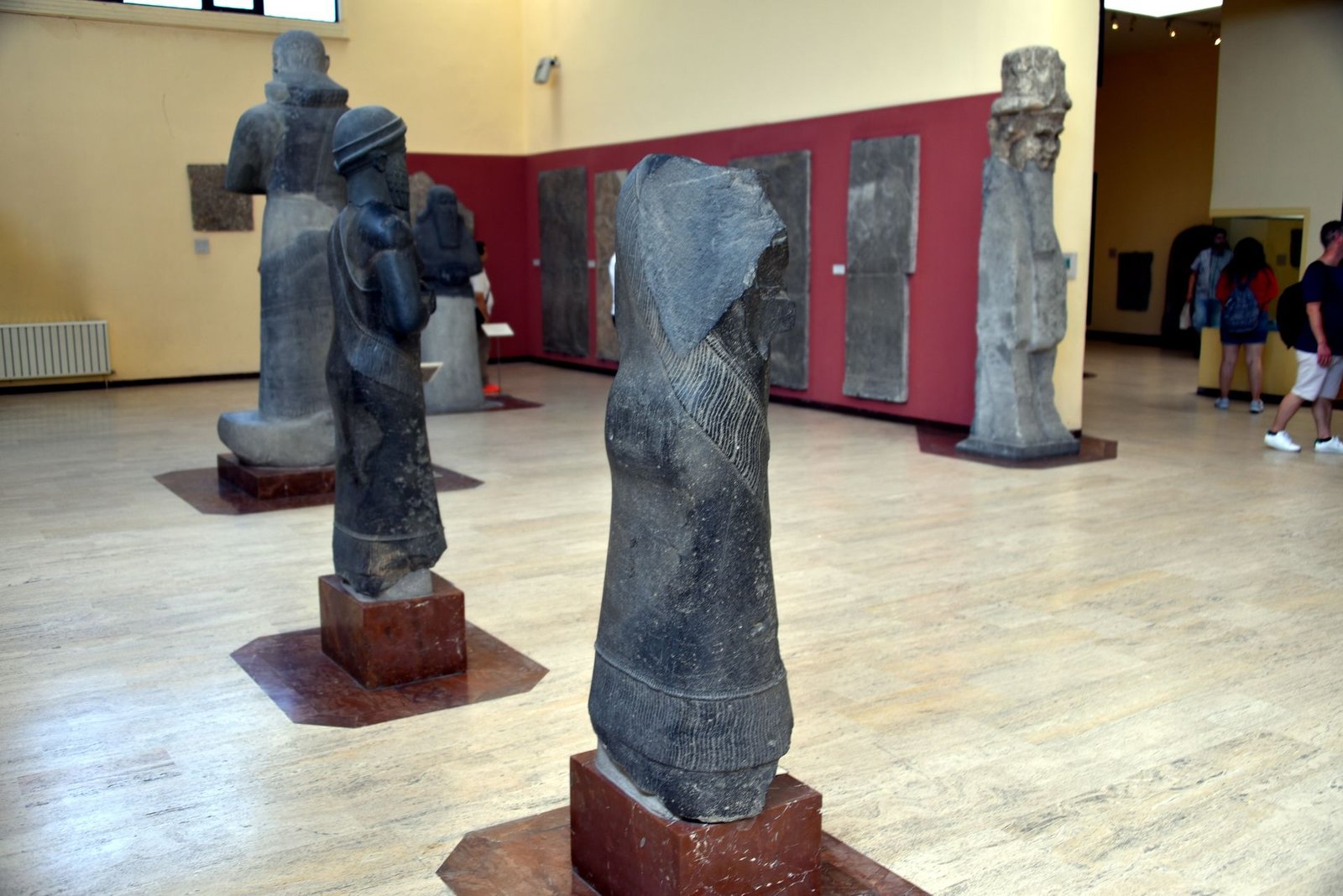
Looted antiquities returned to Turkey filled a hall in Istanbul on Monday 2 November 2026. Culture and Tourism Minister Mehmet Nuri Ersoy presented 100 objects brought back from the United States at the Istanbul Archaeological Museums, alongside the opening of “No Escape: Boubon,” an exhibition reuniting Roman sculptures scattered across international collections after illegal excavations in the 1960s (Europe Says). Manhattan Assistant District Attorney Matthew Bogdanos attended the ceremony.
“Our aim is not to take artifacts from one display case and place them in another, but to reassess them within their stories and the cultural context to which they belong,” Ersoy said (Europe Says).
Information verified through 4 November 2026.
Looted antiquities returned to Turkey: the Horoztepe Bronze Age artifacts, home after about 70 years
The oldest group is 40 objects from Horoztepe, a site in the Erbaa district of Tokat province in northern Turkey. Dating to roughly 2300–2000 BC, the collection includes ceremonial musical instruments, weapons and metal vessels that show the metalworking skill of Early Bronze Age Anatolia (Europe Says).
The paper trail did the work. Records documented illegal excavations at Horoztepe in 1953, and evidence showed how the objects then entered overseas museum collections. Research by archaeologist Tahsin Özgüç, who documented the site’s distinctive forms and manufacturing techniques, helped identify the pieces through comparison (Europe Says). The objects have now returned after approximately 70 years.
Seventy years is longer than most museum careers. A claim that old survives only if someone kept the records, published the comparisons and refused to let the file close. Horoztepe is a case where the archive outlasted the market.
The Getty Museum Duver plaques return
The second large group is 44 terracotta architectural plaques from Duver village in Burdur province, southwestern Turkey, held until now by the J. Paul Getty Museum. Dating to the sixth century BC, the decorated clay plaques were used in roofing and architectural coverings, and researchers matched their patterns, shapes and style against known examples while archival documents traced their movement abroad (Europe Says).
This was not the first Duver homecoming. Earlier recoveries came from the United States in 2022, Denmark in 2024 and the Virginia Museum of Fine Arts in 2025, and Ersoy said the newly returned plaques will be brought together with related pieces already held in Istanbul in a forthcoming project (Europe Says). Reunification, in other words, is happening plaque by plaque, across three countries and four years.
The remaining objects include theatrical masks, goddess figurines and a portrait linked to Aphrodisias in western Turkey. For that portrait, a crime scene report from 1976 proved decisive: it recorded a prosecutor’s observation that more antiquities had been stolen than the ones already documented, and combined with archaeological evidence it strengthened Turkey’s claim (Europe Says). Ersoy also said authorities intervened in May 2026 after Anatolian objects were offered by a US-based auction house; scientific documentation sent to the Manhattan District Attorney’s Office and US Homeland Security Investigations stopped the sale and secured their return.
Boubon bronze statues repatriation: heads, torsos and a sanctuary broken apart
Boubon, near İbecik village in Burdur’s Gölhisar district, held a Sebasteion — a sanctuary dedicated to the imperial cult — where bronze statues honoured Roman emperors and members of the imperial family. Illegal excavations in the 1960s broke the statues apart; heads, torsos and limbs ended up in different countries and private collections (Europe Says). The exhibition brings those dispersed pieces together, including works linked to Lucius Verus, Septimius Severus, Caracalla and Marcus Aurelius.
How do you prove a head belongs to a sanctuary it left sixty years ago? Reporting on the recovery describes three converging methods used in the Boubon campaign: lead isotope analysis comparing the bronze’s ore signature against reference data, geometric matching of statue feet against the imprints left in their original pedestals, and archival work built on Özgüç’s published descriptions and on researcher Jale İnan’s reconstruction of the Boubon corpus from inscriptions, statue bases and sculptures held abroad (TechTimes). Ersoy credited İnan with laying the scientific groundwork, and journalist Özgen Acar with keeping the case in public view.
The same reporting describes TraceART, a scanning platform developed by Turkey’s Ministry of Culture and Tourism and deployed in 2025, which checks auction listings, sales platforms and social media images against a database of documented Turkish cultural assets, with flagged items going to human experts (TechTimes). Bogdanos noted at the ceremony that his unit has recovered 6,452 looted antiquities in total, including 276 objects of Turkish origin returned or awaiting repatriation.
Istanbul is not the only restitution file moving this week. In Glasgow, Egypt has formally requested the return of Nekht, a mummified priest whose remains were removed from display at Kelvingrove Museum after concerns about the absence of informed consent from the deceased; Glasgow Life confirmed it received the request in recent days and will follow its established repatriation process (Glasgow Times). The two cases differ — one concerns looted antiquities, the other human remains held for display — but both turn on records, context and who gets to decide where the dead and their objects rest.
Analysis: the shift on display in Istanbul is evidential. For decades, a plausible-looking ownership history could carry a looted object through sale rooms and into a major collection. A 1953 excavation record, a 1976 prosecutor’s note, an isotope ratio and the exact shape of a foot in a pedestal are harder to argue with. Turkey says it will keep pursuing objects illegally removed from Anatolia through scientific, legal and diplomatic efforts (Europe Says). The 100 objects in Istanbul suggest the burden of proof in these disputes is quietly moving — from the country claiming a loss, to the holder explaining a past.
Photo: Osama Shukir Muhammed Amin, via Wikimedia Commons (CC BY-SA 4.0)
Leave a comment
Comment as a guest and verify your email, or sign in or create a reader account. Guest comments reach our review queue after email verification; account holders can submit directly for review.