Listen to this article
Take the story with you. Choose a voice and a pace that suits you.
Getting your device voices ready…
The voice follows the displayed language and your browser’s regional preference when available. You can choose another narration voice.
Most Americans can picture a Roman toga and a line of Roman numerals. Fewer know both started somewhere else. The Etruscans exhibition at the San Antonio Museum of Art, opening 31 October 2026, is built to close that gap — with gold, bronze and terracotta that, in many cases, has rarely left Italy.
The show is The Etruscans: From the Heart of Ancient Italy. It runs in the museum’s Cowden Gallery through 14 March 2027, the San Antonio Museum of Art announced. San Antonio is the only other United States venue. The exhibition was chosen as a must-see by the New York Times before its spring debut at the Legion of Honor in San Francisco, and it was organised by the Fine Arts Museums of San Francisco in association with SAMA.
Come for the objects. Stay for the argument underneath them: Rome did not appear from nowhere.
The Etruscans From the Heart of Ancient Italy: what is actually on the walls
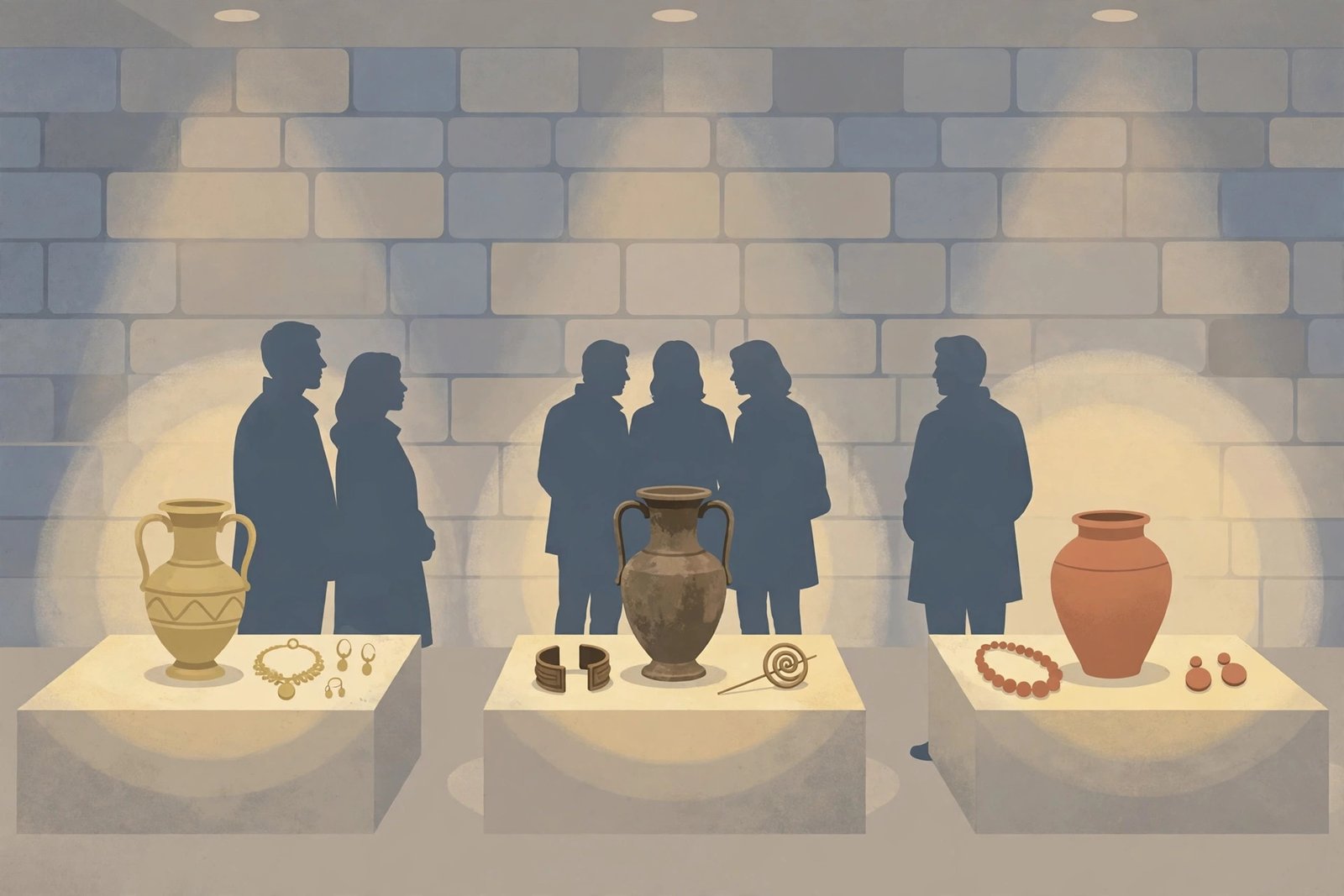
The Etruscans From the Heart of Ancient Italy brings together approximately 130 works from more than 20 museums for the San Antonio presentation, in gold, silver, bronze and terracotta, many rarely if ever exhibited outside Italy, according to SAMA. Lenders include the Vatican Museums, the Museo Nazionale Etrusco di Villa Giulia in Rome, the British Museum and the Louvre.
The San Francisco presentation was larger still. The Fine Arts Museums described over 150 objects, including bronze and terracotta vessels and sculptures, gold jewellery and, shown outside its place of discovery for the first time, the Liver of Piacenza, a bronze model of a sheep’s liver used by diviners to predict the future, on the FAMSF exhibition page. A bronze swaddled baby pulled from the healing waters of the sanctuary at San Casciano dei Bagni was on view for the first time in the United States, and the Linen Book of Zagreb — a third-century BC calendar of rituals and sacrifices and the longest Etruscan inscription known — made its first US appearance there.
Artnet’s preview of the Legion of Honor run counted 180 antiquities from 30 international museums and called it the first major US Etruscan exhibition since 2009, when Dallas’s Meadows Museum hosted “New Light on the Etruscans”, in Artnet News. Counts shift between venues as loans change. The point doesn’t: this is a decade of research arriving in one set of galleries.
“The ancient Etruscans made stunning works of art that spoke to their fundamental customs and beliefs,” said Jessica Powers, SAMA’s chief curator and presenting curator for the exhibition, in the museum’s announcement. Emily Ballew Neff, the museum’s Kelso Director, called it “a remarkably innovative civilization whose influence shaped the ancient Mediterranean world”.
A civilisation Rome absorbed — and borrowed from
The Etruscans thrived from around 900 to 100 BC in central Italy, traded extensively around the Mediterranean, especially with the Greeks and Phoenicians, and were ultimately absorbed by the Roman Empire, SAMA notes. Their cities were conquered one by one through the second and first centuries BC, with Rome claiming numerous Etruscan innovations as its own, Artnet reported.
The borrowing list is long. Togas and Roman numerals were originally Etruscan, per SAMA. Etruria was rich in copper, tin and iron, and its smiths became master bronzesmiths who exported finely crafted products throughout the Mediterranean, the Fine Arts Museums explain. Temples, hydraulic works, city planning and engineering were adopted by the Romans. Artnet adds grapevine cultivation and wine production on the peninsula, drainage of marshes, and — striking for the period — women who could own property, run businesses and retain their own names. FAMSF’s section on women makes the same point from the objects: luxurious grave goods from a wealthy woman’s tomb, including gold jewels and silver, gilded and bronze pieces on loan from the Vatican’s Gregorian Etruscan Museum, revealing women’s high status in Etruscan society.
Why so little survives in writing? “They wrote plenty, both about themselves and their history,” curator Renée Dreyfus told Artnet. “It was lost because they wrote, primarily, on impermanent material like linen.” Greeks and Romans told the story instead, and they did not always look kindly on the Etruscans.
Visiting the Etruscans exhibition San Antonio Museum of Art
For anyone planning the Etruscan art exhibition October 2026 trip, the practical details are unusually friendly. Renée Dreyfus, Curator in Charge of Ancient Art at the Fine Arts Museums of San Francisco, gives a preview lecture at SAMA on Friday 30 October 2026 at 7pm, the night before the public opening, according to SAMA. Guided tours run every Tuesday and Sunday for the duration of the exhibition, and entry is included with museum admission.
The setting helps. SAMA sits in the historic Lone Star Brewery on the Museum Reach of the River Walk, and its permanent collection holds more than 30,000 works representing 5,000 years of history.
Analysis: The Legion of Honor Etruscans exhibition made the case in San Francisco from 2 May to 20 September 2026, per FAMSF. San Antonio gets the second and final US word. If the show’s thesis holds — that a “lesser known” people quietly built much of what we call Roman — then Texas visitors are not seeing a warm-up act for Rome. They’re seeing the headliner Rome replaced, in objects Rome’s own museums have lent across an ocean. Go early in the run. Word travels.
Sources
- San Antonio Museum of Art, “San Antonio Museum of Art Presents The Etruscans: From the Heart of Ancient Italy”, 18 August 2026, https://www.samuseum.org/press/press-release/san-antonio-museum-of-art-presents-the-etruscans-from-the-heart-of-ancient-italy/
- Fine Arts Museums of San Francisco, “The Etruscans: From the Heart of Ancient Italy”, 13 November 2025, https://www.famsf.org/press-room/the-etruscans
- Artnet News, “Forgotten Innovators of the Ancient World? A New Show Gives the Etruscans Their Due”, 13 November 2025, https://news.artnet.com/art-world/estruscan-exhibition-legion-honor-san-francisco-2712304
Leave a comment
Comment as a guest and verify your email, or sign in or create a reader account. Guest comments reach our review queue after email verification; account holders can submit directly for review.