Listen to this article
Take the story with you. Choose a voice and a pace that suits you.
Getting your device voices ready…
The voice follows the displayed language and your browser’s regional preference when available. You can choose another narration voice. Enhanced device voices are preferred; availability varies.
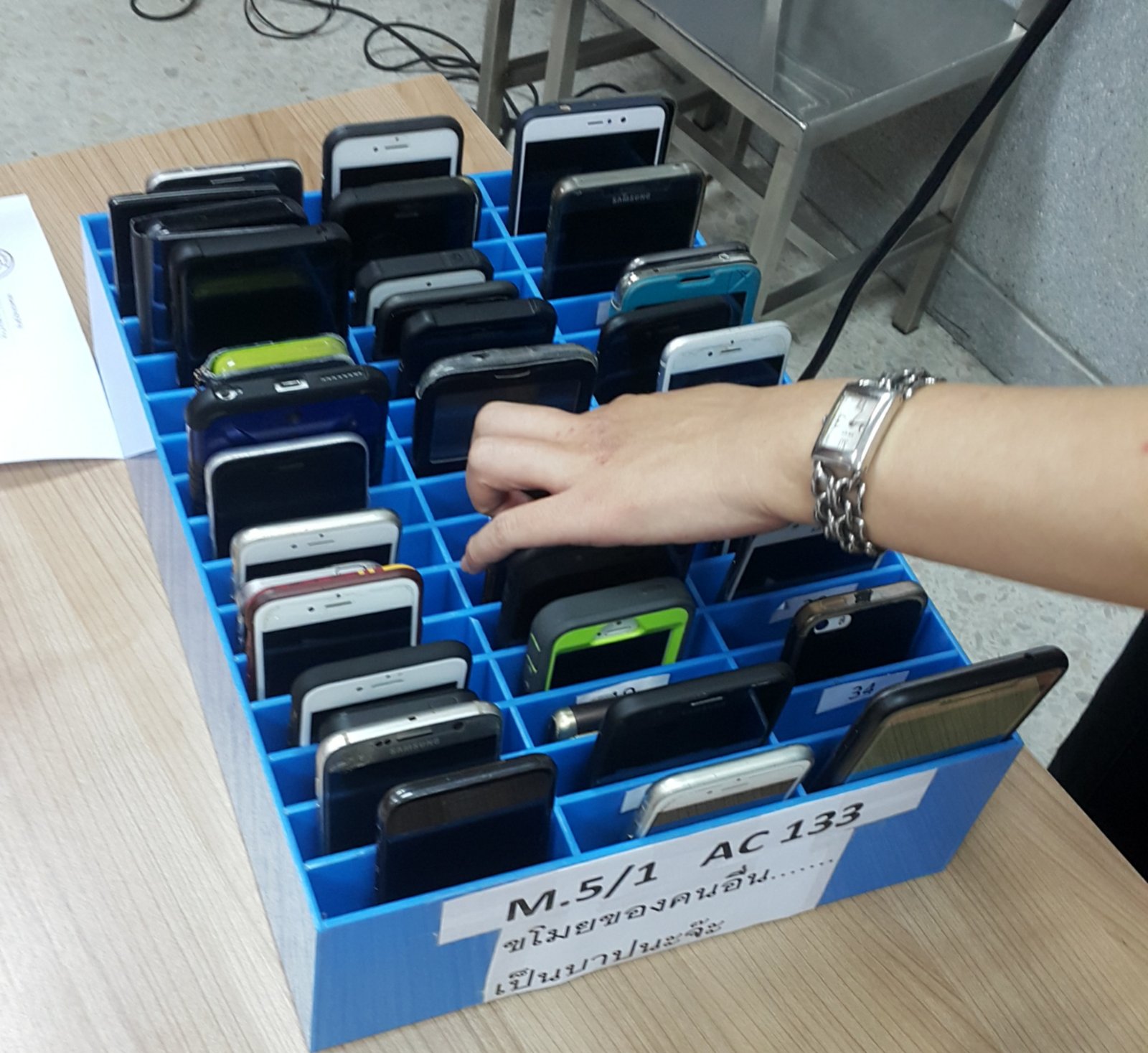
The argument for banning phones in school was always easy to follow. Phones distract. Remove the phones, attention returns, grades follow. Roughly two-thirds of U.S. states have now passed laws limiting phone use in schools on some version of that logic, and thousands of schools have gone further than the laws require, sealing students’ phones into magnetically locking pouches from the first bell to the last.
In May 2026, researchers from Stanford, Duke, the University of Michigan and the University of Pennsylvania published the largest test of that logic so far, as a National Bureau of Economic Research report. They compared schools that adopted the strict pouch policies with schools that did not, across more than 43,000 middle and high schools nationwide, over three years. The study was pre-registered — the team published its hypotheses and methods before running the analysis — and it did not take the schools’ word for anything: the researchers confirmed with GPS ping data and teacher surveys that phone use during the school day really did fall. Information verified through 19 October 2026.
What the ban did not do
The phones went away. The test scores, on average, did not move.
Across the three years after a pouch policy began, the study found almost zero difference in test scores between schools with bans and schools without. The policies had no major impact on attendance either, or on attention in class as teachers reported it, or even on students’ perceived cyberbullying — a result that cuts against one of the more common arguments for bans, since the bullying students experience apparently does not depend much on whether the phone is in a pouch or a pocket during school hours.
Underneath the flat average, the picture splits by age. High school mathematics scores ticked up slightly. Middle schools went the other way, with a small decrease in test scores in the early period of the ban. The authors’ explanation is plain enough: younger, more impulsive students, deprived of the screen, substituted other disruptive behaviors for it. The distraction changed shape rather than disappearing.
The first year was the worst year
The more interesting numbers are not about tests at all. In the first year of a pouch policy, disciplinary incidents rose and student well-being fell. A school that had run on phones suddenly had to renegotiate every corridor, lunch table and bus queue, and the friction showed up in the data.
Then the curve bent. The disciplinary problems dissipated after the first year. By the third year, they were back at their previous levels — and student well-being was higher than it had been before the ban. Co-author Matthew Gentzkow suggested the change may be social rather than academic: with no phones available all day, students interact directly more, playing games at lunch and talking between classes.
Thomas Dee, a professor at Stanford’s Graduate School of Education and another of the authors, put the caution plainly: “There is clearly justifiable enthusiasm for school phone bans, but it’s important to recognize that building effective, phone-free learning environments does not appear to be a simple or quick fix.” The early experience, he said, is sobering — but schools that persist may see the benefits arrive late rather than never.
A different experiment, in a lecture hall
Set against that, a smaller and tighter experiment found the result ban supporters were hoping for. In a randomized trial led by Wharton professor Alp Sungu, nearly 17,000 college students at ten institutions in India were assigned by cohort either to deposit their phones in a box at the start of each lecture or to keep them as usual. Grades in the phone-free lectures rose by 0.07 standard deviations — an effect Sungu compared to what curriculum reforms or growth-mindset interventions typically achieve, at a fraction of the cost. Students who were already struggling gained the most, roughly double the average effect, and first-year students improved more than anyone. In science and engineering courses, where phones apparently compete less with the material, the bans did almost nothing.
The catch is in the design. A lecture-only ban, applied to adults, for one semester, is a different intervention from an all-day ban imposed on thirteen-year-olds for years. The Wharton team itself flags that the social implications of school-wide policies for younger students may be different — and the pouch study reads like the demonstration of exactly that.
Analysis: Read together, the two studies are less contradictory than they first look. Removing a phone from a room where a defined task is happening — a lecture, an exam — seems to help people do the task. Removing phones from an entire institution for years is a social change, and social changes have adjustment costs that arrive before the benefits do. The pouch study’s flat test scores will be quoted by both sides of this argument, but its well-being curve is the finding school boards should sit with: year one got worse. A district that bans phones and judges the policy at the first set of results is measuring the turbulence, not the destination.
The question that remains open
Nobody involved in the pouch study treats it as the last word. Gentzkow called it a first step, noting that there may be learning effects test scores alone do not pick up. What the research currently supports is narrower than the debate around it: pouch bans do what they mechanically promise — the phones really do get used less — and the educational payoff, if it comes, comes slowly and through changed habits rather than through the policy itself. The researchers’ own emphasis fell on consistency over years, paired with broader digital policies and work on classroom engagement. A pouch, in other words, is a beginning. Schools still have to decide what fills the attention it frees up.
Sources
- Stanford School of Humanities and Sciences — “National study of school cellphone bans shows benefits are not immediate” (May 4, 2026; study design, 43,000+ schools, test-score, discipline and well-being findings, Dee and Gentzkow comments): https://humsci.stanford.edu/feature/national-study-school-cellphone-bans-shows-benefits-are-not-immediate
- EdSource — “Cellphone bans have little impact on academics or behavior, study finds” (May 6, 2026; high school math gains, middle school decreases, year-by-year discipline and well-being pattern): https://edsource.org/updates/cellphone-bans-have-little-impact-on-academics-or-behavior-study-finds
- Knowledge at Wharton — “Can Classroom Cell Phone Bans Boost Grades?” (Feb. 3, 2026; randomized trial of nearly 17,000 college students in India, 0.07 standard deviation grade gain, largest gains for struggling and first-year students): https://knowledge.wharton.upenn.edu/article/can-classroom-cell-phone-bans-boost-grades/
Photo: Chainwit., CC BY-SA 4.0, via Wikimedia Commons
Leave a comment
Comment as a guest and verify your email, or sign in or create a reader account. Guest comments reach our review queue after email verification; account holders can submit directly for review.