Listen to this article
Take the story with you. Choose a voice and a pace that suits you.
Or listen in another language / choose a voice
Getting your device voices ready…
The voice follows the displayed language and your browser’s regional preference when available. You can choose another narration voice.
Access is the easy part to count. Devices arrive, logins get issued, dashboards light up. Learning is harder to prove. A study reported on 9 November 2026 tries to close that gap for digital learning lessons and exam scores in Indonesia, and its headline finding is simple: students who finished more lessons did better in their end-of-year assessments (mid-east.info).
Information verified through 15 November 2026.
Alef Education Indonesia study results: digital learning lessons exam scores Indonesia, by the numbers
The study covered 2,221 students in 60 madrasas — Islamic schools — across 20 Indonesian provinces during the 2025–2026 academic year (mid-east.info). It looked at Arabic and English in Grades 5, 8 and 11, plus Mathematics in Grade 8.
Students who completed more lessons on the Alef Platform scored an average of 5.1 points, or almost 7%, higher in end-of-year assessments than comparable students with lower engagement (mid-east.info). The company’s summary puts the same comparison at 6.82% higher on the end-of-year PAT assessment, with an effect size of 0.29 standard deviations (p = .019) (mid-east.info).
Dose mattered, not just membership. Every 10 additional lessons completed was associated with an average of 1.12 points higher on the end-of-year assessment (ME News 247). Arabic showed the strongest results of the subjects monitored, with highly engaged students scoring significantly higher than comparable students with lower engagement (mid-east.info).
One design point deserves attention. Both groups used the platform. Researchers compared higher-engagement students with lower-engagement students while accounting for previous academic performance, and they report the difference as statistically significant (mid-east.info). That is a stronger design than comparing users with non-users, though it still cannot fully separate the effect of the lessons from the habits of students who choose to finish them.
Online lesson completion academic performance: what the finding can and cannot carry
Read the result carefully and two claims survive.
First, completion beats exposure. A login is not a lesson. The gradient — more lessons, higher scores, step by step at roughly 1.12 points per 10 lessons — points at finished work, not screen time (ME News 247).
Second, subjects differ. Arabic led. English and Grade 8 Mathematics were tracked too, but the reports do not publish a full subject-by-subject table, so nobody should quote precise gains for those subjects from these summaries alone (mid-east.info).
Now the limits. Alef Education ran the study of its own platform. That does not make the numbers wrong. It does mean independent replication would carry more weight, and the published summaries are press releases rather than a peer-reviewed paper with full methods. Motivation is the obvious confounder: students who complete more lessons may study more in every other way too. The researchers accounted for prior performance, which helps, but prior performance is not the same as present effort.
Alef’s chief executive, Geoffrey Alphonso, framed the finding in those measured terms himself. Expanding access is important, he said, but access alone does not tell us whether students are progressing; the Indonesia findings show a clear relationship between lesson completion and academic performance, with particularly encouraging results in Arabic (mid-east.info). Relationship is the right word. The releases use it too.
Madrasa students digital learning outcomes and the classroom around them
The setting is part of the story. Madrasas sit inside Indonesia’s Ministry of Religious Affairs system, and a ministry official, Dr Gugun Gumilar, described the collaboration as an important step toward advancing madrasas and supporting student progress across Indonesia (mid-east.info).
Scale gives the result context. Alef says it operates across more than 21,000 schools in the UAE and Indonesia, with over 2.3 million registered students, and supports more than 93,000 educators (mid-east.info). The study’s own advice to schools is unglamorous and probably right: encourage students to complete lessons, monitor progress, and make sure digital tools complement classroom teaching rather than replace it (mid-east.info).
The pattern rhymes with independent work elsewhere. A Stanford-reported analysis of roughly 200,000 students using a mastery-based maths program, published in the Proceedings of the National Academy of Sciences, found a roughly linear improvement — more use, better external test scores — with average use of only about six hours a year, and its authors stress the same caveat about confounding factors in non-randomised data (Stanford News). That study also found skills mastered predicted gains better than time spent, which matches the Indonesian emphasis on lessons completed.
Analysis: the useful lesson here is not “buy a platform.” It is that completion is a measurable behaviour a school can act on this term — timetable it, track it, chase it — while vague “engagement” is not. If the dose-response pattern holds in independent studies, the cheapest intervention in digital learning may be the follow-through: making sure the lessons already paid for actually get finished.
For now, file this as promising vendor-run evidence from a large, real school system — 2,221 students is not a pilot of twelve — and wait for the full methods, and for someone without a product to sell, to test the same question.
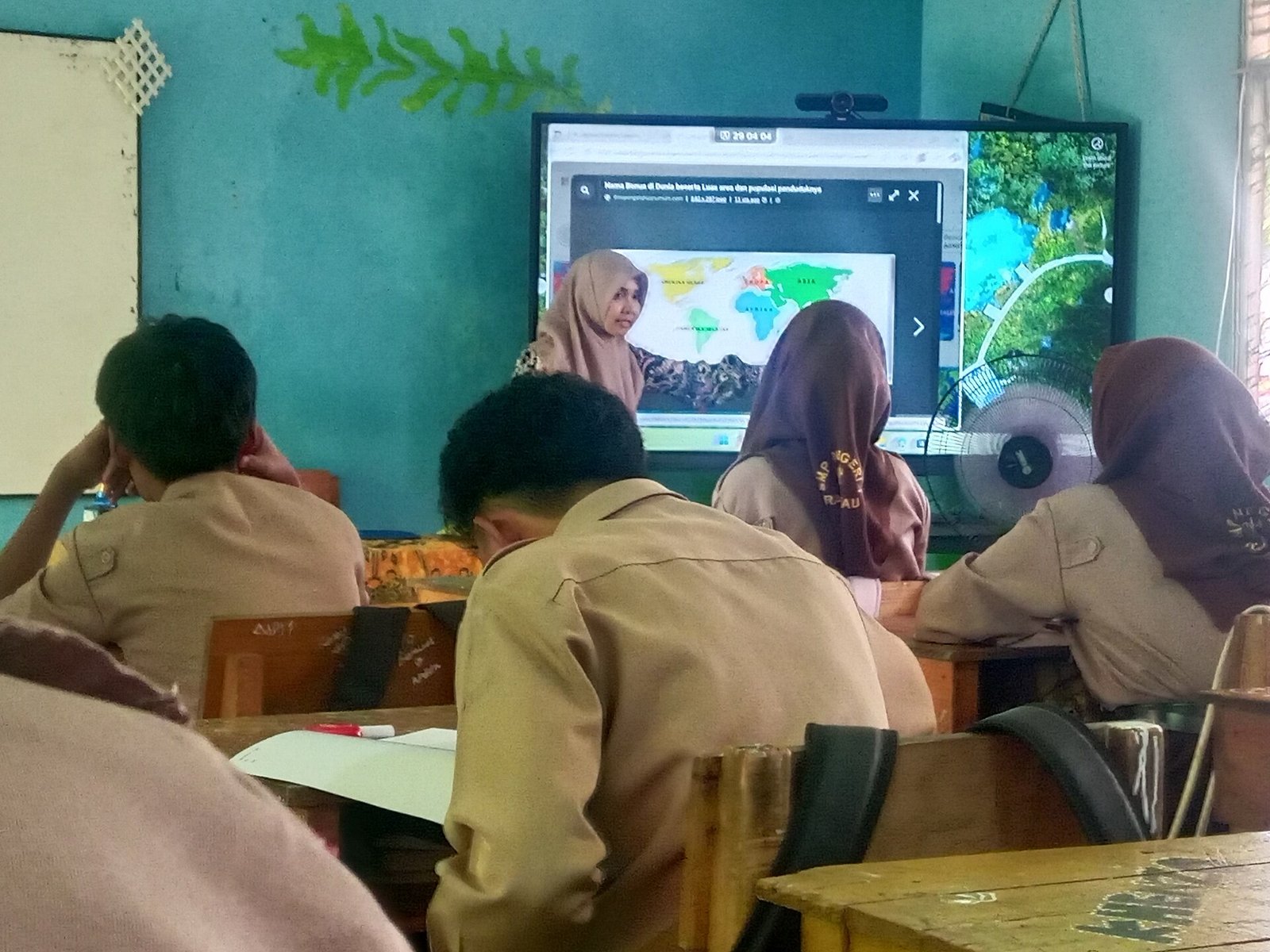
Photo: Fitrah 9131, via Wikimedia Commons (CC BY 3.0)
Sources
- https://mid-east.info/alef-educations-uae-born-platform-delivers-real-international-impact-with-nearly-7-higher-academic-scores-at-indonesian-schools/
- https://menews247.com/alef-educations-uae-born-platform-delivers-real-international-impact-with-nearly-7-higher-academic-scores-at-indonesian-schools/
- https://news.stanford.edu/stories/2026/01/online-mastery-math-practice-software-educational-impact-research
Leave a comment
Comment as a guest and verify your email, or sign in or create a reader account. Guest comments reach our review queue after email verification; account holders can submit directly for review.