Listen to this article
Take the story with you. Choose a voice and a pace that suits you.
Or listen in another language / choose a voice
Getting your device voices ready…
The voice follows the displayed language and your browser’s regional preference when available. You can choose another narration voice.
Jensen Huang resigns as Nvidia CEO. The sentence would have sounded impossible a week ago. On Thursday 12 November 2026, Nvidia’s board announced that its founder had resigned as president, chief executive and board member, effective immediately, ending 33 years in charge of the company he co-founded in 1993 (USA TODAY). Information verified through 13 November 2026.
The company’s statement gave no reason. It thanked Huang for his “immeasurable contributions to the company and the industry” and moved straight to the succession (CNN). What it left out was the week that forced the decision: an admitted extramarital affair, a second reported relationship with a company executive, and a board investigation into whether Huang had been the target of a foreign intelligence operation (KhabarWire).
Jensen Huang resigns as Nvidia CEO — and Colette Kress steps in with no successor named
Chief financial officer Colette Kress, in that post since September 2013, takes over as interim chief executive while keeping her finance role until a permanent successor is found (CNN). Harvey C. Jones, a longtime director and former Synopsys chief, was appointed the board’s first-ever chair, and he said the board expects “the company’s operations, customer commitments and product roadmap to continue without interruption” (CNN).
The board says it is “initiating a search” and will consider internal and external candidates, with no timetable promised (KhabarWire). Huang, 63, owns about 3.6% of the stock and had no obvious successor in place, with dozens of executives reporting directly to him (USA TODAY). President Donald Trump weighed in within hours, posting that “there is only one man to take his place — TIM COOK of Apple,” a suggestion Nvidia has not endorsed (KhabarWire). Other names in the reporting include Arm’s Renée Haas, AMD’s Lisa Su and, inside Nvidia, co-founder Chris Malachowsky and computing chief Ian Buck (KhabarWire).
How the week unravelled
The reversal was fast. On Sunday 8 November, Nvidia said independent directors, helped by outside counsel, would investigate whether Huang had been the target of a foreign intelligence effort, after reports of his relationship with a Singapore-based executive whom US officials suspect of spying for China — and the board expressed confidence in him the same day (USA TODAY). Huang acknowledged in a memo to staff that he had been unfaithful to his wife, took “full responsibility,” and apologised to his family and colleagues (USA TODAY).
Then the story widened. On 11 November the New York Times reported a second relationship, with a vice president who reports to Huang, and the Wall Street Journal reported that directors were preparing to remove him; the board met on Wednesday night to weigh exactly that (CNN). By Thursday the resignation was announced. The independent inquiry has not closed: the board had earlier retained a former acting US attorney for the Southern District of New York to examine the intelligence question, Nvidia has said it has no reason to believe company secrets were compromised, and Beijing has rejected the espionage allegation (KhabarWire). Huang also faces a possible congressional subpoena if he does not agree to a closed-door briefing, and Bloomberg has reported he will testify before Congress before Thanksgiving (USA TODAY; KhabarWire).
Nvidia shares fall after the Huang resignation, and the bill keeps growing
Markets did their own accounting. Nvidia shares fell more than 13% when the news broke on 12 November, after dropping about 8% in after-hours trading the night before, and the company has shed roughly $600 billion in market value across the week (USA TODAY). The Guardian’s live coverage put the loss at more than $575 billion at Thursday’s open alone, with the shares down over 13% before a partial rebound (KhabarWire). A company valued near $4 trillion discovered how much of that value was, in effect, one man in a leather jacket.
Analysts split along a familiar line. Some argued Kress is well respected by investors and can steady the company; others warned that Huang’s personal influence over AI regulation debates and partner trust is not transferable by appointment (KhabarWire). The first hard test lands quickly: Nvidia reports third-quarter results on 17 November, with Kress hosting a company meeting the following day (KhabarWire).
Analysis: Strip out the scandal and a structural problem remains. Nvidia never built a visible second-in-command, so a personal crisis became a corporate one within four days. Kress buys the board time and credibility with investors, but the permanent appointment now has to answer two questions at once — who can run the AI industry’s central supplier, and who can stand in front of Congress and Beijing-watchers while the intelligence inquiry runs. The resignation closed Huang’s era. It did not close the investigation, the lawsuit risk, or the succession fight, and all three will price the stock long after the headline fades.
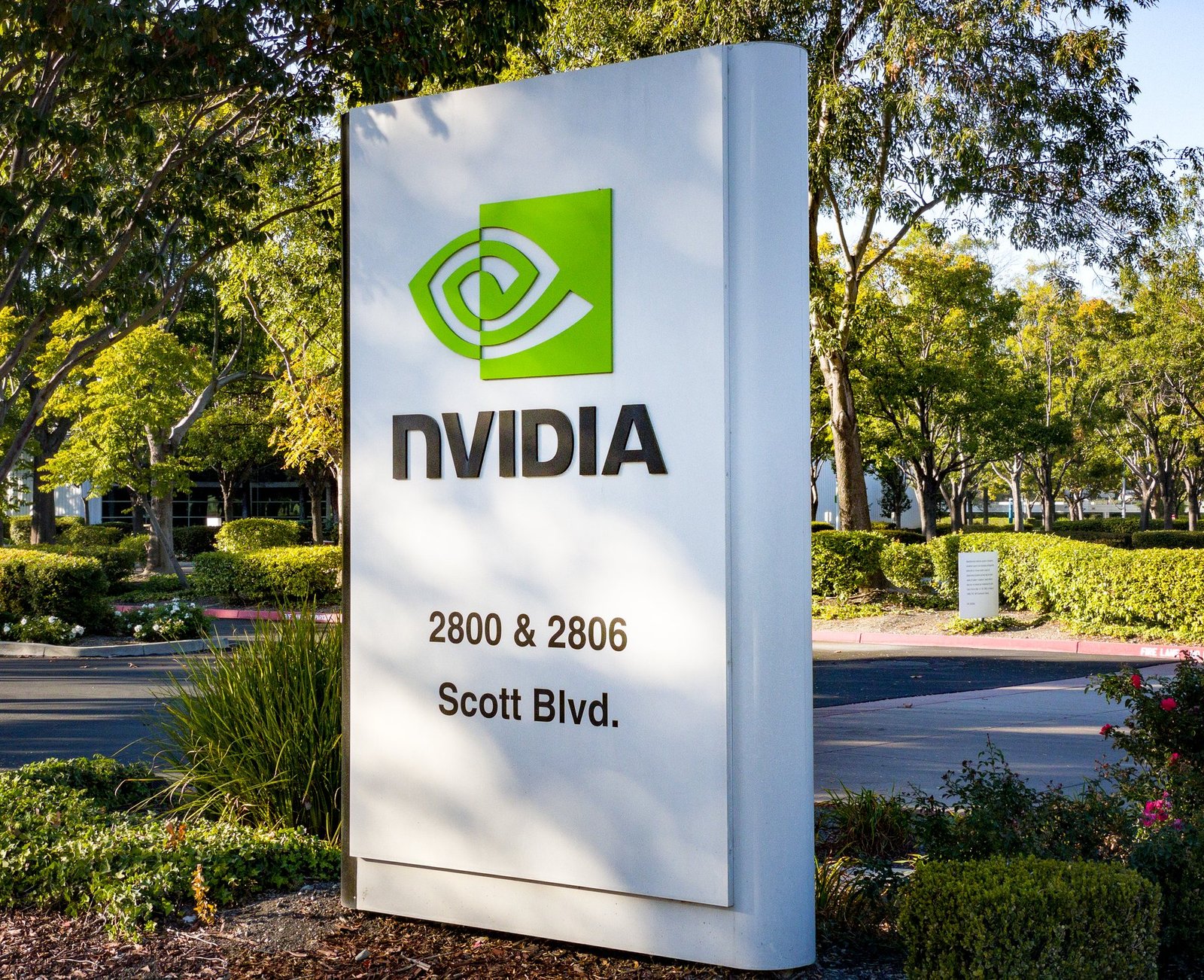
Photo: Will Buckner, via Wikimedia Commons (CC BY 2.0)
Sources
- https://www.usatoday.com/story/tech/2026/11/12/jensen-huang-nvidia-ceo-resigns-affair-investigation/92734431007/
- https://www.cnn.com/2026/11/12/tech/jensen-huang-nvidia-resigns?cid=external-feeds_iluminar_meta
- https://khabarwire.com/blog/nvidia-ceo-huang-resigns-2026-11-12/
- https://nexuseuropa.eu/en/story/nvidia-chief-executive-jensen-huang-resigns-following-affair-allegations-25528
- https://www.corpuschrististar.com/stories/jensen-huang-resigns-as-nvidia-ceo-after-alleged-affairs,2245880
Leave a comment
Comment as a guest and verify your email, or sign in or create a reader account. Guest comments reach our review queue after email verification; account holders can submit directly for review.