Listen to this article
Take the story with you. Choose a voice and a pace that suits you.
Or listen in another language / choose a voice
Getting your device voices ready…
The voice follows the displayed language and your browser’s regional preference when available. You can choose another narration voice.
If you are asking is Whale Harbor worth reading, start with the shape of it. Mary Beth Keane’s fifth novel follows eleven Irish brothers scattered after their mother’s death in 1963, across Connemara, England, Montana and New York, over four decades (Wrote a Book). It is a 352-page family saga, published on 20 October 2026, and it is the Good Morning America Book Club pick for November 2026 (Wrote a Book).
Short answer: yes, for readers who liked Ask Again, Yes and who do not need a plot to hurry. The reasons, and the reservations, are below.
Is Whale Harbor worth reading for the brothers at its centre?
The novel centres on Macdara “Mac” Joyce, the second-eldest son. He is sixteen in 1963 when a dead fin whale, about 66 feet long, washes up on the shore near his Connemara fishing village, and researchers hire him to translate for them (Wrote a Book). Weeks later his mother Mary dies, shortly after giving birth to her eleventh son. His father Cathal remarries, sends the older boys to England for work, places the baby with a cousin and sends two sons to a seminary (Wrote a Book).
Mac is offered a job on a cattle ranch in Montana. Before he leaves, he promises his nine-year-old brother Rian — the brother most likely to find trouble — that he will not leave him behind. He breaks the promise. At thirteen, Rian runs away and disappears (Wrote a Book).
Keane told interviewer Zibby Owens the novel is about love and forgiveness, and especially forgiving yourself (Wrote a Book). That guilt shapes the next four decades: Mac builds a decent life in Montana and then New York while unsent postcards to Rian gather in a rack (BookIshelf). Keane refuses to make him a villain or let him off lightly, and Montana is genuinely good for him — which is why the guilt lands.
Whale Harbor Mary Beth Keane review: what the critics found
The trade response was unusually united. Kirkus, Publishers Weekly, Booklist and Library Journal all gave the novel starred reviews (Wrote a Book). Kirkus praised Keane’s “outstanding ability to encompass family feeling in fluid, translucent prose” and singled out the beached whale as the image that holds the family’s story together. Publishers Weekly wrote that Keane “evokes each setting beautifully”, and Booklist that her prose and dialogue “sparkle with lightness, wit, and authenticity” (Wrote a Book).
In the Boston Globe, Marion Winik called it “another stunner” from the author of Ask Again, Yes, praised how the ensemble is managed, and found the climax surprisingly full of action and well set up (Wrote a Book). NPR, listing it among November’s notable books, recalled Fresh Air critic Maureen Corrigan comparing Keane to Ann Patchett — writers who seem to tell “only” a closely observed domestic tale that transforms into something deep and universal — and said that ability is on display again here, in a narrative that encompasses years, seas and continents (NPR).
The village chapters draw particular praise: the whale on the beach, women arriving with baskets after a death, boys closing ranks without being told — a vanishing Irish-speaking Gaeltacht written with affection and no sentimentality (BookIshelf). Cathal, seen differently by brothers of different ages, becomes two true versions of the same father.
Where the novel strains, and who should skip it
No honest recommendation should skip the last hundred pages. The longer review argues the weaknesses cluster there: the Rian thread ends quietly, perhaps too quietly, after four decades of build-up, with key exchanges happening off the page; the final act runs on luck, moved along by a name dropped in the right bar; and late decades arrive in summary, compressing events that deserved more room (BookIshelf).
Pace is the other dividing line. The middle moves through long stretches of daily work — Mac fixing fences, patching walls, shoeing horses — which admirers read as texture and sceptics may read as drift (Wrote a Book; BookIshelf). Eleven brothers is also a lot of names to hold, even handled with care.
Content matters for some groups. The book deals with a mother’s death shortly after childbirth, children separated and sent away, a child who runs away and stays missing for years, heavy drinking and grief carried across a lifetime (Wrote a Book). Readers who have lived close to any of that should know before they start, not after.
Whale Harbor book club pick: the verdict
As a Whale Harbor book club pick, it is well chosen. It gives a group a big cast, a long time span, disputed memories of the same father, and one running question — what you owe the people you leave (Wrote a Book). It is also a finalist for Barnes & Noble’s Book of the Year, with the winner due on 12 November (Wrote a Book).
Keane drew on two events in her father’s family — her grandmother’s death and a brother’s disappearance — then insisted the characters are not her relatives: “I had to make this world and these people entirely my own” (Wrote a Book). Knowing the seed was real stops the disappearance feeling like a device.
Analysis: recommend it, with the caveat stated plainly. This is Keane’s most personal novel and, on the evidence of four starred trade reviews and the Globe, her most accomplished handling of a large family across time. It is not a propulsive book, and its ending asks readers to accept restraint where they may want release. If your reading life has room for a slow, generous saga about a promise made at sixteen on a muddy lane — and carried for life — it earns its place. If you need answers delivered at pace, choose something else this month and come back to Mac when you have the patience he deserves.
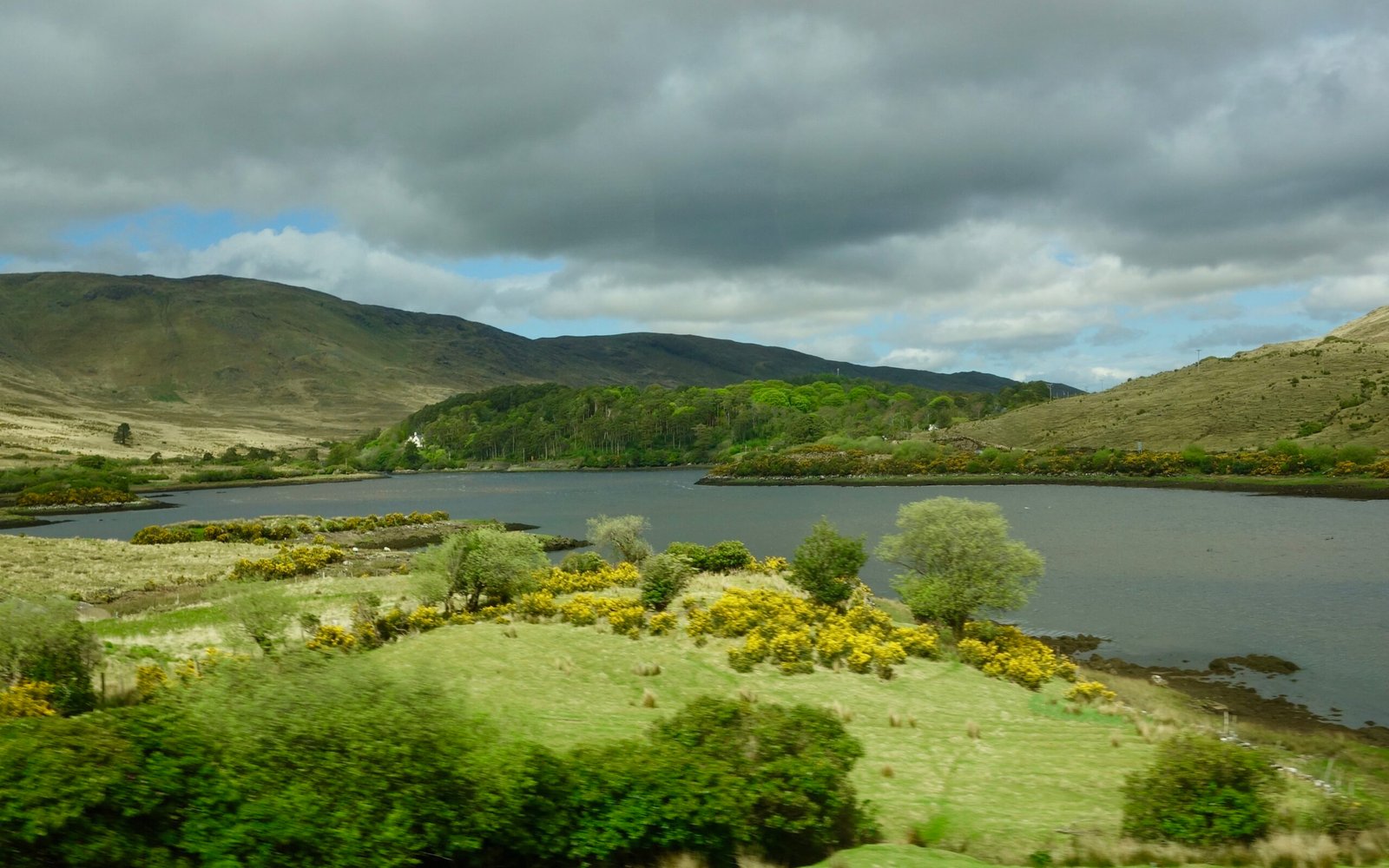
Photo: Sonse, via Wikimedia Commons (CC BY 2.0)
Sources
- https://wroteabook.org/whale-harbor-book-club-guide/
- https://www.bookishelf.com/whale-harbor-by-mary-beth-keane/
- https://www.nprillinois.org/2026-11-03/6-books-you-wont-want-to-miss-in-november
- https://www.bookbrowse.com/bb_briefs/detail/index.cfm/ezine_preview_number/26593/whale-harbor
- https://www.hachette.co.uk/titles/mary-beth-keane/whale-harbour/9781399639026/
Leave a comment
Comment as a guest and verify your email, or sign in or create a reader account. Guest comments reach our review queue after email verification; account holders can submit directly for review.