Listen to this article
Take the story with you. Choose a voice and a pace that suits you.
Or listen in another language / choose a voice
Getting your device voices ready…
The voice follows the displayed language and your browser’s regional preference when available. You can choose another narration voice.
Arab States higher education enrolment has nearly tripled in 25 years, reaching almost 15 million students. That is the headline of UNESCO’s first comprehensive review of higher education across 19 Arab States, launched on 4 November 2026 in Doha, Qatar, at the first session of the committee for the revised Arab States Convention on recognising qualifications (UNESCO). The growth is real. So is the catch: graduates are struggling to find work, with youth unemployment at 26 percent across the region, roughly twice the global average.
Information verified through 5 November 2026.
Arab States higher education enrolment, in numbers: the UNESCO Arab States higher education report counted
Start with access. Despite the tripling, the enrolment rate was 37 percent in 2024, still below the global average of 44 percent, and the averages hide sharp differences between countries (UNESCO). A place at university is far easier to come by in some Arab States than in others, and the report — built on UNESCO’s 2026 Higher Education Global Trends Report — treats that unevenness as a central problem, not a footnote (Devdiscourse).
Then look at who is studying. Women have enrolled and graduated at higher rates than men since 2007. The region’s students cluster heavily in bachelor’s degrees, which account for 81 percent of enrolment. Shorter technical and professional diplomas attract just 7 percent of students, against 19 percent globally — a narrow base for a labour market that needs technicians as much as graduates (UNESCO).
Money and staffing explain part of the strain. Government spending on higher education sits at a regional median of 0.8 percent of GDP, in line with the global median but varying widely by country. Lecture halls are fuller than the world norm: 25 students per member of academic staff, compared with 18 globally (UNESCO). Systems built lecture capacity faster than they built teaching capacity.
Women STEM graduates Arab States universities are producing — ahead of the world
The finding most likely to surprise readers outside the region concerns science. STEM fields account for 28 percent of graduates in the Arab States, compared with 23 percent globally. Women represent nearly half of all STEM graduates in the region, compared with just over a third worldwide (UNESCO).
Research output tells a similar story of speed. Scholarly publications from the Arab States increased by 576 percent between 2010 and 2024, outpacing growth in Europe, North America, China and India over the same period (UNESCO). UNESCO’s caution is about quality and impact: volume has surged, and the report pushes for stronger partnerships and joint programmes to make the work count for more (Devdiscourse).
Mobility is shifting, too. The region hosts nearly 600,000 of the world’s 7.3 million international students, and both inbound and outbound mobility rates — 4.2 and 4.7 percent — exceed the global average of 2.7 percent. Students from the region increasingly choose to study within it, with the United Arab Emirates and Egypt emerging as major regional hubs (UNESCO). The revised Arab States Convention, in force since April 2026, is meant to make qualifications portable across borders so that movement gets easier still.
Graduate employability Arab States leaders now have to fix
Here is where the report turns sober. A youth unemployment rate of 26 percent, roughly twice the global average, sits awkwardly beside a tripling of enrolment (UNESCO IESALC). Degrees have multiplied faster than the jobs that reward them, and the bachelor’s-heavy structure — with so few shorter, work-linked programmes — leaves many graduates over-qualified on paper and under-prepared for the vacancies that exist.
Digital change adds pressure. More than 70 percent of Arab States have written digitalisation objectives into their national higher education plans, yet institutional policies lag the technology: globally, only one in five universities had a formal AI policy in 2025 (UNESCO).
UNESCO’s answer is a set of ten interconnected recommendations: widen access through more diverse pathways, strengthen student support and graduate employment prospects, invest in academic and research capacity, pursue responsible digital transformation, and deepen regional cooperation (UNESCO IESALC). Qun Chen, UNESCO’s Assistant Director-General for Education, framed the task at the launch: the shared priority “is to ensure that this progress translates into greater opportunities for students and societies” (UNESCO).
Analysis: tripling enrolment in a generation is an achievement most regions would envy, and the women’s STEM numbers genuinely lead the world. But a system where a quarter of young people are out of work cannot grade itself on admissions alone. The test for the next decade is unglamorous — more staff per student, more short technical routes into real jobs, degrees that employers recognise across the region’s borders. Doha gave the Arab States a shared framework for that work this week. Whether ministries fund it is the story to watch.
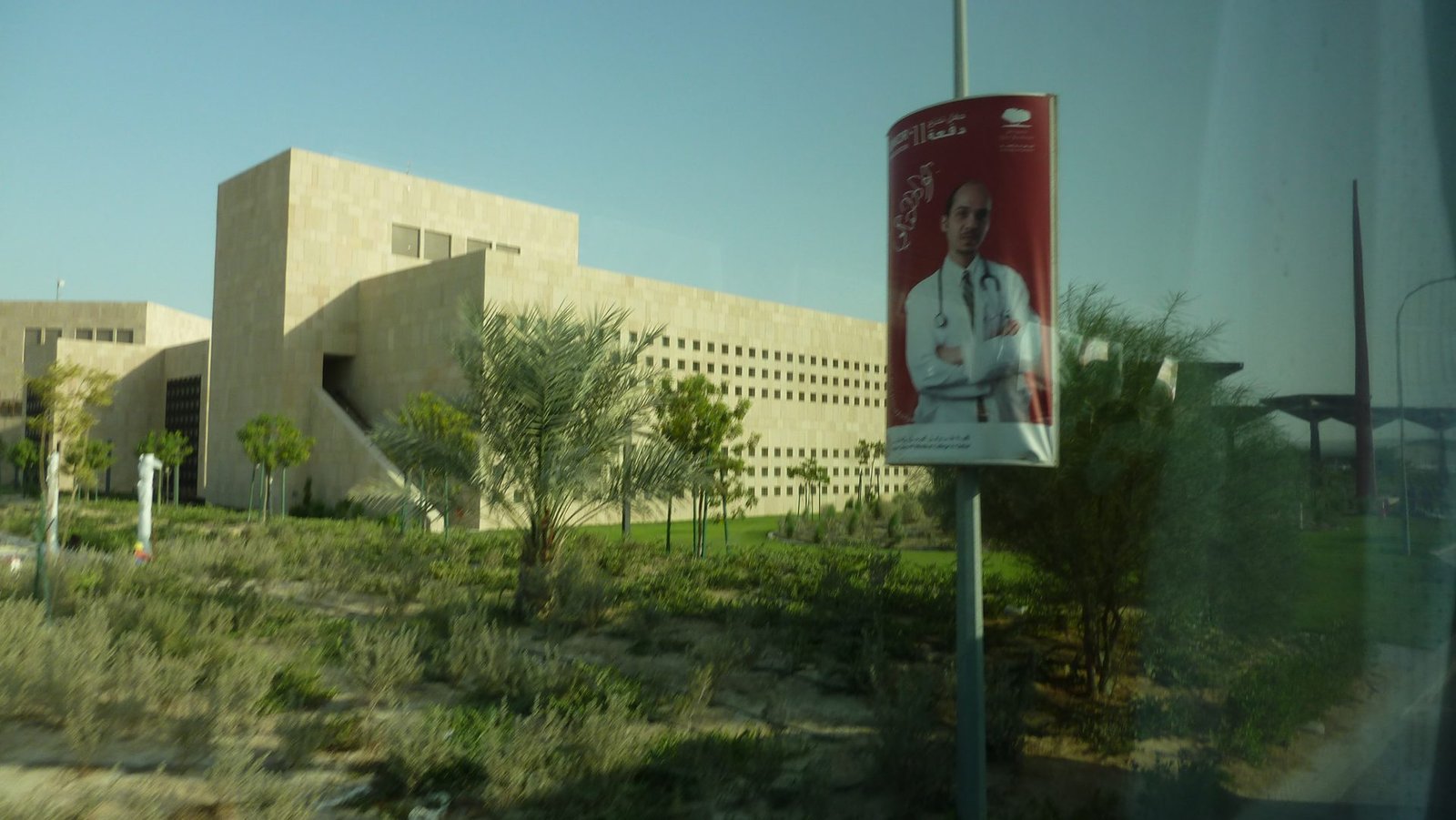
Photo: Frederick Noronha, via Wikimedia Commons (CC BY-SA 4.0)
Sources
- https://www.unesco.org/en/articles/number-students-higher-education-triples-across-arab-states-graduate-employability-remains-challenge
- https://www.iesalc.unesco.org/en/articles/number-students-higher-education-triples-across-arab-states-graduate-employability-remains-challenge-0
- https://www.devdiscourse.com/article/education/4001465-arab-higher-education-nears-15-million-students-unesco-flags-quality-and-jobs-gaps
Leave a comment
Comment as a guest and verify your email, or sign in or create a reader account. Guest comments reach our review queue after email verification; account holders can submit directly for review.