Listen to this article
Take the story with you. Choose a voice and a pace that suits you.
Getting your device voices ready…
The voice follows the displayed language and your browser’s regional preference when available. You can choose another narration voice.
Rethinking school in the AI era starts with an uncomfortable admission: a student can now produce a tidy essay, a solved problem set and a plausible summary in seconds, without learning much at all. An international group of scholars and education leaders plans to launch a new association on 7 November 2026 to confront exactly that, according to organisers. The founding initiative for the International Association for AI and Innovation in Education (IAAIE) is scheduled to be announced during the U.S.–China Education Summit at Columbia University.
Information verified through 3 November 2026.
The declaration behind the launch does not mince words. “It is the education system that needs to transform faster, rather than asking children to run faster on the same old track,” the founding declaration states. That line lands because most schools have so far done the opposite. They kept the same assignments, the same exams and the same homework, then added warnings about cheating on top.
What rethinking school in the AI era actually proposes
The initiative, coordinated by Paul Pu, a senior research scientist at the University of Toronto’s Ontario Institute for Studies in Education, aims to connect research, classroom practice and AI innovation, with human development as its central goal, organisers say. Its advisers include scholars from McMaster University, NYU Shanghai, the University of Toronto and UNESCO chairholders, and a school in Ontario, The Erindale Academy, is named as a setting where the ideas will be tested in practice.
The proposed framework is called School 2.0. It is built around three capacities. First, using AI with understanding and independent judgment, not as an answer machine. Second, applying knowledge through investigation, making and experimentation. Third, developing social skills through collaboration and shared responsibility.
Notice what is missing from that list. Speed. Recall for its own sake. The lone student racing a clock.
The framework also insists on foundations. Students still need knowledge they can explain, reasoning they can defend and conclusions they can verify in unfamiliar situations, the organisers set out. Privacy, fairness and ethical judgment are to be built into curriculum and school governance, not bolted on after a scandal.
The classroom problem underneath the launch
Why does a new association need to say this at all? Because the old bargain has broken. Schools long treated content delivery as the core job: the teacher holds knowledge, hands it over, then checks who kept it. When answers can be generated instantly, that model stops measuring learning and starts measuring compliance.
The British International School Kuala Lumpur makes a similar point in its own account of teaching now: content alone is no longer the defining measure, and students have to question information, apply it in new contexts and judge its reliability, the school writes. Its list of priorities — critical thinking, metacognition, problem-solving and judgment — overlaps with School 2.0 almost word for word. Two very different settings, same diagnosis.
Measurement is the hard part, and honest educators admit it. You cannot evaluate “AI in the classroom” as if it were one thing. A tutor that gives feedback on a draft, a chatbot that writes the draft and a tool that generates practice questions are three different interventions with three different effects. Schools that skip that distinction end up with slogans instead of evidence.
Other institutions are building the same scaffolding
Columbia, the summit’s host, has been assembling its own version. In September 2026 the Digital Education Council launched a Center of Excellence for AI in Teaching and Learning with Columbia Engineering and Columbia’s Center for Teaching and Learning, the council announced. Its first work examines how AI is reshaping engineering and computer science education, paired with online courses giving educators discipline-specific guidance.
Read together, these moves suggest a pattern. Universities and school networks are no longer asking whether AI belongs in education. That argument is over in practice, whatever people say at conferences. The live argument is about terms: who sets them, what gets assessed, and whether teachers get training or just new rules to enforce.
IAAIE says it plans to support curriculum development, teacher professional learning and classroom research, and to evaluate educational AI products for learning value, accuracy, fairness and data protection, according to the launch report. That product-evaluation pledge matters. Schools are being sold tools faster than anyone can test them, and an independent body willing to say a product does not work would fill a real gap.
What would have to change on Monday morning
Analysis: A framework only earns its name in timetables and mark schemes. If School 2.0 means anything in an ordinary school, it means assignments a chatbot cannot complete alone: work done partly in class, drafts with reasoning shown, oral defence of written answers, projects built and tested rather than described. It means grading the verification step — did the student check the output, catch an error, find a better source? — instead of pretending the output never happened.
It also means protecting the slow parts. Struggle and iteration are not inefficiencies to be engineered away; they are where judgment forms. A school that lets software remove every hard step will produce students who can prompt and cannot think, and it will not notice until those students meet a problem with no template.
The association is inviting public signatures and expressions of interest, with signing described as personal support rather than membership or institutional endorsement, organisers note. So the launch is a beginning, not a result. Its test comes later: published classroom research, curricula teachers actually use, and product judgments schools can trust. The declaration’s best line sets the standard. Children should not have to run faster on the old track. Build a better track, then prove it works.
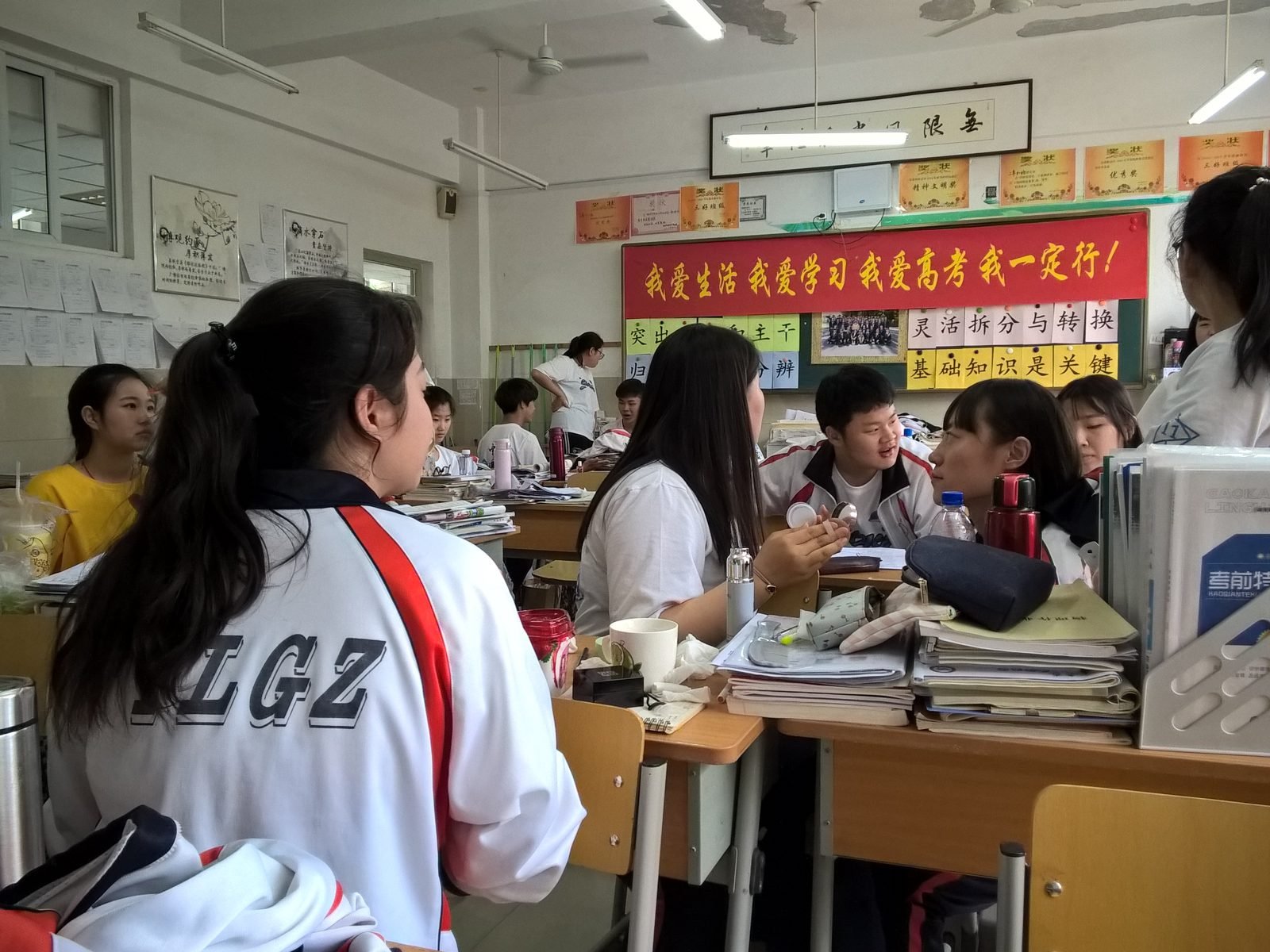
Photo: Kychn, via Wikimedia Commons (CC BY-SA 4.0)
Sources
- https://victoriamedia.ca/en/canada/7422/
- https://www.digitaleducationcouncil.com/newsroom/digital-education-council-establishes-center-of-excellence-for-ai-in-teaching-and-learning-in-collaboration-with-columbia-engineering-and-the-columbia-center-for-teaching-and-learning
- https://www.nordangliaeducation.com/bskl-kuala-lumpur/news/2026/09/22/how-should-schools-teach-in-the-age-of-ai
Leave a comment
Comment as a guest and verify your email, or sign in or create a reader account. Guest comments reach our review queue after email verification; account holders can submit directly for review.