Listen to this article
Take the story with you. Choose a voice and a pace that suits you.
Or listen in another language / choose a voice
Getting your device voices ready…
The voice follows the displayed language and your browser’s regional preference when available. You can choose another narration voice.
The Israel election deadlock 2026 is now the fact everyone has to work around. Israel voted on Tuesday, 27 October 2026, in its first election since the Hamas attack of 7 October 2023, and neither Prime Minister Benjamin Netanyahu nor his main rival, former military chief Gadi Eisenkot, came within reach of the 61 seats needed for a majority in the 120-seat Knesset, according to exit polls reported by Reuters (Reuters). Kan 11 and Channel 13 put the two blocs level at 51-51, while Channel 12 gave Netanyahu’s Likud-led bloc a narrow 52-49 edge, Reuters reported. Neither leader claimed victory.
Turnout was 77.7%, Israel’s Central Elections Committee said, the highest in more than two decades and around seven points higher than in 2022 (Reuters). People showed up. They just did not hand anyone a government.
Information verified through 28 October 2026.
What happens next after Israel election deadlock 2026: count first, then the president
Exit polls are projections, not results. Final results are expected on Thursday or Friday, Reuters reported, and the count could still shift the picture as actual votes are tallied (Reuters). CNN, reporting with more than half the vote counted, said Channel 12 and Ynet projected Netanyahu’s bloc on 55 seats, down from the 68-seat coalition he led in the outgoing Knesset, with Likud still the largest single party (CNN).
Once results are certified, the process moves to President Isaac Herzog. He will hold consultations in which each party recommends its choice, then task the candidate he judges most likely to assemble a majority — not necessarily the leader of the largest party, CNN explained (CNN). The person picked gets 28 days, with a likely 14-day extension. If he fails, the mandate passes on. If that fails too, Israel goes to another election. In the meantime, deadlock helps the incumbent in one narrow way: it could leave Netanyahu in office as caretaker prime minister during prolonged negotiations, Reuters noted (Reuters).
Israel coalition negotiations 61 seats: two speeches, no path
Both men spoke as if the night had vindicated them. Neither speech changed the maths.
Netanyahu, addressing party faithful after 3 a.m. at Likud headquarters in Jerusalem, called for “a strong, right-wing national government” and said Likud was the largest party, Reuters reported (Reuters). He also raised the prospect of renewed joint action with US President Donald Trump against Iran. Eisenkot, speaking in Tel Aviv, said the public had voted against Netanyahu and called on him to retire. “The Israeli public has voted against Netanyahu continuing to serve as prime minister of Israel,” he said, in CNN’s account (CNN).
Look at the blocs underneath the speeches. If the exit polls hold, Netanyahu’s nationalist-religious coalition, which at its height held 68 seats, falls far short of 61, Reuters reported. Far-right parties led by Itamar Ben-Gvir and Bezalel Smotrich were projected to take a combined 13 seats inside his bloc, with no major gains for either. Eisenkot, 66, entered politics only four years ago, joined Netanyahu’s war cabinet after the 2023 attack, then quit eight months later criticising the prime minister’s leadership, Reuters reported. Yohanan Plesner, president of the Israel Democracy Institute, called the polls a major defeat for Netanyahu’s coalition but cautioned that Eisenkot was no clear winner and much could change as votes were counted (Reuters).
Arab parties kingmakers Israel election: the seats both camps hesitate to use
The clearest movement in this election came from voters both main camps have kept at arm’s length.
Arab parties outside the two main blocs could hold the balance of power, Reuters reported, after a historic night for turnout among Palestinian citizens of Israel (Reuters). CNN put the Arab parties on course for about 16 seats in its later projections and described their expected result as their strongest showing in history, driven by turnout above 75% in Arab communities (CNN). USA Today, working from the earlier exit polls, put Arab-Israeli parties at around 17 or 18 seats and called them potential kingmakers for either bloc (USA Today).
Here is the catch. Eisenkot has all but ruled out forming a government with the Arab parties, Reuters reported, and CNN noted that two of his allies, Avigdor Liberman and Naftali Bennett, have ruled out sitting with them altogether. Eisenkot has also set conditions for partners, including recognising Hamas as a terrorist organisation that must be dismantled, terms CNN said most Arab lawmakers are unlikely to accept. Netanyahu warned against a government that relies on Arab parties, in remarks reported by CNN. So the seats that could break the deadlock are the seats both leaders have distanced themselves from.
Analysis: this election was framed as a verdict on Netanyahu after nearly 19 years as prime minister across the past 30, and on the security failure of 7 October 2023, when Hamas killed 1,200 people and took 251 hostage, figures Reuters cited in its reporting. Voters delivered a rebuke without delivering a replacement. With turnout at a two-decade high, that looks less like indecision than a country that wanted change and could not agree on who should lead it, or with whom.
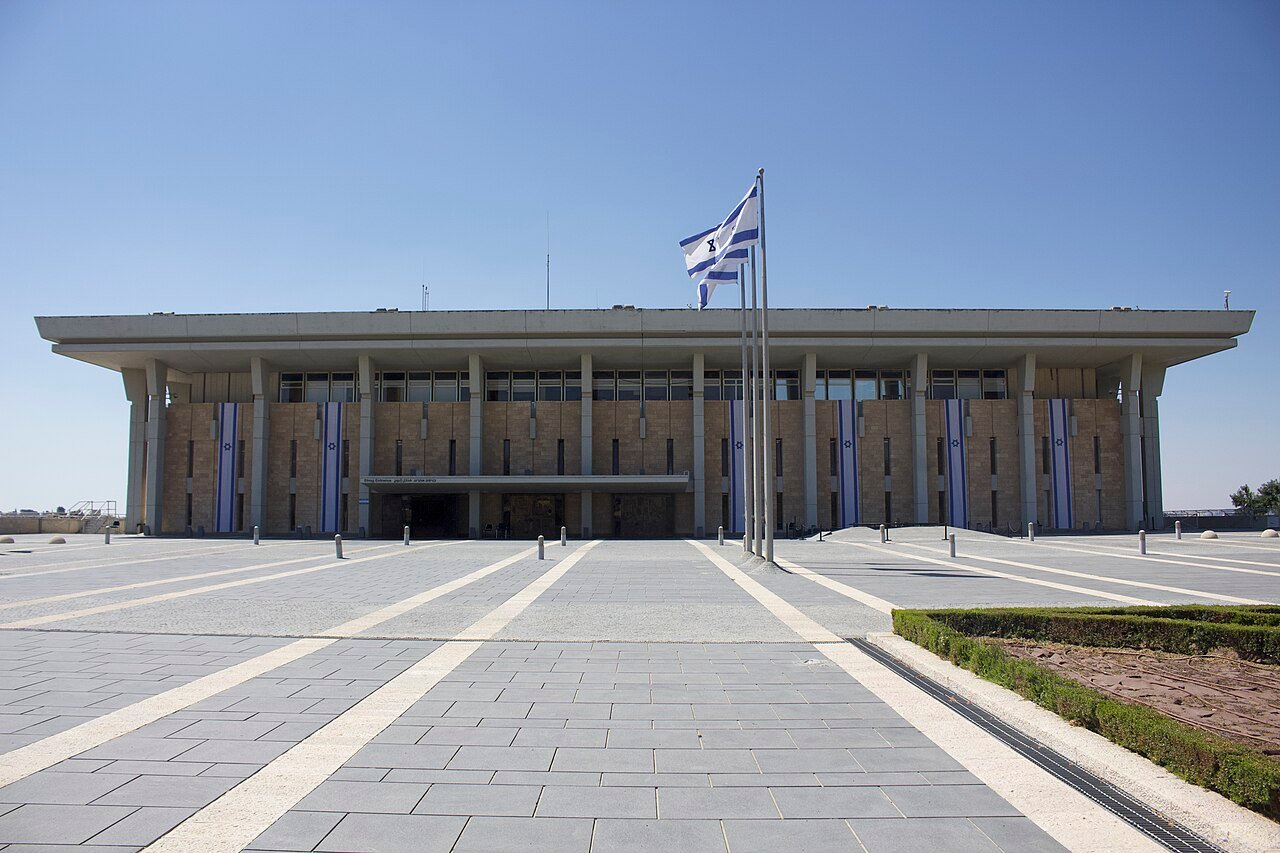
Photo: Clema12, via Wikimedia Commons (CC BY-SA 4.0)
Sources
- https://www.reuters.com/world/middle-east/netanyahu-eisenkot-stake-rival-claims-lead-israel-after-deadlocked-vote-2026-10-28/
- https://www.cnn.com/2026/10/27/middleeast/israel-elections-outcome-analysis-hnk-intl?cid=external-feeds_iluminar_meta
- https://www.usatoday.com/story/news/world/2026/10/27/israel-election-takeaways-benjamin-netanyahu-gadi-eisenkot/92361598007/
Leave a comment
Comment as a guest and verify your email, or sign in or create a reader account. Guest comments reach our review queue after email verification; account holders can submit directly for review.