Listen to this article
Take the story with you. Choose a voice and a pace that suits you.
Or listen in another language / choose a voice
Getting your device voices ready…
The voice follows the displayed language and your browser’s regional preference when available. You can choose another narration voice.
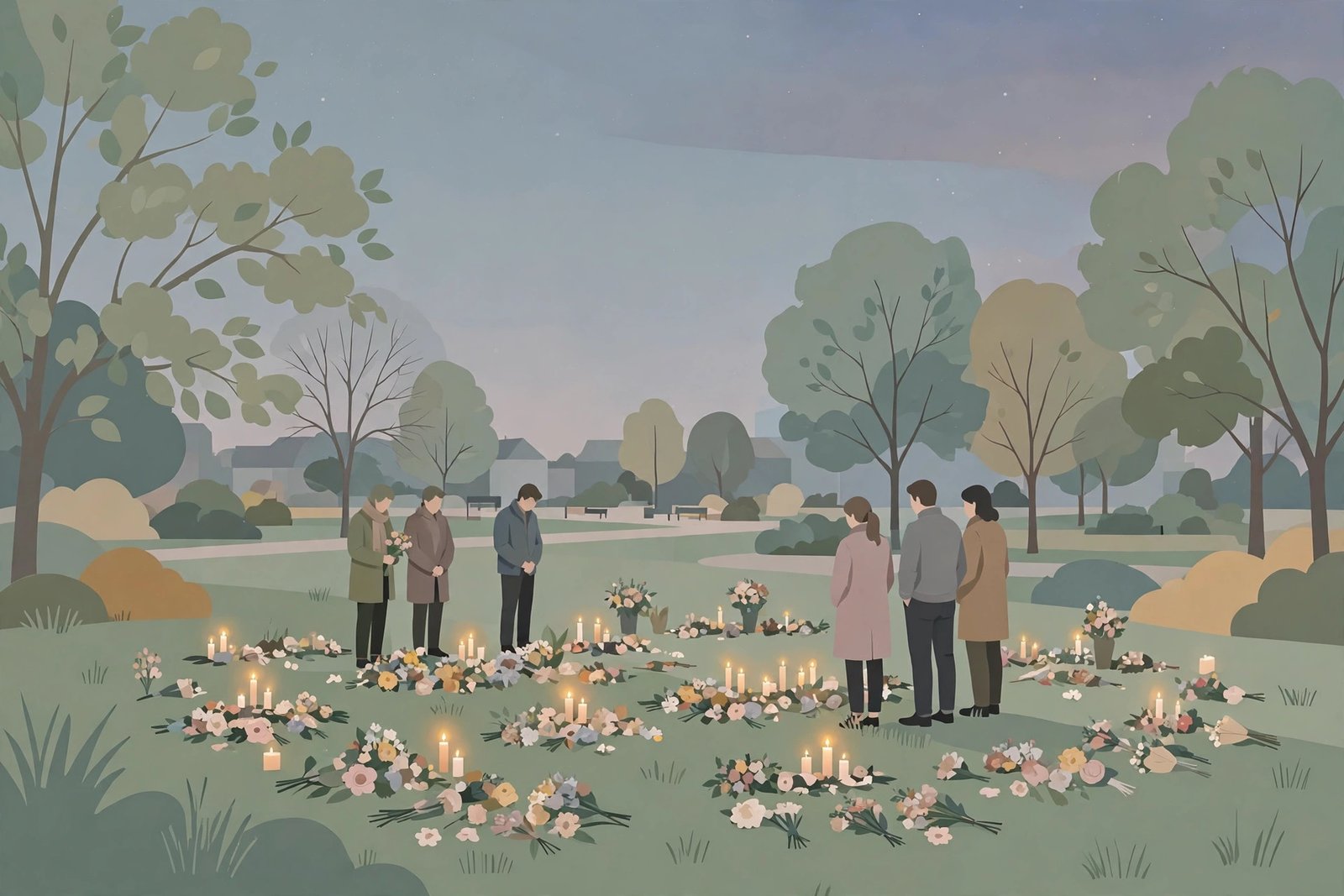
At noon on Monday 26 October 2026, people gathered at the memorial in Weston Park, Yarralumla, for the Australia overdose deaths Canberra remembrance ceremony — the 31st time the community has held it on the last Monday in October (Medianet News Hub). Names were read aloud. That part has not changed in three decades. The list has.
Information verified through 27 October 2026.
This year’s ceremony arrived with the worst national figures the series has produced. The Penington Institute recorded 2,596 drug-induced deaths in Australia in 2024, the equivalent of seven lives lost every day (Medianet News Hub; Penington Institute).
What the Penington Institute Annual Overdose Report 2026 actually shows
Strip the headline back and the detail is worse in specific, patterned ways. Of the 2,596 deaths, a record 2,091 were unintentional, according to the Penington Institute’s Australia’s Annual Overdose Report 2026, reported by Medical Republic (Medical Republic).
The age profile moved. People aged 50 to 59 accounted for 533 unintentional deaths, 25.5% of the total, overtaking the 40-to-49 group for the first time. Deaths in that 50-to-59 bracket have risen more than fivefold since 2001, while deaths among 60-to-69-year-olds have more than tripled, the report said. Almost half of unintentional deaths now occur among people aged 50 and above.
The drugs involved moved too. Opioids remained the most common type, involved in 877 unintentional deaths, or 41.9%. Amphetamine-type stimulants were involved in a record 772 deaths, up 25.1% from 2023, and heroin deaths reached a record 488. Most deaths did not involve one substance alone: over the five years to 2024, 67.8% involved two or more drug types, Medical Republic reported.
A separate national series points the same way. The National Drug and Alcohol Research Centre at UNSW Sydney recorded a 7.4% rise in the national age-standardised rate of drug-induced deaths between 2023 and 2024, with a 29% increase in deaths from amphetamine-type stimulants and a 40% jump in cocaine-related mortality (Medical Xpress / NDARC). Its definitions differ from Penington’s, so the totals differ — 2,005 deaths excluding alcohol and tobacco in that series — but the direction does not.
Why the Australia overdose deaths Canberra remembrance ceremony is also an argument
Remembrance was the stated purpose. It was not the only one.
ACT Health Minister Dr Marisa Paterson said every life lost is felt “not only by the individual, but by their families, friends and the wider community,” and committed the ACT Government to a harm minimisation approach and continued investment in evidence-based initiatives, in the ceremony release (Medianet News Hub).
Community organisations used sharper language. Chris Gough of the Canberra Alliance for Harm Minimisation and Advocacy said the community gathered “in support and solidarity to grieve those we have lost to overdose and to the criminalisation of drugs,” and called the toll preventable. Alexandra Hogan of Uniting NSW.ACT argued for stronger measures including supervised injecting facilities and more permanent drug-checking sites. ATODA acting chief executive Anke van der Sterren said harm reduction and treatment services save lives and need ongoing investment.
Those are advocacy positions, and they are contested in Australian drug policy debate. What the ceremony release presents without dispute is the practical advice attached to the day: after several suspected overdose deaths and non-fatal incidents in the ACT in August 2026, police and health authorities urged people to use the CanTEST health and drug checking service and to carry naloxone, which temporarily reverses an opioid overdose.
Canberra harm reduction, naloxone and CanTEST in practice
That local detail matters because Canberra is not starting from zero. The ACT has a fixed drug-checking service, a decriminalisation framework supporters credit with enabling a health response, and services such as Directions Health working directly with families after a loss. Bronwyn Hendry, its chief executive, said in the release: “We see first-hand the profound impact these losses have on families, friends and colleagues.”
Penington’s own policy complaint, in its snapshot, was about balance: almost two-thirds of proactive government spending on drug harms goes to law enforcement, it said, while harm reduction receives 1.6% (Penington Institute). Chief executive John Ryan said: “What is missing is not evidence. What is missing is political urgency.”
You don’t have to accept every prescription offered on Monday to see why the ceremony keeps growing. Thirty-one years ago this was a local act of mourning. Now the names read out in Weston Park sit inside a national record — 2,596 deaths, an older profile, a stimulant toll climbing faster than the services built for an earlier drug market. The people standing in the park were not asking for remembrance instead of change. They were insisting the first should force the second.
Sources
- https://newshub.medianet.com.au/2026/10/canberrans-gather-to-remember-lives-lost-to-drug-harms-and-call-for-change-2/178304/
- https://www.medicalrepublic.com.au/overdose-deaths-shift-older-as-stimulant-toll-hits-record-high/129062
- https://medicalxpress.com/news/2026-08-drug-deaths-hospitalizations-driven.html
- https://www.penington.org.au/peningtons-annual-overdose-snapshot-shows-7-people-a-day-are-dying-from-overdose/
Leave a comment
Comment as a guest and verify your email, or sign in or create a reader account. Guest comments reach our review queue after email verification; account holders can submit directly for review.