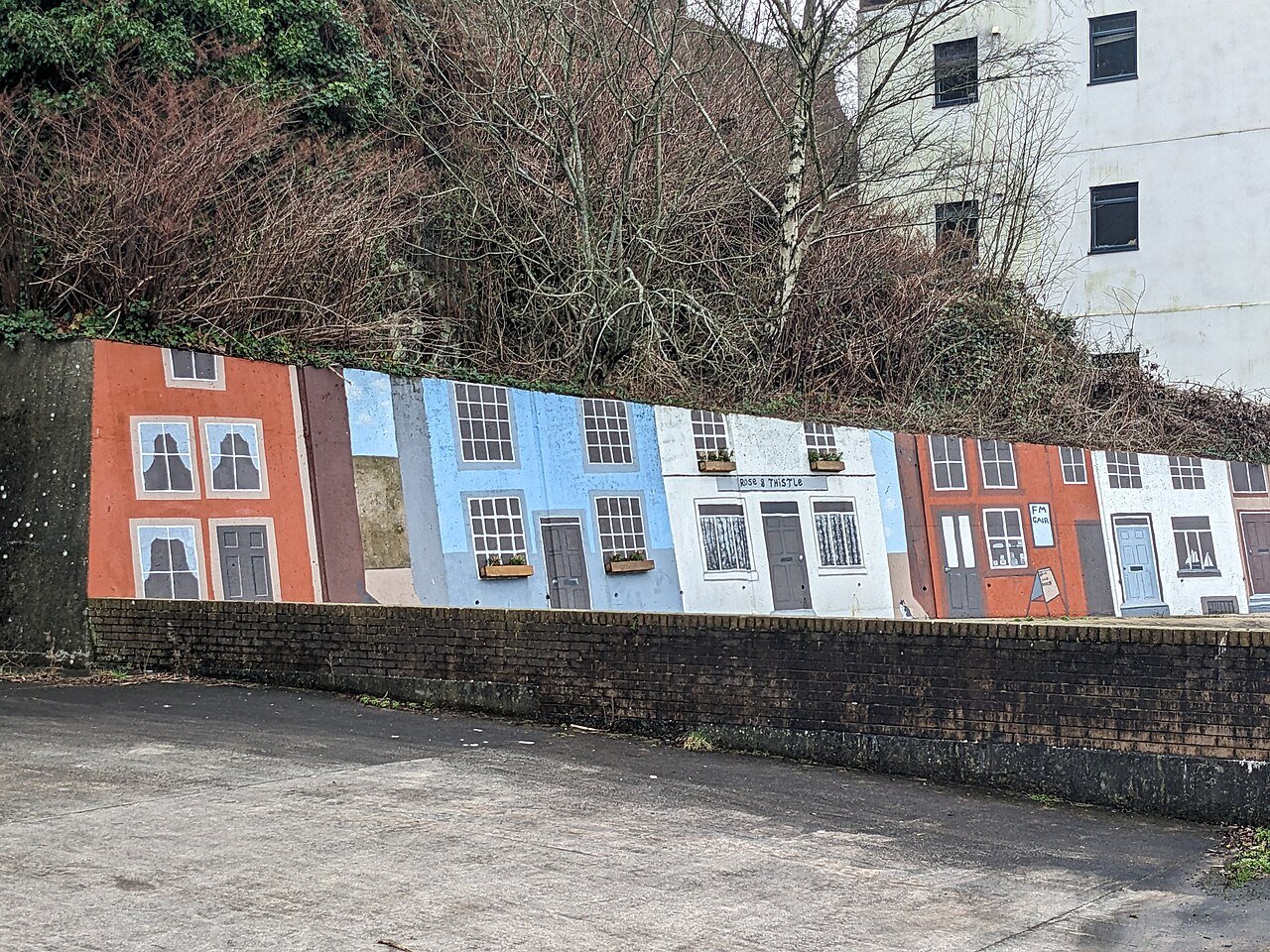

A mark on a wall is encountered under conditions its maker cannot fully control. Someone passes it on the way to work; someone else lives opposite it; another person considers it damage. When the same image appears inside a gallery, the conditions change before anyone begins discussing its quality.
The visitor has entered a setting that identifies the object as art. Lighting and labels direct attention. A price or collection record may give it an institutional history. None of those changes automatically improves or diminishes the work, but each changes what the encounter asks of the viewer.
The wall is part of the argument
Consider a hypothetical mural made for a contested public space. Its subject may matter, but so may the particular wall, the people who pass it, and the question of permission. A photograph can preserve the image while losing those relationships. A gallery presentation can recover some context through documentation, though it cannot reproduce the original encounter exactly.
That difference should not become a purity test. Artists may want payment, conservation, or a new audience. The idea that public work must remain precarious to remain meaningful can romanticize conditions that the artist would reasonably prefer to change.
Public for whom?
Calling an artwork public does not settle who gets to make it or who can object. Property owners, residents, artists, and passersby may understand the same surface differently. Criticism becomes more useful when it examines those relationships instead of assuming that being outdoors makes a work democratically shared.
The gallery has its own exclusions and possibilities. Admission, geography, opening hours, and the confidence to enter shape access. At the same time, a gallery can provide interpretation and preservation that a street setting does not. The question is what has been gained, what has been displaced, and whose perspective is missing.
A serious discussion of street art follows the work through those changes. It asks how the image operates in each setting and what remains of its earlier context. The move indoors is neither a guaranteed betrayal nor a guaranteed arrival. It is another event in the artwork’s life, one that deserves to be described with the same attention as the paint.