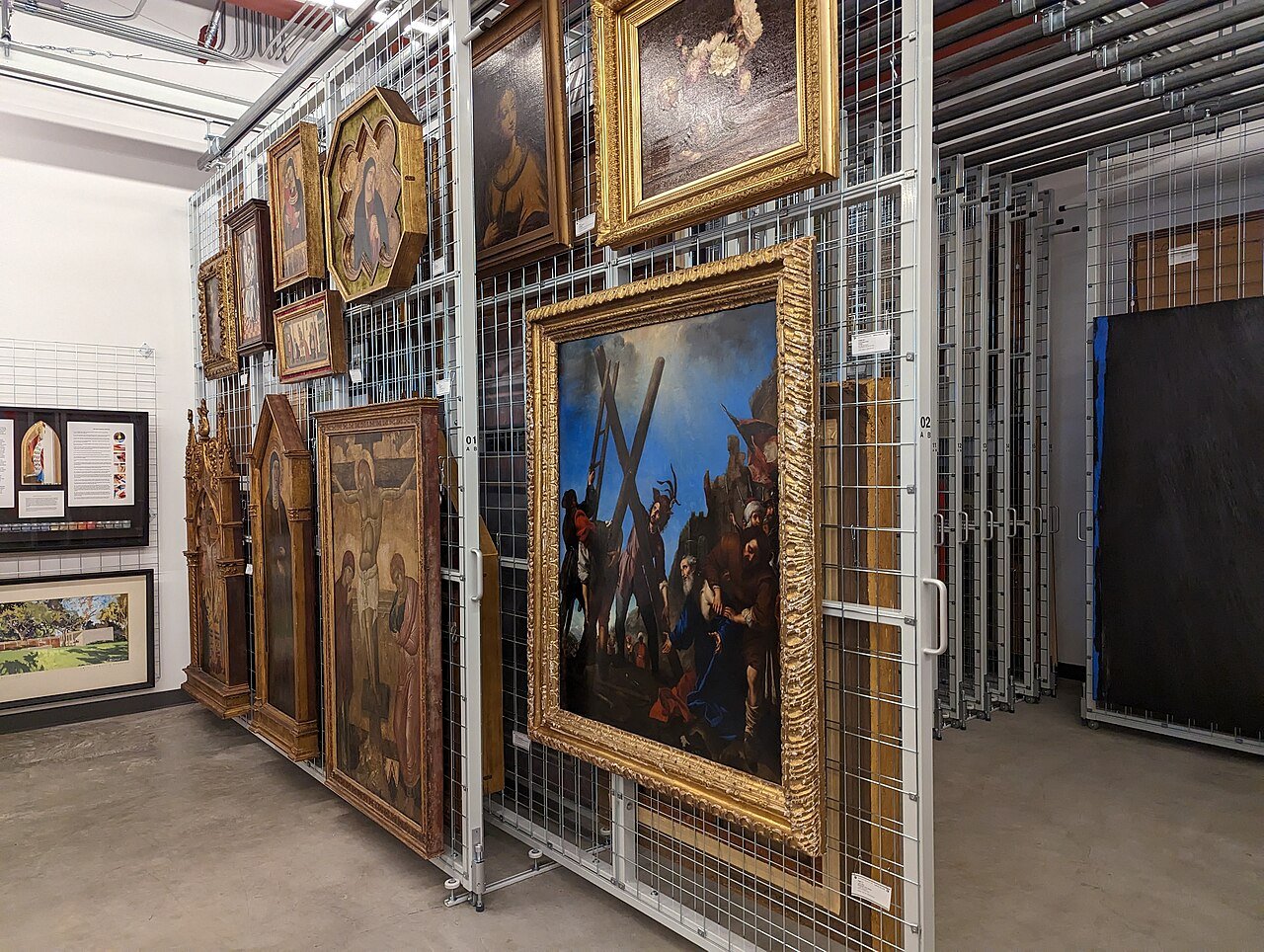

A gallery offers an argument through selection. Objects are positioned beside one another, labels establish a subject, and the route encourages a particular encounter. A storeroom reveals another aspect of the institution: the collection beyond the current exhibition.
V&A East Storehouse makes that distinction part of its public proposition. The museum describes a purpose-built space combining collection storage with public access, including its Order an Object experience and staff-led encounters. The project gives visitors ways to engage with material beyond a conventional display. [1]
Access is a designed relationship
Opening storage does not mean eliminating the need for mediation. Fragile objects still require care, and a visitor’s ability to understand a collection depends partly on information about it. The useful question is how an institution explains those constraints while giving people meaningful opportunities to explore.
An object presented without context may seem more immediate, but it can also become harder to interpret. What is known about its maker? How did it enter the collection? Which descriptions come from the object’s original community, and which were added by the museum? Visible storage should make those questions easier to pursue.
The choices behind visibility
Every exhibition leaves material out. That fact is not, by itself, evidence of concealment. Space, condition, and the purpose of a display all shape selection. Yet institutions can still be asked to explain how their choices are made and how other parts of the collection can be encountered.
A visitor who follows a particular interest may make connections that a thematic exhibition would not anticipate. That possibility is one of open storage’s attractions. It gives curiosity a less predetermined route while retaining the need for responsible handling and documentation.
The storeroom can also change what counts as museum work in the public imagination. Storage, cataloguing, and conservation become easier to see as ongoing activity. The museum begins to appear less like a finished statement and more like an institution whose collection is continually being cared for, interpreted, and questioned.